
Parental Alienation: I Watched What Happened to My Father Happen to My Husband & It Broke Me (2024)
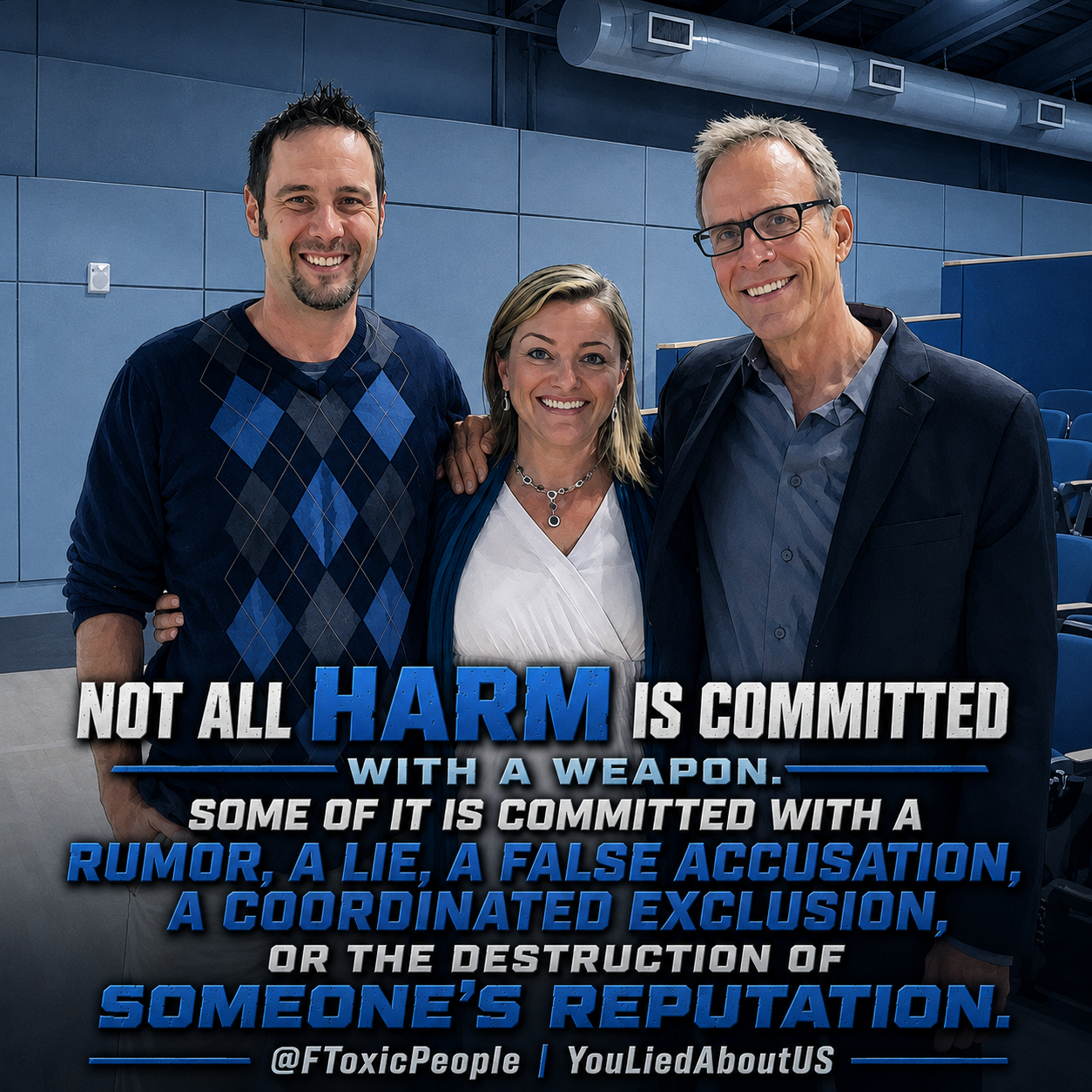
There is a quiet kind of violence that doesn’t leave bruises.
It happens when people decide that protecting their reputation is more important than protecting the people they hurt.
Instead of taking responsibility, they reshape reality. They rewrite history. They recruit supporters. They leave out inconvenient facts. They manufacture doubt. They cast themselves as the victim while someone else becomes the convenient villain.
This isn’t just gossip.
It’s narrative control.
And the damage it causes can last for decades.
The Psychology Behind Narrative Control
Human beings naturally want to think well of themselves. Psychologists refer to this as self-enhancement—our tendency to preserve a positive self-image. When someone’s actions threaten that image, some people respond with accountability.
Others respond by rewriting the story.
Research has shown that people often use psychological defense mechanisms such as denial, projection, rationalization, and blame shifting to protect their self-concept. In more manipulative relationships, these behaviors can become organized campaigns designed to preserve status, influence, or public perception.
The objective isn’t necessarily truth.
The objective is winning the audience.
Scapegoats Are Rarely Chosen Because They’re Guilty
One of the oldest dynamics in dysfunctional families, organizations, and communities is scapegoating.
A scapegoat serves an important purpose.
By concentrating blame onto one person, everyone else avoids examining the real dysfunction.
The person being blamed often has characteristics that make them an easy target:
- They tell the truth.
- They notice inconsistencies.
- They refuse to participate in unhealthy dynamics.
- They’re different from the group.
- They’re compassionate enough to believe others will eventually understand.
Ironically, many scapegoats spend years trying to avoid conflict.
They stay quiet.
They work hard.
They mind their own business.
They assume good intentions.
Yet silence doesn’t protect someone who has already been assigned a role in someone else’s story.

We Believed Staying Quiet Would Keep the Peace
Like many people, we believed that if we avoided conflict, treated people with respect, and focused on our own lives, everything would eventually work itself out.
It didn’t.
We stayed out of trouble.
We kept to ourselves.
We tried to de-escalate.
We gave people the benefit of the doubt.
None of it mattered.
Because the narrative had already been written.
Once someone decides you’re the problem, your silence isn’t interpreted as maturity.
It’s interpreted however they need it to be.
Image Management Can Become More Important Than Integrity
Healthy people care about their reputation because it reflects their character.
Unhealthy people care about their reputation because it hides their character.
There’s a profound difference.
Integrity asks:
“Did I do the right thing?”
Image management asks:
“How can I make sure nobody finds out?”
That distinction changes everything.
When protecting an image becomes the priority, almost anything can be justified:
- Half-truths.
- Smear campaigns.
- Character assassination.
- Selective storytelling.
- Social exclusion.
- False accusations.
- Public virtue signaling.
- Private cruelty.
The goal isn’t justice.
The goal is preserving appearances.
The Collateral Damage Is Often Invisible
When people manipulate narratives, they rarely consider the lives they disrupt.
Families become divided.
Friendships disappear.
Children lose relationships with loving parents or grandparents.
Communities fracture.
Good people begin questioning their own memories.
Victims withdraw because speaking up only seems to make things worse.
Many experience anxiety, depression, chronic stress, and symptoms consistent with trauma—not only because of the original harm, but because of the profound betrayal that follows.
Psychologists sometimes refer to this as betrayal trauma or institutional betrayal when organizations fail to protect those they should have supported.
The emotional wounds are real.
Even when nobody else can see them.
Why So Many People Believe the Wrong Story
Most people don’t investigate.
They trust confidence.
They trust popularity.
They trust whoever speaks first.
Psychologists call this the confirmation bias—our tendency to seek information that confirms what we already believe while dismissing information that challenges it.
There’s also the fundamental attribution error, where people are more likely to attribute someone else’s struggles to flaws in their character rather than considering the circumstances they may have experienced.
Once a narrative spreads, every new piece of information is filtered through that existing belief.
Facts become secondary.
The story becomes the truth.
You Cannot Control Other People’s Narratives
One of the hardest lessons trauma survivors learn is this:
You cannot force people to care about the truth.
Some people have already chosen the version of reality that’s most comfortable for them.
No amount of explaining will change someone who is committed to misunderstanding you.
That doesn’t mean you stop telling the truth.
It means you stop believing your worth depends on convincing people who were never looking for it in the first place.
Integrity Outlasts Performance
Narratives can be manufactured.
Character cannot.
Eventually, patterns emerge.
People who constantly create victims eventually run out of believable stories.
People who consistently live with integrity rarely need to defend themselves endlessly.
Their lives speak louder than rumors ever could.
Truth has remarkable endurance.
It doesn’t always win quickly.
But it has a way of surviving long after carefully constructed narratives begin to collapse.
Final Thoughts
If you’ve ever found yourself wondering how you became the villain in someone else’s story despite doing your best to live quietly, respectfully, and honestly, you’re not alone.
Sometimes being the scapegoat has very little to do with who you are.
It has everything to do with what someone else needed you to be.
Don’t let another person’s version of you become your identity.
Continue living with integrity.
Continue documenting the facts.
Continue protecting your peace.
Because in the end, image can be manufactured.
Character cannot.
Suggested References
- Institutional Betrayal (Smith, C. P., & Freyd, J. J., American Psychologist, 2014)
- Center for Institutional Courage – What Is Institutional Betrayal?
- Betrayal Trauma: The Logic of Forgetting Childhood Abuse (Jennifer J. Freyd)
- Mistakes Were Made (But Not by Me): Why We Justify Foolish Beliefs, Bad Decisions, and Hurtful Acts (Carol Tavris & Elliot Aronson)
- Thinking, Fast and Slow (Daniel Kahneman)
- Shattered Assumptions: Towards a New Psychology of Trauma (Ronnie Janoff-Bulman)
- The Scapegoat in Group Psychotherapy (Irvin D. Yalom)
- The Drama of the Gifted Child (Alice Miller)
- Adult Children of Emotionally Immature Parents (Lindsay C. Gibson, PsyD)
- The Body Keeps the Score (Bessel van der Kolk, M.D.)
- Trauma and Recovery (Judith Herman, M.D.)
- The Fundamental Attribution Error (Simply Psychology)
- Confirmation Bias (Simply Psychology)
- What Is DARVO? (Center for Institutional Courage)
- Why Do People Gaslight? (Psychology Today)
- Scapegoating in Families: Dynamics and Effects (Verywell Mind)
- Moral Disengagement in the Perpetration of Inhumanities (Albert Bandura)

 Jennifer and Lee
3 thoughts on “When Image Matters More Than Truth: How Toxic People Control the Narrative and Create Scapegoats to Avoid Accountability (August 5, 2026)”