Copyright © Jennifer Norris. All rights reserved.
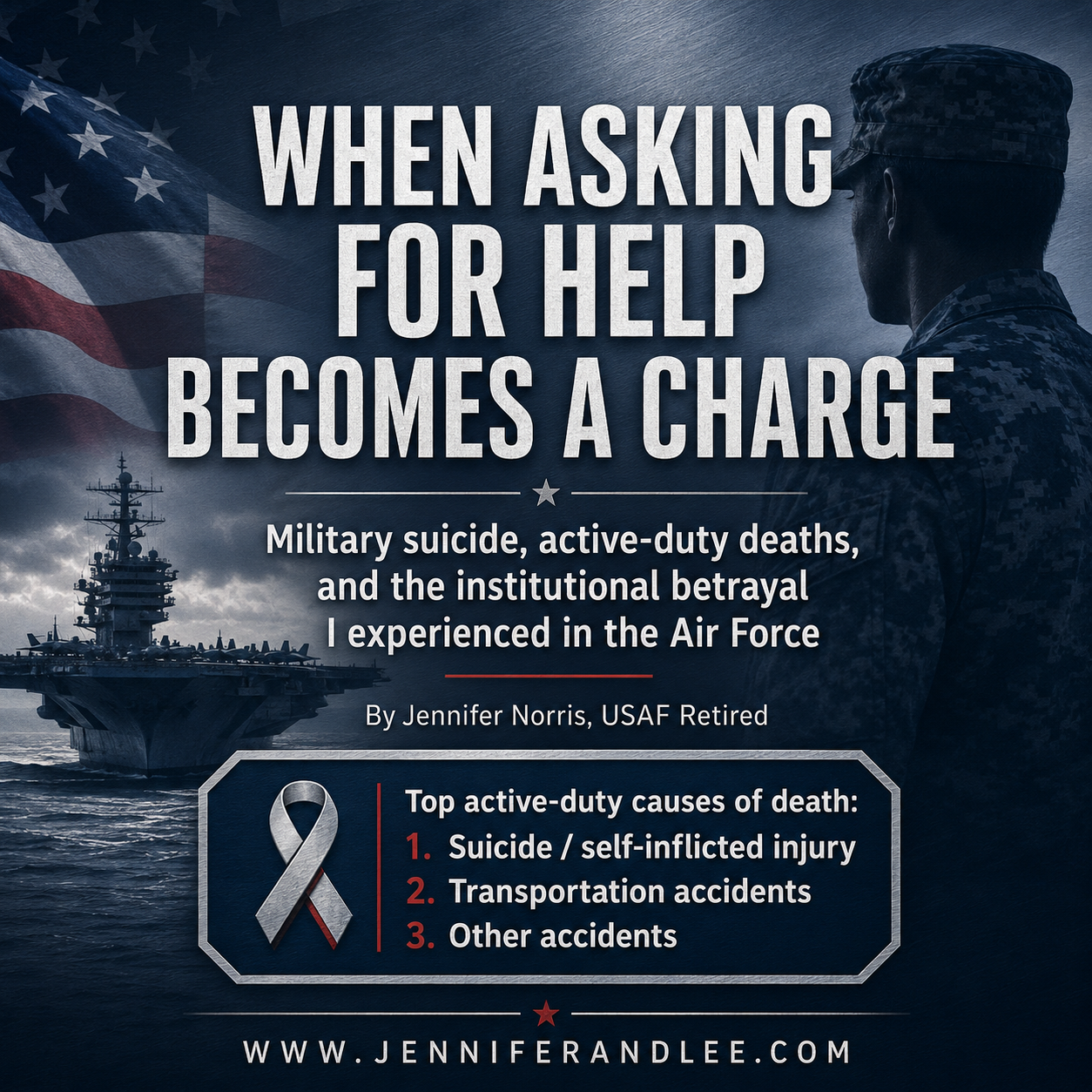
When I read that a 19-year-old sailor aboard the USS Abraham Lincoln reportedly survived a suicide attempt and was then accused of malingering and being absent without leave, I felt something painfully familiar. Not because my story is identical to his. It isn’t. But I recognize the system.
I recognize what can happen when a service member becomes overwhelmed, traumatized, sick, frightened, or psychologically injured—and the institution begins looking at that person as a disciplinary problem instead of asking what happened to them.
I spent almost 15 years serving in Air Force combat communications and civil engineering. I was a satellite communications technician and a readiness troop. I trained Airmen, led people, supported missions after 9/11, and took enormous pride in what I did.
I also learned what can happen when the military institution you depend on for your livelihood, health care, safety, career and future becomes another source of trauma. That is why the story coming from the USS Abraham Lincoln deserves much more attention than one sailor’s disciplinary case. It raises a larger question:
What happens when a military member asks for help, reaches a breaking point anyway, and the institution responds with punishment?
A 19-Year-Old Sailor Reached a Breaking Point
According to recent reporting and the sailor’s wife, the 19-year-old sailor went overboard from the USS Abraham Lincoln on August 3, 2026, during what she described as a suicide attempt. He survived.
Charging documents reviewed by reporters subsequently accused him of violating Article 83 of the Uniform Code of Military Justice for malingering and Article 86 for absence without leave. The Article 83 allegation reportedly rests on the theory that he intentionally injured himself to avoid duty. He is reportedly facing nonjudicial punishment rather than a court-martial.
Those are allegations, and the disciplinary process should determine what the evidence actually establishes. But there is another part of the story that cannot be ignored. His wife says he had already been struggling psychologically and had sought assistance before reaching that crisis point.
Meanwhile, the approximately 5,000 sailors and Marines aboard the Lincoln have endured an extraordinarily long deployment. Family members and sailors have described long workdays, limited time off, disrupted mail, supply problems and months without the regular port calls that normally provide crews opportunities for rest and recovery.
Families raised concerns about mental health and self-harm directly with Navy leadership. The Navy subsequently announced that additional mental-health support was being sent to the carrier. The Lincoln has spent more than 250 consecutive days at sea during this deployment. Whatever ultimately happens in this individual sailor’s disciplinary proceeding, we should be asking a much bigger question:
How does someone become so psychologically overwhelmed that death appears to be an escape—and what happened before they reached that point?
Suicide Is Already the Leading Cause of Death Among U.S. Service Members
That question becomes much harder to dismiss when you look at the military’s own statistics. In March 2026, the Armed Forces Health Surveillance Division published its most comprehensive military mortality analysis in more than a decade.
For active-component service members studied from 2010 through 2020:
- Suicide and self-inflicted injury was the leading cause of death: 3,485 deaths.
- Transportation accidents were second: 2,216 deaths.
- Other accidents and adverse effects were third: 1,348 deaths.
Suicide accounted for approximately one-third of service-member deaths across the overall population studied, and the military suicide mortality rate increased substantially during the surveillance period. Suicide remained the leading cause of death in 2020. This is not an abstract public-health issue.
These are our Airmen. Our sailors. Our soldiers. Our Marines. Our families.
And the newer numbers are no less disturbing.
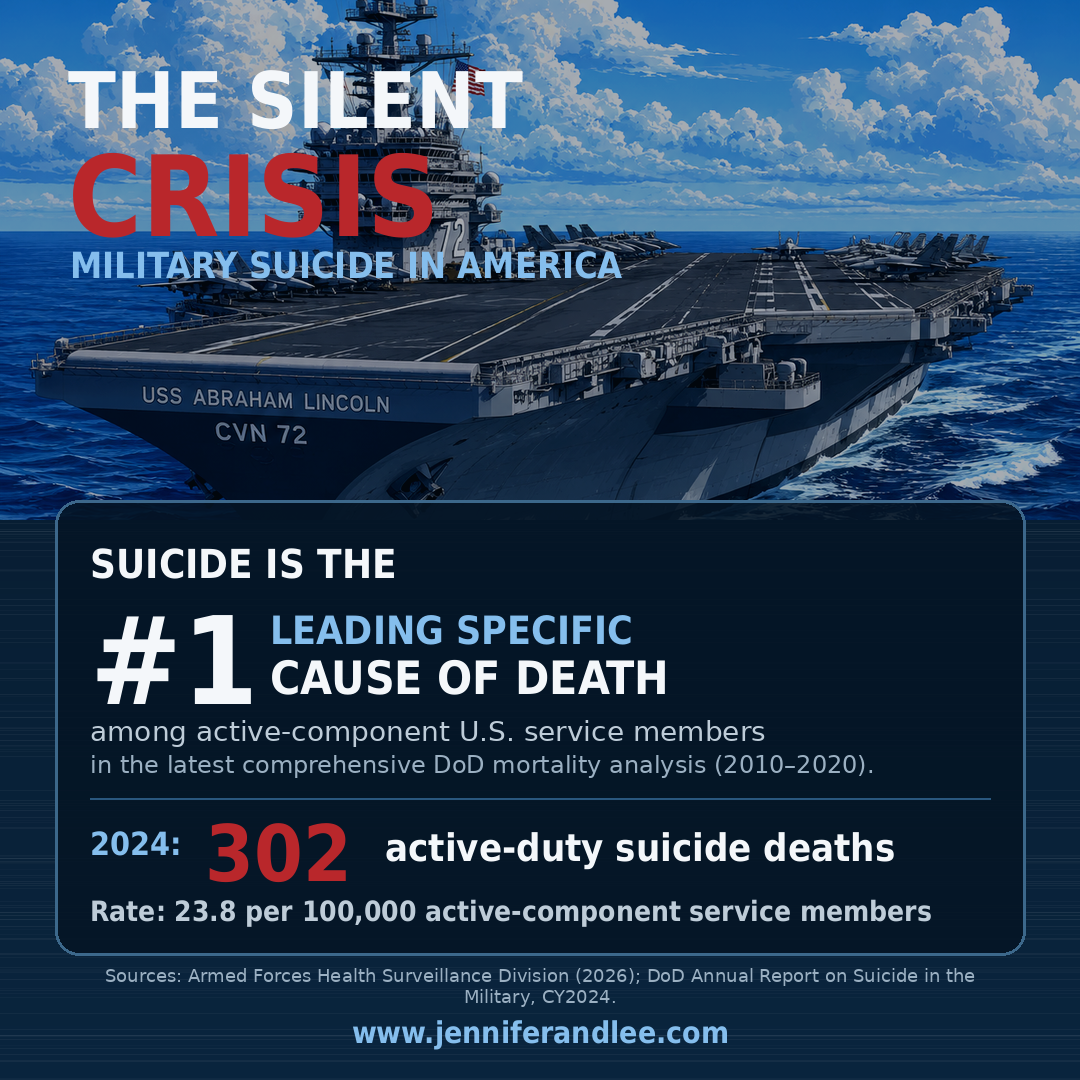
The Department’s Calendar Year 2024 Annual Report on Suicide in the Military documented 302 suicide deaths among active-component service members, producing a rate of 23.8 per 100,000.
The age statistics should stop us in our tracks.
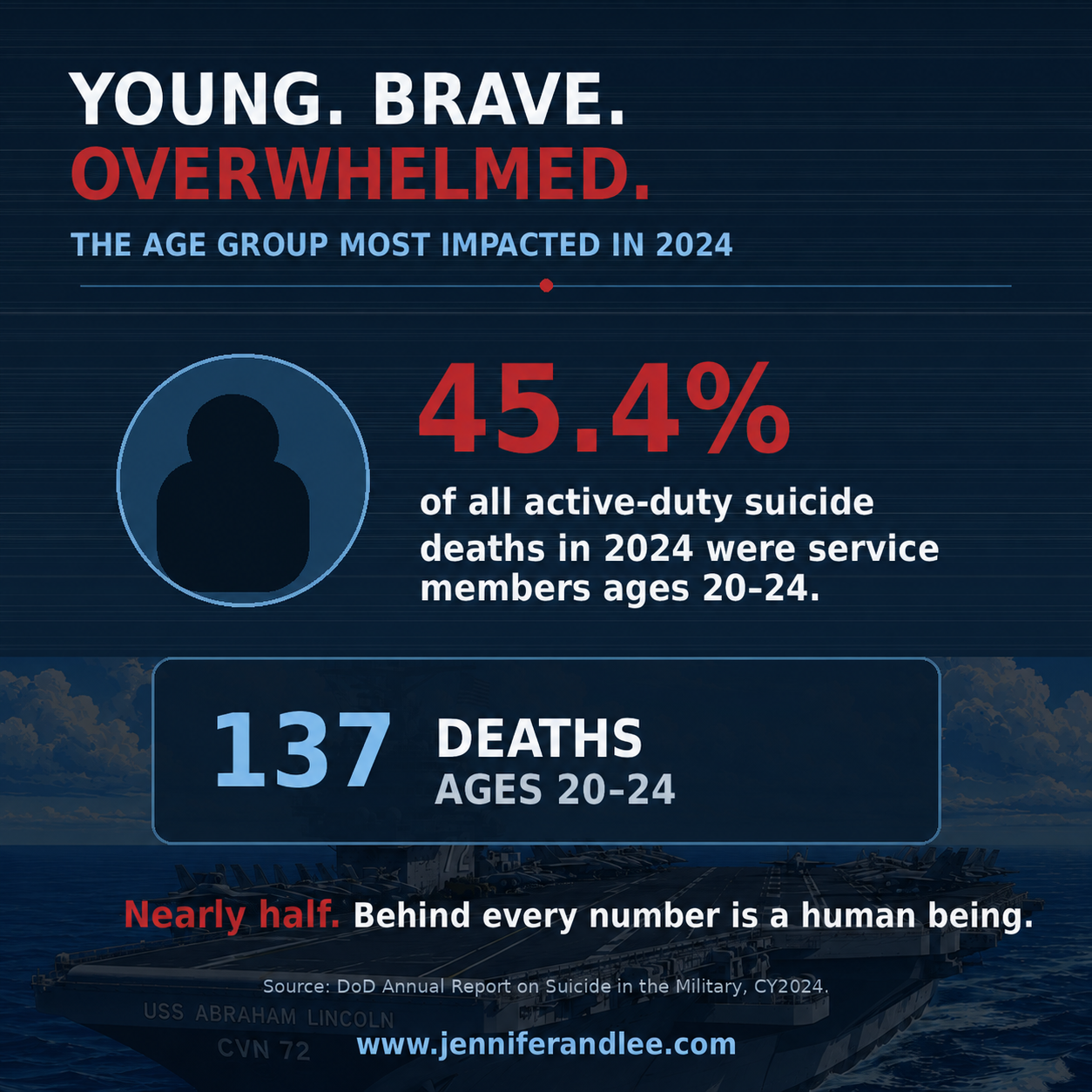
Of those 302 active-component service members who died by suicide in 2024, 137 were between the ages of 20 and 24. That represents 45.4 percent of all active-component suicide deaths that year.
The sailor aboard the USS Abraham Lincoln is just 19.
The Military’s Own Data Point Toward Workplace Stress
The Department of Defense also knows that suicide does not occur in a vacuum.
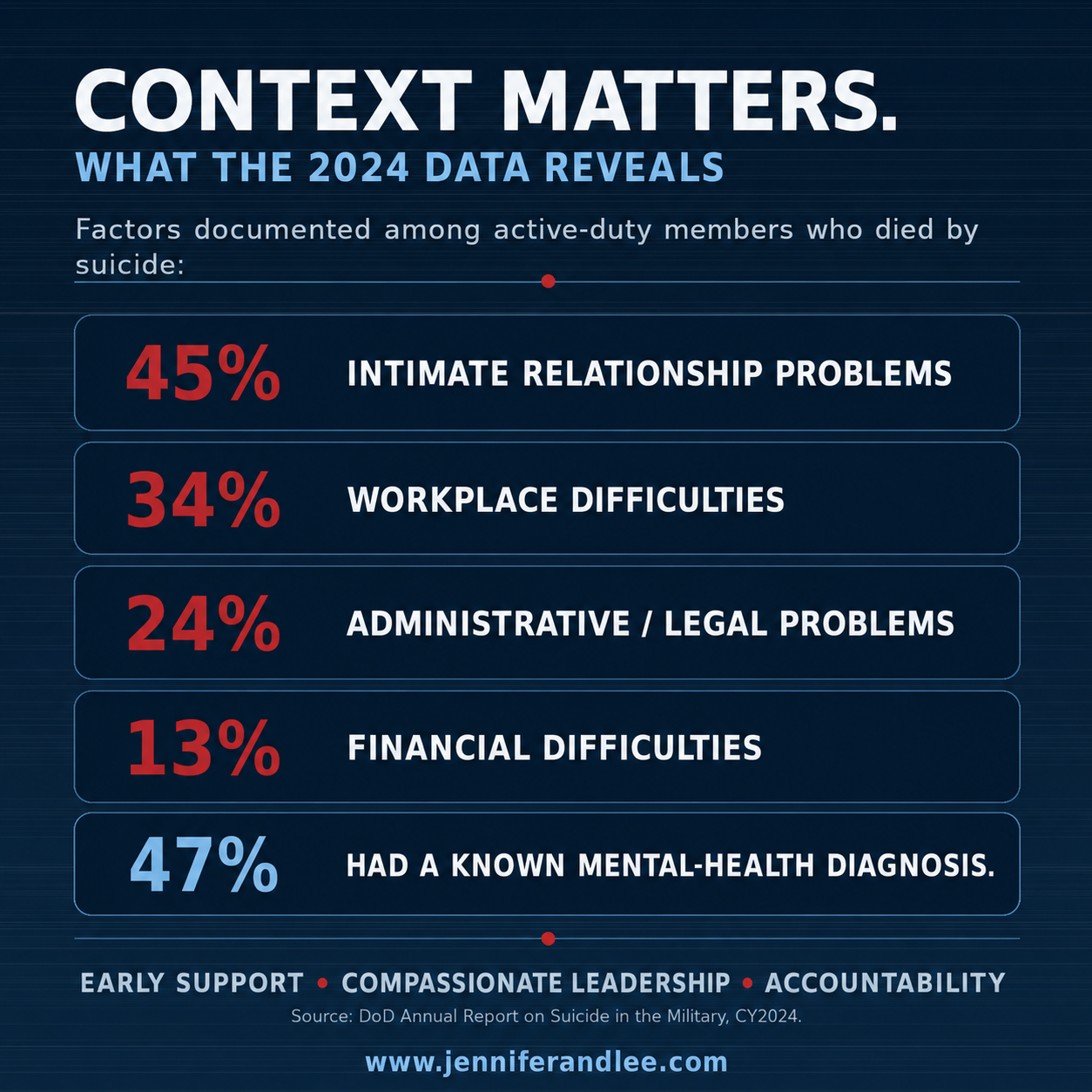
Among active-component service members who died by suicide in 2024 and for whom contextual information was known:
- 45 percent had intimate relationship problems
- 34 percent had workplace difficulties
- 24 percent had administrative or legal problems
- 13 percent had financial difficulties
Nearly half had a known mental-health diagnosis.
None of these statistics means that a workplace problem, disciplinary proceeding, abusive leader, relationship crisis or single traumatic experience “causes” an individual suicide. Human beings are more complicated than that. But the military’s own researchers are telling us that the environments surrounding service members matter.
A 2025 Military Health System study examining active-component service members found significant associations between suicidal ideation or attempts and a range of non-medical stressors.
Among the strongest associations were factors involving employment and physical, sexual and psychological abuse. Researchers concluded that understanding these broader non-medical factors is important to identifying vulnerable service members and preventing suicide-related behavior. That finding matters deeply to me.
Because I know what it feels like when the workplace itself becomes part of the trauma.
I Learned What Happens When the Institution Becomes Part of the Injury
I served proudly in the United States Air Force for 15 years.
But my military experience also included sexual trauma, retaliation, toxic leadership, serious illness and a growing realization that asking the institution for protection did not necessarily mean I would receive it.
After experiencing sexual assault and later reporting misconduct involving men in my military chain of command and environment, I experienced consequences that changed the trajectory of my life. What hurt wasn’t simply what individual people did. It was what happened when I turned toward systems that were supposed to protect me. Instead of safety, I experienced retaliation.
Instead of accountability, I experienced pressure. Instead of feeling protected by the chain of command, I eventually felt trapped inside it. That distinction is important. Trauma caused by one person is devastating. Trauma that becomes reinforced by an institution capable of protecting you—but unwilling or unable to do so—creates another wound entirely. There is a name for that.
Institutional betrayal.
Even Seeking Mental-Health Treatment Could Feel Dangerous
After my father died, I was struggling. I sought psychiatric treatment and was prescribed antidepressants. Instead of experiencing mental-health care simply as medical care, I remember leadership referring to antidepressants as “happy pills” and warning me about possible consequences for my security clearance.
Think about the message that sends to a service member.
We publicly tell military personnel:
Ask for help.
But historically, many service members have also absorbed another message:
Be careful what you disclose. It could affect your job, clearance, reputation or career.
Those competing messages can be deadly. I became frightened enough about the career consequences that I stopped medication against medical advice. Years later, when my psychological condition deteriorated even further, I was no longer dealing with one isolated trauma. I was carrying layers of it.
Military sexual trauma. Grief. Workplace stress. Institutional betrayal. Physical illness. And eventually the consequences of toxic exposures and neurological injury that I would spend years trying to understand.
I Was Sick While the System Kept Demanding More
During the Stop Loss period following 9/11, while serving at what is now Joint Base Cape Cod, my health deteriorated dramatically. I experienced severe headaches, vomiting, exhaustion and other symptoms.
Years later, testing would identify elevated levels of lead, antimony and uranium, along with brain injury and other health problems. I have always been careful about this part of my story because multiple illnesses and traumatic experiences overlapped. There wasn’t one simple explanation for everything happening to my body and brain.
But at the time, I knew one thing:
I was sick.
And the machine kept moving.
That’s one of the most difficult things civilians sometimes struggle to understand about military life. You cannot simply walk away from your employer. Your employer controls enormous parts of your existence. Your job. Your orders. Your medical system. Your housing in many circumstances. Your security clearance. Your ability to leave. Your professional reputation.
And through the Uniform Code of Military Justice, the military has disciplinary authority that no civilian employer possesses.
That tremendous authority makes good leadership extraordinarily important. It also makes abusive, negligent or psychologically unsafe leadership extraordinarily dangerous.
By 2010, I Was Falling Apart
Eventually my nervous system could not carry everything anymore. By 2010, after repeated PTSD crises and psychological collapse, I was trying to explain to leadership just how badly I was struggling.
Police had already become involved in crises multiple times. I was hospitalized while people with authority were kicking me while I was down. Even going to the base could trigger panic.
My husband Lee and I eventually sought help outside the immediate system, including assistance from Senator Olympia Snowe’s office. I didn’t need another lecture about resilience. I didn’t need someone deciding I was inconvenient. I needed people with authority to understand that years of trauma had accumulated inside a human nervous system.
That experience permanently changed how I look at stories involving military suicide.
Before Calling Someone a Discipline Problem, Ask What Happened
This is why the USS Abraham Lincoln case bothers me. Again, I do not know this young sailor. I don’t know everything his command knows. I haven’t reviewed his complete medical or disciplinary record. And allegations should not be presented as established facts before the process is complete.
But I know the questions I want answered.
Did he ask for help?
Who knew he was deteriorating?
What happened when he disclosed distress?
Was appropriate mental-health intervention available when he needed it?
What environmental and occupational stressors were present?
And after he survived a life-threatening mental-health crisis, was punishment truly the most appropriate response?
Those are not anti-military questions. They are leadership questions. They are readiness questions. They are suicide-prevention questions. And they are questions every commander entrusted with human lives should be willing to answer.
Gang Bullying Behaviors: Seven Patterns That Reveal How Group Abuse Works (August 21, 2026)
Discipline and Compassion Are Not Opposites
The military obviously requires discipline. People operate aircraft, weapons, nuclear systems, ships, communications networks and equipment capable of killing people if someone fails to perform properly. Standards matter. Accountability matters. Good order and discipline matter.
But none of those principles require leaders to abandon common sense or humanity. A mental-health crisis has to be evaluated as a mental-health crisis. If evidence ultimately establishes intentional misconduct unrelated to a genuine psychiatric emergency, military law contains procedures for addressing misconduct.
But when a service member is genuinely suicidal, the first institutional response should be preserving life, understanding what led to the crisis and preventing it from happening again.
Punishment cannot substitute for prevention.
We Cannot Tell Troops to Seek Help and Then Teach Them That Help-Seeking Is Dangerous
This contradiction has existed for generations.
“Ask for help.” But don’t appear weak.
“Take care of your mental health.” But don’t let it affect the mission.
“Tell someone you’re struggling.” But don’t become a problem for leadership.
“Report abuse.” But be prepared for what may happen if the person you report is protected, popular or useful to the institution.
I eventually became an advocate for military sexual-assault survivors because I knew firsthand how devastating that contradiction could become. In January 2013, I testified before members of Congress about what I had come to view as a culture that punished victims within a broken military justice system.
I wasn’t saying that every commander was abusive. They aren’t.
I wasn’t saying every military leader fails their troops. They don’t.
I served with some extraordinary people. But a system should not be judged only by how it treats its strongest members when everything is going well.
We should also judge it by what happens when one of its people becomes injured, traumatized, sick, overwhelmed or afraid.
The Statistics Are Telling Us Something
Suicide is the leading specific cause of death among U.S. service members in the latest comprehensive military mortality analysis. The Department documented 302 active-component suicide deaths in 2024. Nearly half involved service members ages 20 through 24.
Workplace difficulties appeared in the documented histories of roughly one-third of active-component service members who died by suicide in 2024. Military researchers have also identified strong associations between suicidal thoughts or attempts and non-medical problems involving employment, social conditions and physical, sexual or psychological abuse.
Those numbers should lead to introspection, not defensiveness.
Because sometimes the question isn’t:
What’s wrong with this service member?
Sometimes the better question is:
What happened to this service member—and what was happening around them?
The Masks Trauma Made Us Wear: How Treatment Helped Us Find Our Confidence Again (August 8, 2026)
I Survived, and Eventually I Told the Story
I survived my Air Force experience. I survived the trauma that followed. I survived years when my mind and body were telling me that something was terribly wrong while institutions repeatedly failed to provide answers. Eventually, I began telling the truth publicly.
That is one reason stories like the USS Abraham Lincoln matter so much to me.
A 19-year-old should not have to reach the edge of life before everyone begins examining the environment surrounding him. Neither should anyone else wearing the uniform.
The military recruits young Americans and asks them to surrender freedoms civilians take for granted. It asks them to endure separation, exhaustion, danger, uncertainty and extraordinary responsibility.
In return, military leadership assumes an extraordinary responsibility of its own:
Take care of the human beings entrusted to you.
Not only when they’re performing. Not only when they’re deployable. Not only when they’re easy to manage.
Take care of them when they’re injured. Take care of them when they’re traumatized. Take care of them when they’re struggling.
And when someone reaches a breaking point, investigate the environment surrounding that crisis with the same seriousness used to investigate the person. Because if suicide remains one of the greatest threats to the lives of America’s service members, we cannot afford a military culture in which asking for help feels more dangerous than remaining silent.
That lesson should not require another death.
Sources
Armed Forces Health Surveillance Division — “Mortality Rates Among U.S. Service Members, 2010–2020,” Medical Surveillance Monthly Report, March 2026. The study found suicide and self-inflicted injury was the leading cause of death among U.S. service members during the surveillance period.
Department of Defense — Calendar Year 2024 Annual Report on Suicide in the Military. The Department reported 302 active-component suicide deaths in 2024 and a suicide rate of 23.8 per 100,000.
Military Health System / Psychological Health Center of Excellence — Suicide Risk. Provides 2024 contextual data regarding relationship, workplace, administrative/legal and financial difficulties documented among active-component members who died by suicide.
Armed Forces Health Surveillance Division — “Non-Medical Risk Factors Influencing Health and Association with Suicidal Ideation or Attempt, U.S. Active Component, 2018–2022,” March 2025. Researchers found significant associations between suicidal ideation or attempts and several non-medical factors, including employment and physical, sexual and psychological abuse.
Stars and Stripes — “USS Abraham Lincoln Families Press Navy Leaders Over Sailors’ Mental Health,” August 11, 2026. Reports concerns raised by sailors and family members about mental health, self-harm, working conditions and the carrier’s prolonged deployment.
Task & Purpose — “Navy Sending More Mental Health Help to the USS Abraham Lincoln Crew,” August 14, 2026. Reports the Navy’s response and deployment of additional mental-health resources.
Reporting on the sailor’s disciplinary case, August 2026. Charging documents reportedly accuse the sailor of malingering under Article 83 and absence without leave under Article 86 following an incident his wife characterized as a suicide attempt.
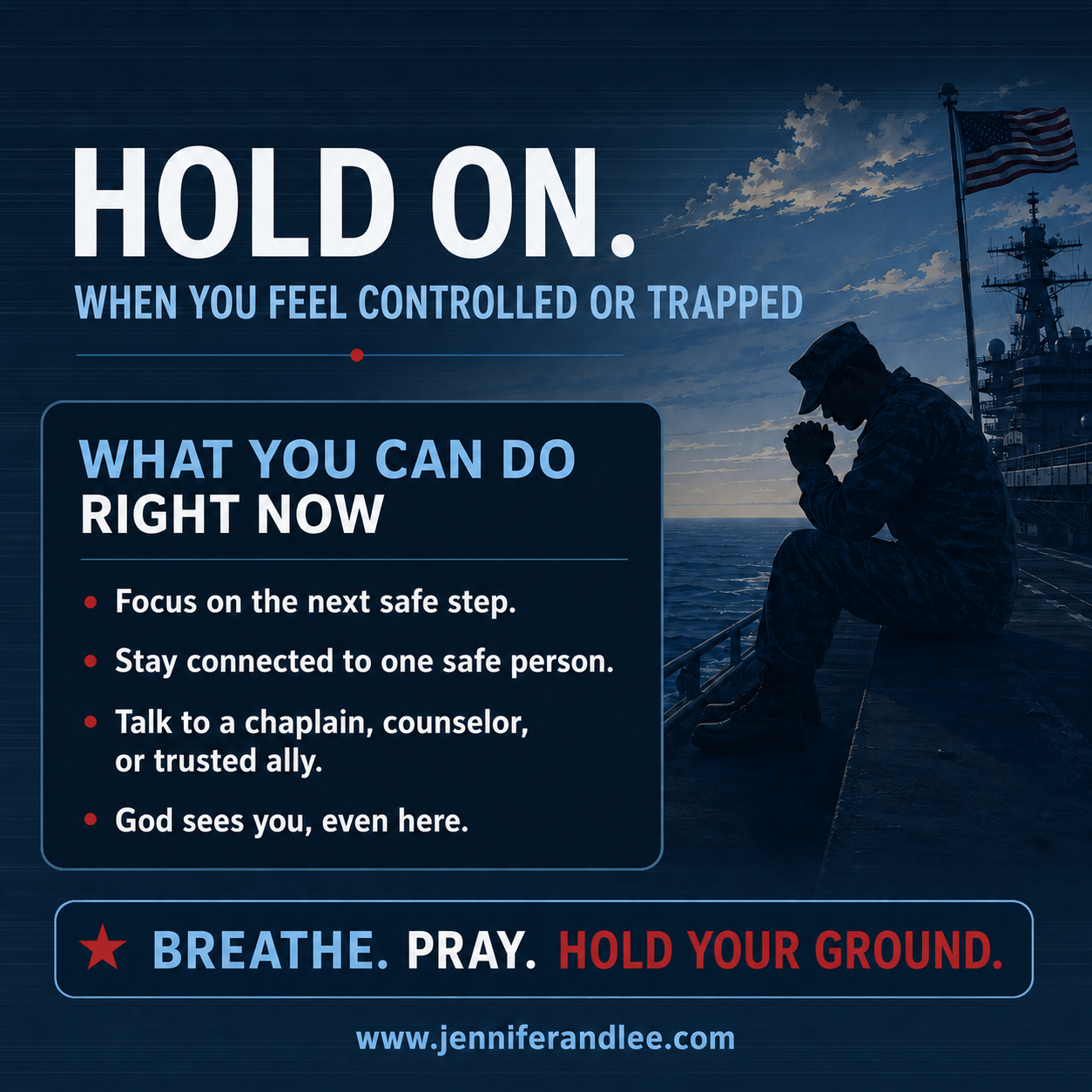
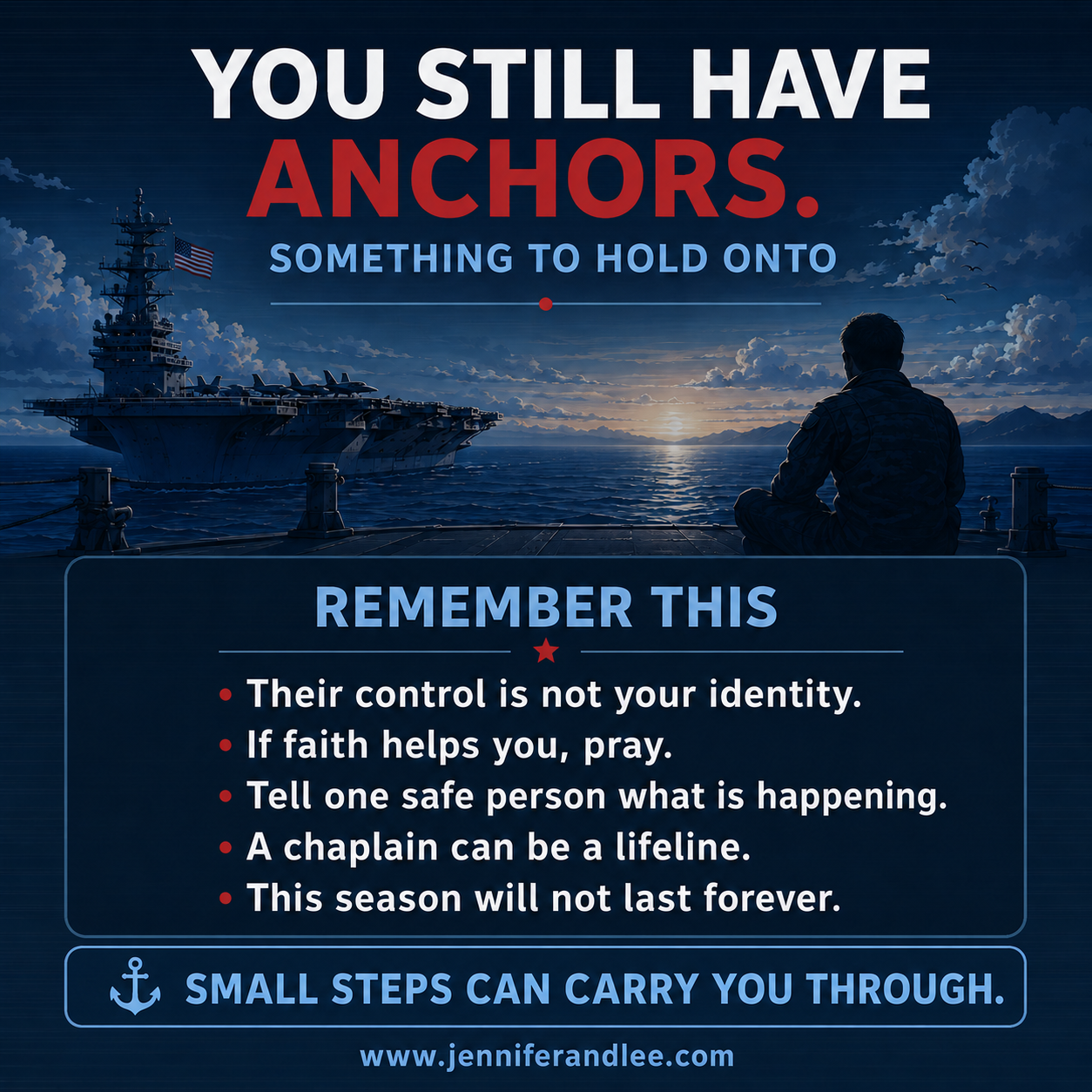
Crisis Resources: Service members, veterans and their loved ones who are in crisis can call 988 and press 1 to reach the Veterans/Military Crisis Line. The Defense Suicide Prevention Office also provides military-specific suicide-prevention resources.


One thought on “When Asking for Help Becomes a Charge: The USS Abraham Lincoln, Military Suicide, and What Institutional Betrayal Looks Like (August 31, 2026)”