
Gang bullying is rarely just one person behaving badly. It is a group dynamic in which multiple people participate in exclusion, humiliation, rumor-spreading, intimidation, or other forms of social aggression against a targeted person.
What makes it especially damaging is the way the individual behaviors reinforce one another. One person starts the story. Another repeats it. Someone else excludes the target. Others watch silently, laugh, monitor, or join the pile-on. Before long, the group has created its own version of reality—and the person being targeted is expected to defend themselves against an entire social system.
I can relate to this pattern personally. In my own experience, I became concerned that people targeting me were trying to create circumstances that could eventually be turned into a “he said, she said” allegation against me. Whether every person involved understood the larger picture or not, I recognized enough red flags that I changed how I interacted with them.
I kept my distance. I avoided private situations. I kept interactions public whenever possible.
That mattered.
When someone cannot manufacture the circumstances they originally wanted, they may change tactics. In my experience, that appears to be exactly what happened. When the original path did not work, the behavior shifted into what I think of as Plan B: narrative manipulation, group pressure, reputation attacks, exclusion, and other tactics designed to achieve socially what could not be accomplished another way.
Understanding these patterns helped me finally make sense of what I was seeing.
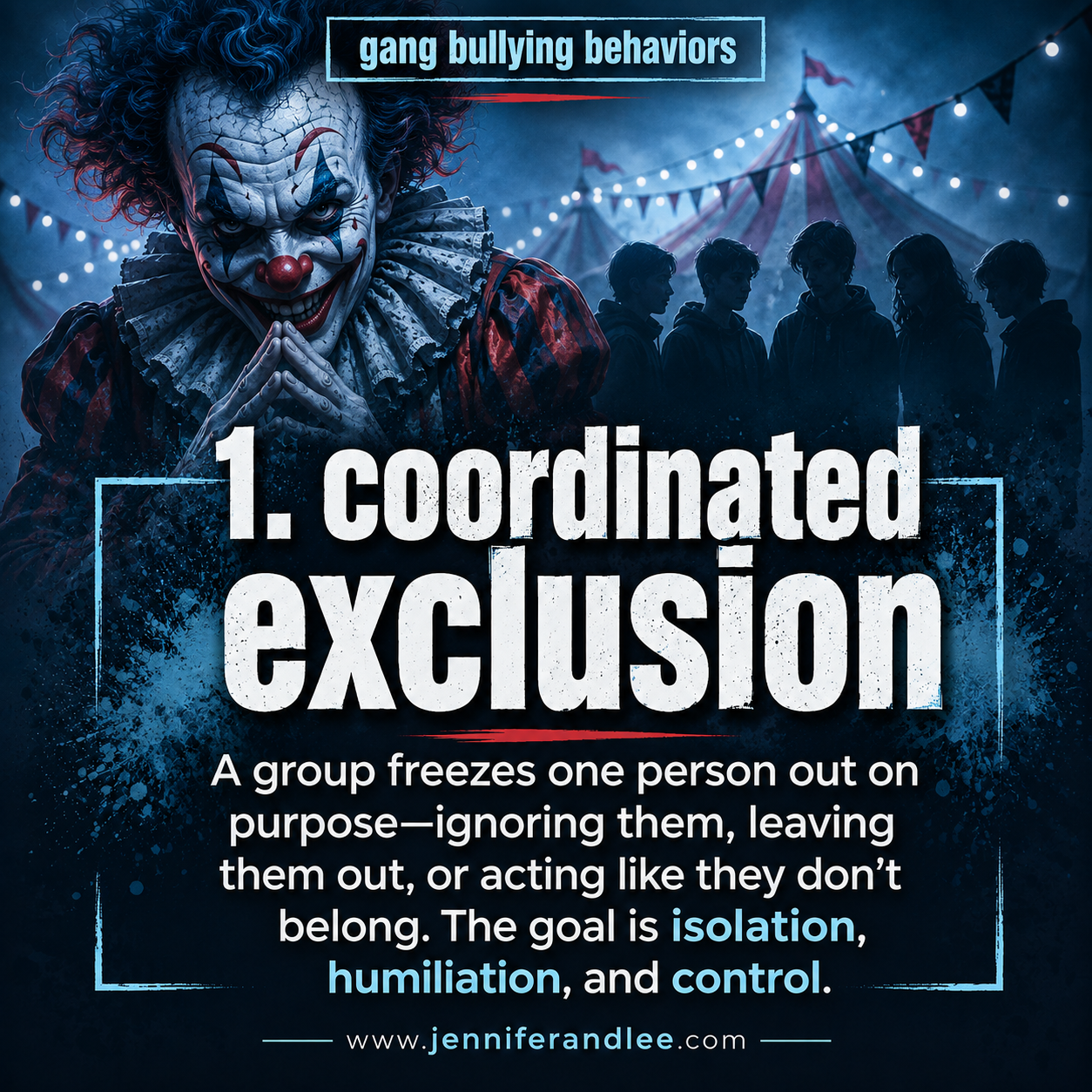
1. Coordinated Exclusion
Coordinated exclusion happens when a person is deliberately pushed outside the group.
It can look deceptively ordinary: invitations stop coming, conversations suddenly end when the person enters the room, messages are ignored, meetings happen without them, or everyone somehow “forgets” to include the same individual.
One isolated incident may mean nothing. A repeated pattern is different.
Exclusion communicates something without anybody having to say it directly: You are not one of us.
It can also serve another purpose. Once someone is isolated, there are fewer witnesses to how they are treated, fewer people available to challenge the dominant narrative, and fewer opportunities for the target to compare notes with others.
Isolation makes social control easier.
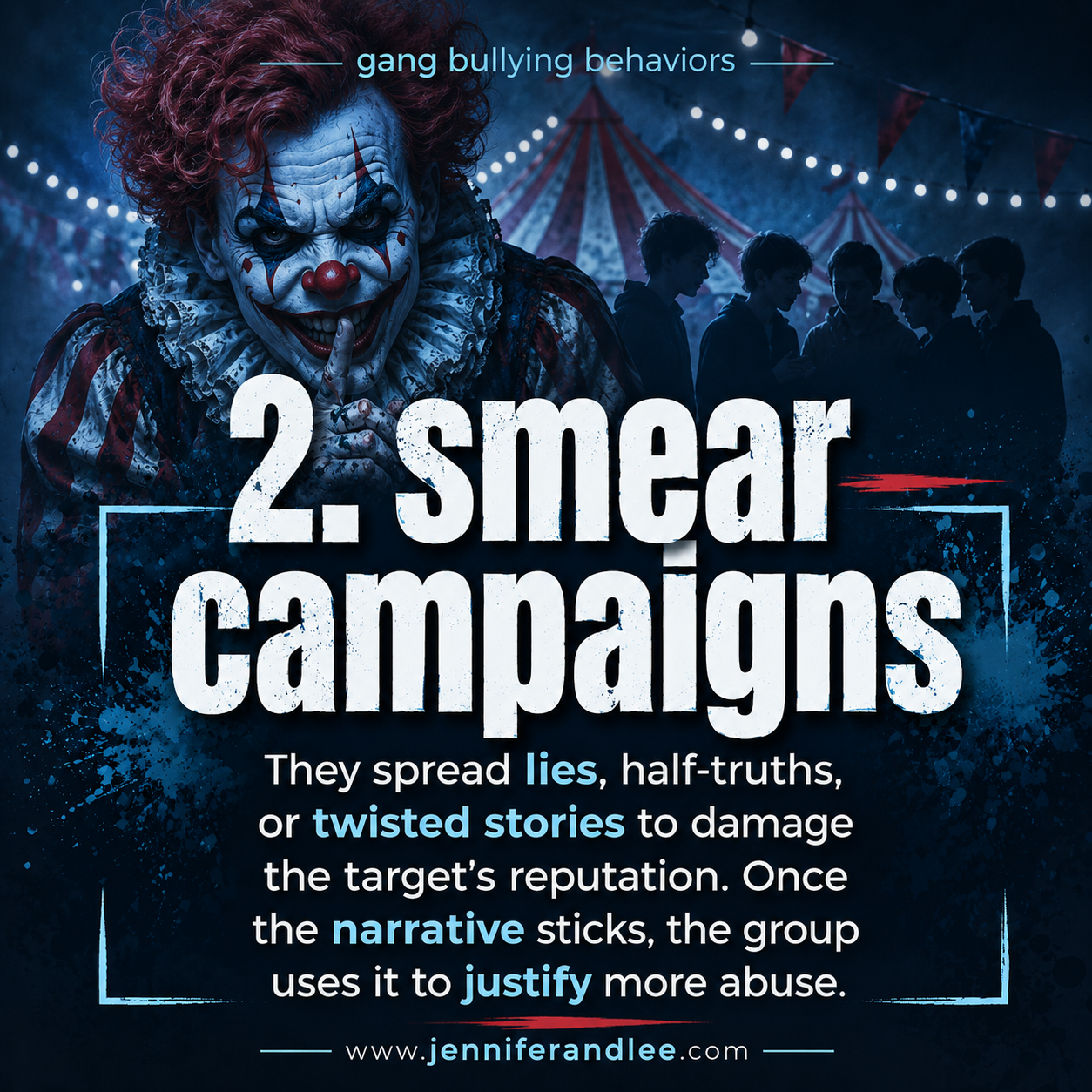
2. Smear Campaigns
A smear campaign is the systematic destruction of someone’s reputation through gossip, distorted stories, selective facts, insinuations, or outright lies.
The most effective smear campaigns usually contain enough truth to sound believable.
A real disagreement gets exaggerated.
A private conversation loses its context.
A normal emotional reaction becomes evidence that someone is “unstable.”
A boundary becomes “hostility.”
Defending yourself becomes “bullying.”
Eventually, people who never witnessed the original events may begin treating the target according to stories they heard from somebody else.
That is what makes smear campaigns so powerful: the accusation travels faster than the evidence.
Once a group accepts the narrative, every future interaction can be interpreted through it.
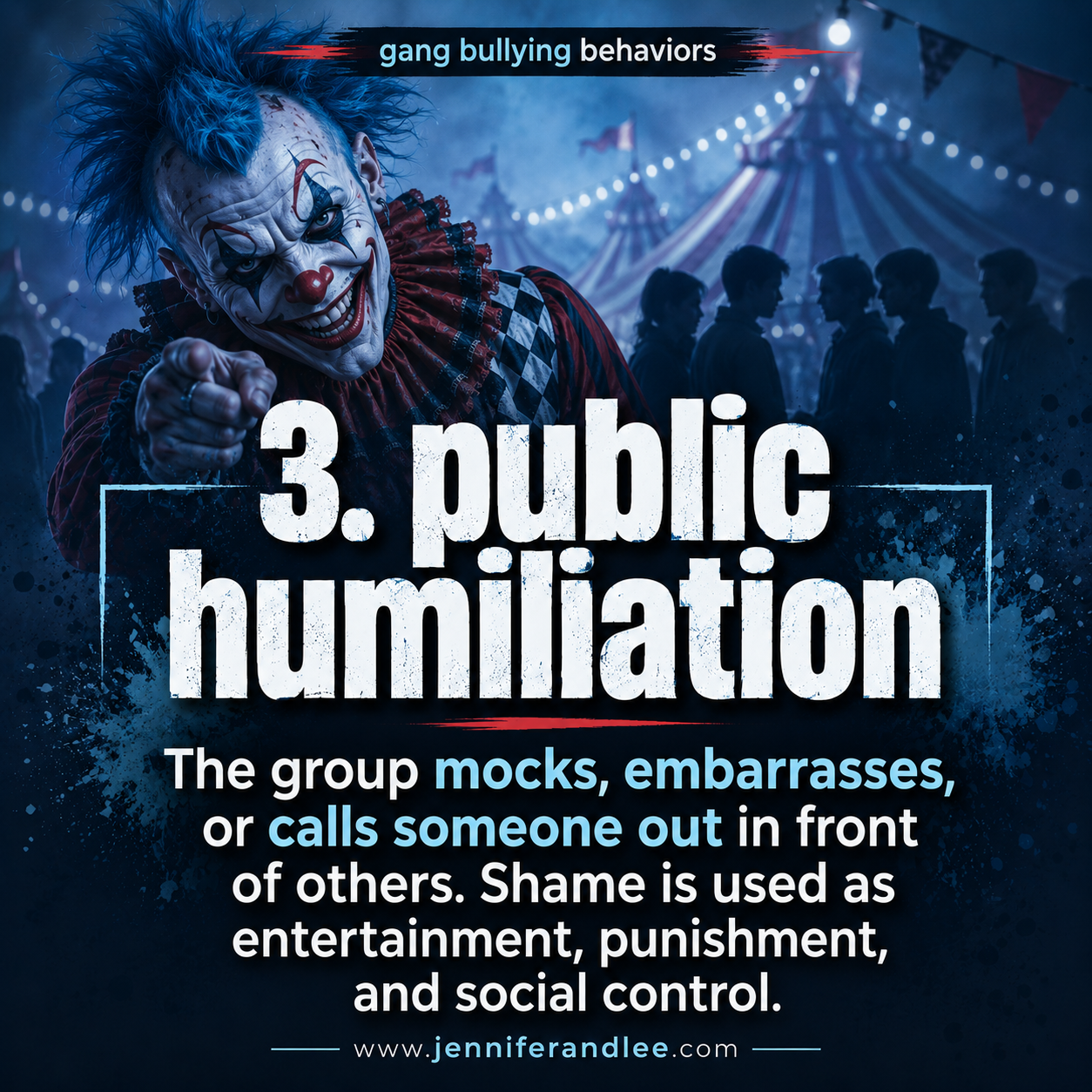
3. Public Humiliation
Public humiliation turns another person’s discomfort into entertainment, punishment, or a warning to others.
This may include mocking someone in front of coworkers, making jokes at their expense, revealing private information, publicly correcting them unnecessarily, encouraging others to laugh, or deliberately putting them in situations where they are likely to feel embarrassed.
There is often a social message behind the humiliation.
The target is being shown their position in the hierarchy—and everyone watching is learning what happens to people who challenge the group.
That is why humiliation can become such an effective conformity tool.
People do not have to agree with the bully.
They simply have to become afraid of becoming the next target.
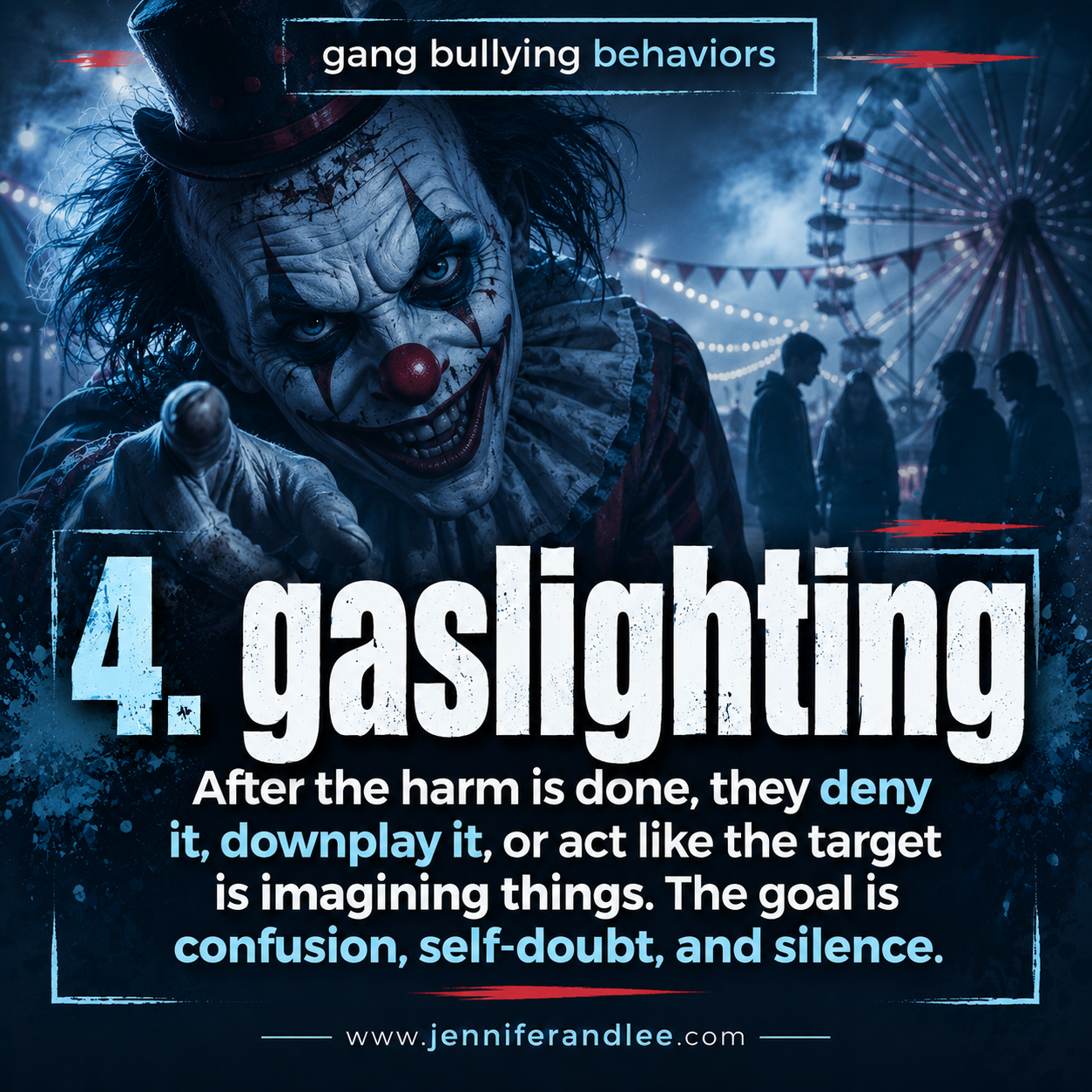
4. Gaslighting and Reality Manipulation
Gaslighting occurs when someone repeatedly denies, minimizes, or rewrites events in ways that cause another person to question their perception of what happened.
In group bullying, the effect can be amplified because multiple people repeat the same narrative.
Suddenly the target hears:
“That never happened.”
“You misunderstood.”
“Nobody else has a problem with them.”
“You’re imagining things.”
“You’re being too sensitive.”
When several people repeat the same version of events, it can become psychologically overwhelming—even when the number of people agreeing has nothing to do with whether their story is accurate.
Consensus is not evidence.
Groups can be wrong together.
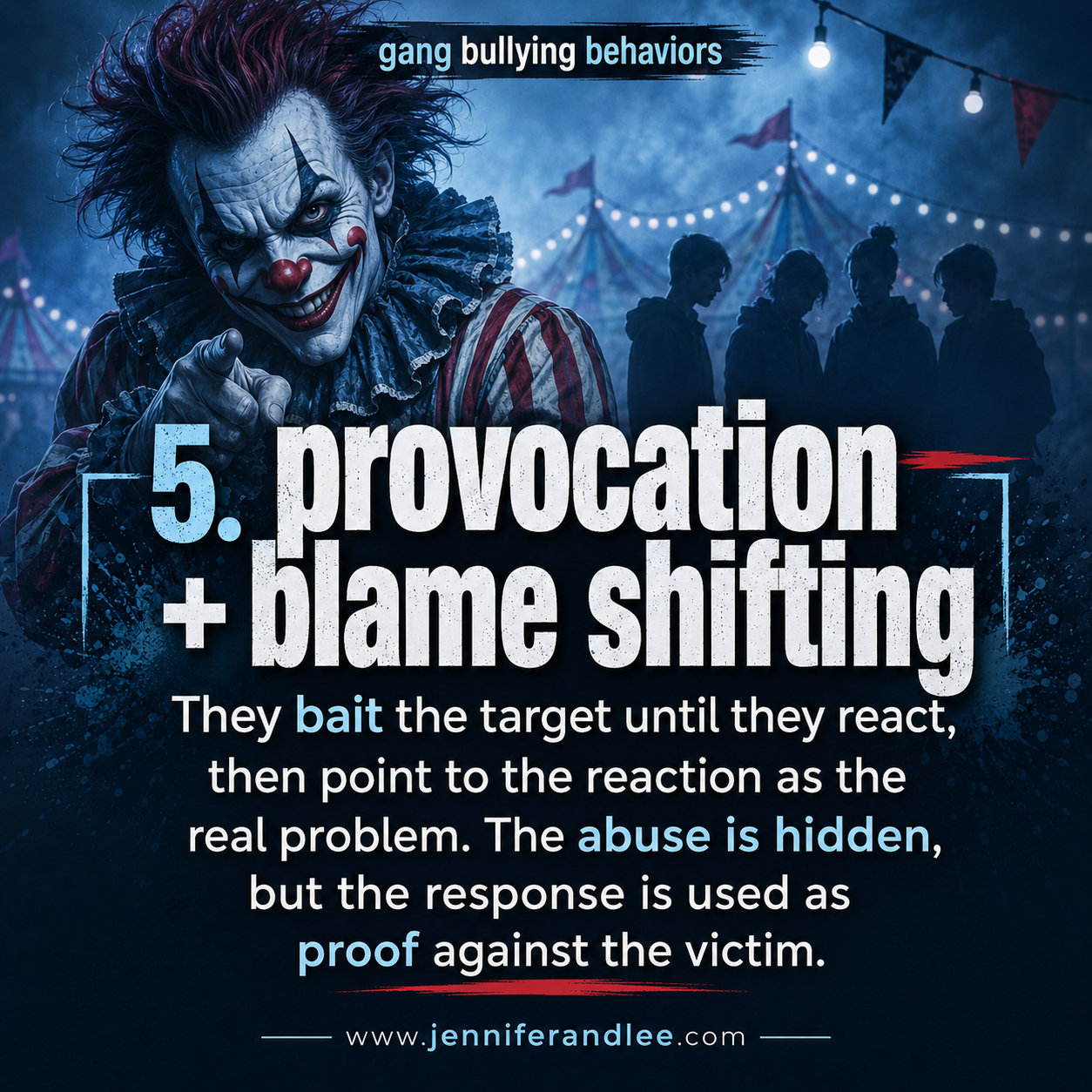
5. Provocation and Blame Shifting
One of the most destructive patterns involves provoking someone repeatedly and then using their eventual reaction against them.
The harassment may happen quietly for weeks or months.
Then one day the target gets angry, sends an emotional message, raises their voice, or finally confronts somebody.
Suddenly the entire story begins with that reaction.
Everything that happened beforehand disappears.
The conversation becomes:
“Look how angry she is.”
“See? We told you she was the problem.”
This is sometimes called reaction abuse or reactive behavior, although those terms should be used carefully because every situation has its own facts.
The basic manipulation is simple:
Create the reaction. Erase the provocation. Showcase the reaction.
That allows the people responsible for the original behavior to reposition themselves as the victims.
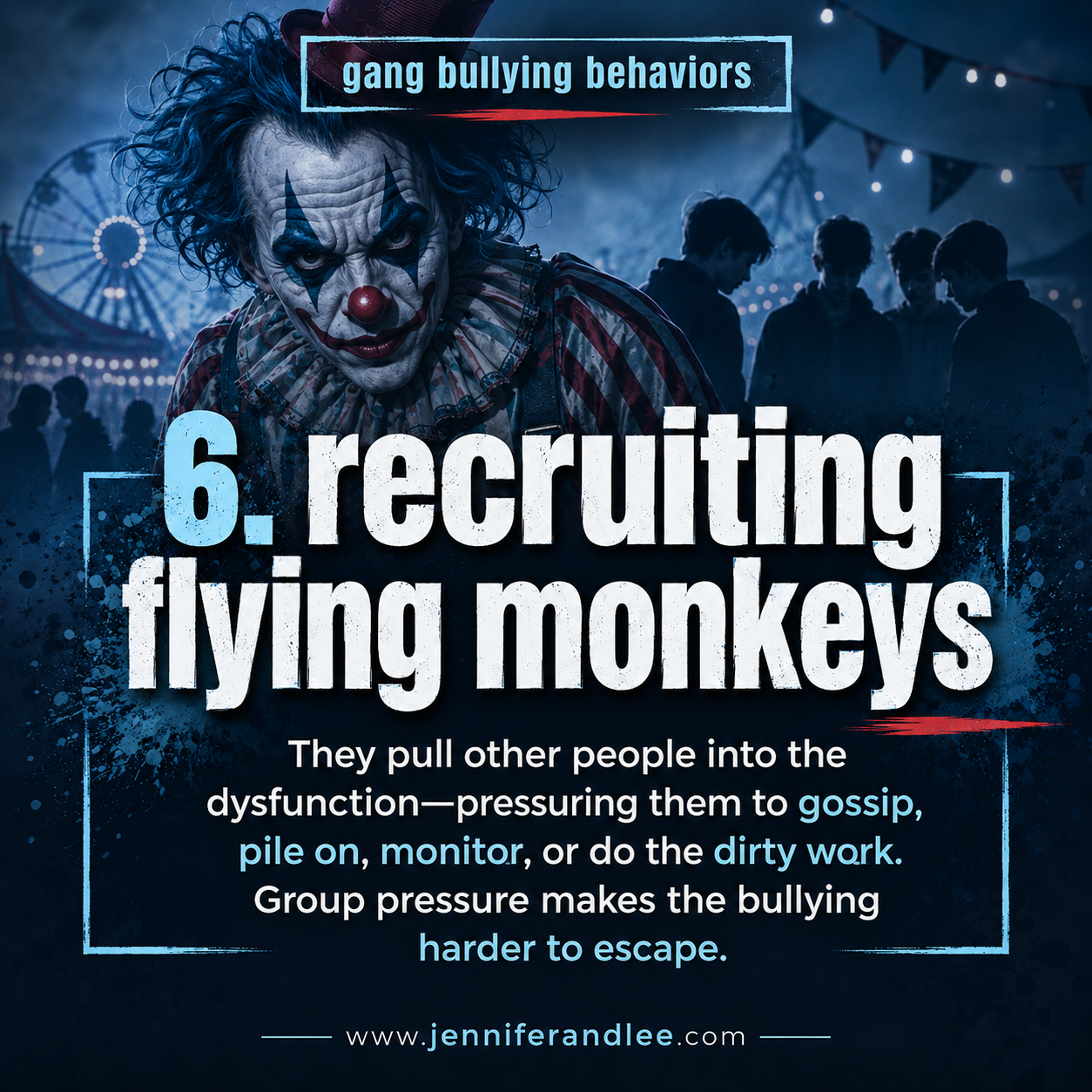
6. Recruiting Other People Into the Conflict
Group bullying survives through participation.
Sometimes the additional people are enthusiastic participants. Others may simply accept what they have been told. Some join because they want social approval, while others may fear becoming targets themselves.
These additional participants may gossip, monitor social media, pass along information, confront the target, repeat accusations, exclude them, or report back to the person driving the conflict.
They may not even realize how much they are contributing.
But collectively, the effect can become devastating.
The target is no longer dealing with one difficult person.
They are dealing with an ecosystem of reinforcement.

7. Intimidation, Monitoring, and Surveillance Behaviors
Another pattern involves making the target feel watched.
That may include repeatedly monitoring social media, appearing wherever the person goes, questioning others about them, collecting screenshots, tracking their activities through mutual acquaintances, or constantly commenting on things the target has done or said.
Not every instance of online viewing or unwanted contact constitutes stalking or surveillance in the legal sense. Context, frequency, intent, and jurisdiction matter.
But psychologically, persistent monitoring can still send a powerful message:
We are watching you.
That can cause people to change routines, withdraw socially, stop speaking openly, or constantly anticipate the next attack.
Fear becomes another form of control.

The Trip That Changed Everything: Jennifer and Onyx Fly to Albuquerque, New Mexico (June 3, 2013)
Why Keeping Distance Can Matter
One of the most important things I learned was that I did not need to keep giving unsafe people access to me.
When I became concerned about what was happening around me, I created distance.
I avoided unnecessary private interactions. I preferred public spaces. I limited opportunities for ambiguous encounters that could later become competing versions of what occurred.
In retrospect, I believe those boundaries protected me.
If someone is attempting to provoke conflict, manufacture ambiguity, or control the narrative, distance removes opportunities.
And when one strategy stops working, watching what happens next can reveal a great deal.
Sometimes the tactics change.
The exclusion increases.
The gossip intensifies.
The accusations become more dramatic.
More people suddenly become involved.
That shift itself can be revealing.
The Bigger Picture
Gang bullying works because responsibility becomes fragmented.
One person says, “I only repeated what I heard.”
Another says, “I just stopped talking to her.”
Someone else says, “I was only concerned.”
Another claims, “Everybody felt the same way.”
Individually, each behavior may appear minor.
Collectively, however, those behaviors can destroy relationships, reputations, careers, communities, and a person’s sense of safety.
That is why recognizing the pattern matters more than obsessing over any single incident.
When exclusion, humiliation, gossip, provocation, monitoring, gaslighting, and group recruitment repeatedly converge on the same person, we need to ask a more serious question:
Are these truly isolated conflicts—or is a group deliberately provoking, discrediting, and isolating someone to manufacture the very narrative it intends to use against them?
One incident may be a misunderstanding. A repeated pattern is something else. Protecting yourself begins with recognizing the difference.
Sources:
- “Bullying and the Peer Group: A Review” — Christina Salmivalli, Aggression and Violent Behavior (2010). This is particularly useful because it examines bullying as a group process, including how peers can reinforce, assist, witness, or defend against bullying. Bullying and the Peer Group: A Review
- “Bullying as a Group Process: Participant Roles and Their Relations to Social Status Within the Group” — Salmivalli et al., Aggressive Behavior (1996). Identifies distinct roles within group bullying, including the bully, assistants, reinforcers, defenders, outsiders, and the targeted person. Bullying as a Group Process
- “Participant Role Approach to School Bullying: Implications for Interventions” — Christina Salmivalli, Journal of Adolescence (1999). Explains how bullying can be enabled and maintained by a group, including people who reinforce the primary aggressor or remain passive. Participant Role Approach to School Bullying
- “Risk Factors for Workplace Bullying: A Systematic Review” — Feijó et al., International Journal of Environmental Research and Public Health (2019). Defines workplace bullying as repeated harassment, abuse, offenses, or social exclusion occurring within an unequal power relationship. It also examines organizational and leadership conditions associated with bullying. Risk Factors for Workplace Bullying: A Systematic Review
- “Consequences of Workplace Ostracism: A Meta-Analytic Review” — Frontiers in Psychology (2021). A meta-analysis of 95 independent samples involving more than 26,000 people examining the consequences of deliberate social exclusion and ostracism at work. Consequences of Workplace Ostracism: A Meta-Analytic Review
- “A Systematic Review of Negative Work Behavior: Toward an Integrated Definition” — Frontiers in Psychology(2021). Reviews research involving workplace bullying, mobbing, harassment, aggression, ostracism, incivility, victimization, social undermining, and related behaviors.A Systematic Review of Negative Work Behavior
- “Workplace Bullying and Mental Health: A Meta-Analysis on Cross-Sectional and Longitudinal Data” — Verkuil, Atasayi & Molendijk (2015). Reviews evidence connecting repeated workplace bullying with psychological distress and mental-health consequences over time. Workplace Bullying and Mental Health: A Meta-Analysis
- “The Sociology of Gaslighting” — Paige L. Sweet, American Sociological Review (2019). An important academic treatment of gaslighting that examines how social relationships, power, stereotypes, and institutions can be mobilized to undermine another person’s credibility and perception of reality. The Sociology of Gaslighting
- “The Influence of Deny, Attack, Reverse Victim and Offender and Insincere Apologies on Perceptions of Sexual Assault” — Sarah J. Harsey & Jennifer J. Freyd (2023). Research on DARVO — Deny, Attack, and Reverse Victim and Offender — which is especially relevant to the article’s discussion of blame shifting and portraying the person accused of harmful conduct as the victim. The Influence of DARVO on Perceptions of Sexual Assault
- “How Are Social Stressors at Work Related to Well-Being and Health? A Systematic Review and Meta-Analysis” (2021). Reviews social stressors including mobbing, bullying, abusive supervision, incivility, interpersonal conflict, and workplace injustice and their associations with health and well-being How Are Social Stressors at Work Related to Well-Being and Health?


6 thoughts on “Gang Bullying Behaviors: Seven Patterns That Reveal How Group Abuse Works (August 21, 2026)”