
“I Just Want to Disappear”: The End Result of a Lifetime of Dehumanization and Abuse (2024)
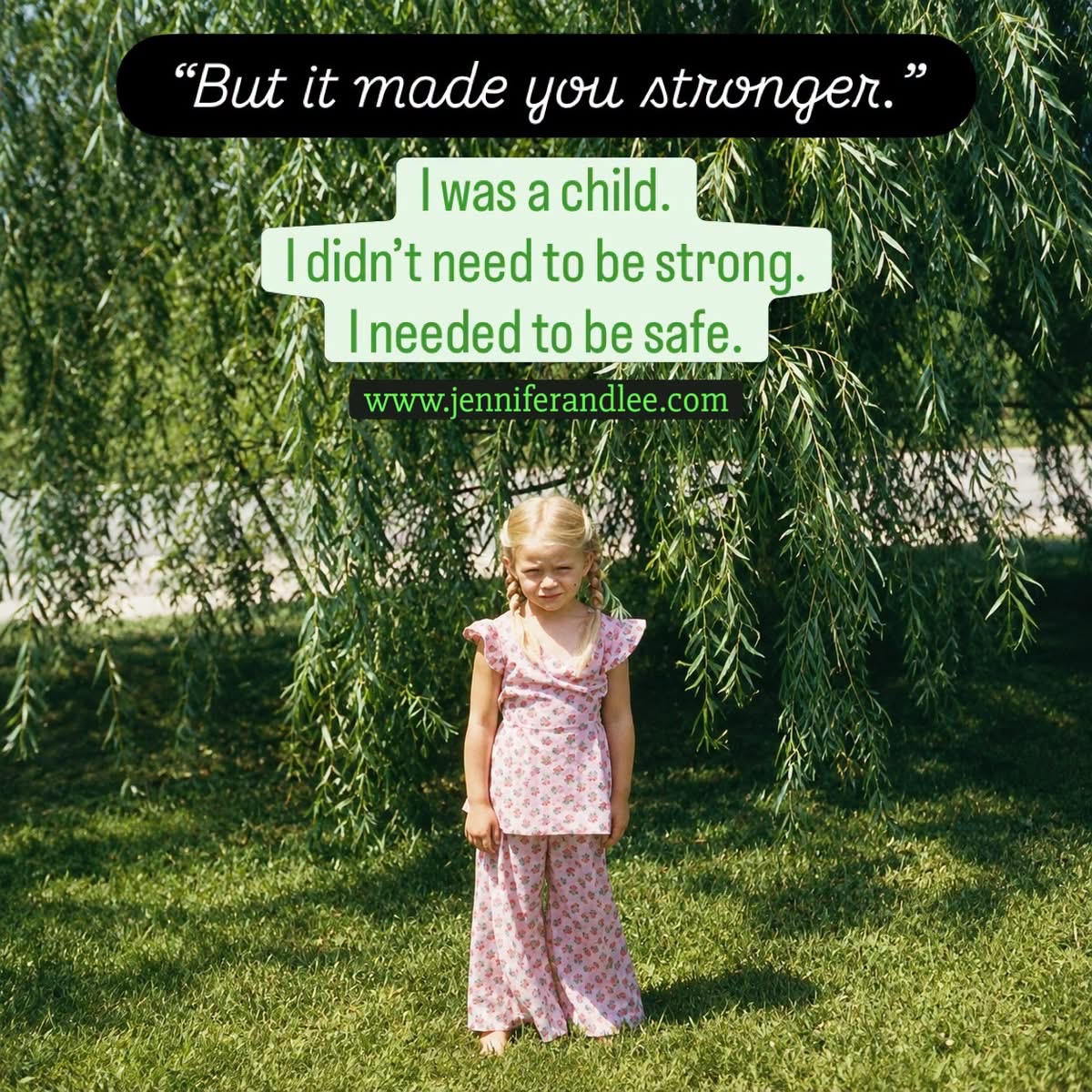
At first glance, that quote sounds like confidence.
In reality, it’s the voice of someone who learned to survive long before they ever had the chance to simply be a child.
Many people who grow up in abusive, neglectful, or chaotic environments develop skills they never asked for. They become hyperaware of their surroundings. They learn to anticipate danger. They solve problems quickly. They adapt because their survival depends on it.
Those adaptations come at a cost.
Researchers call this toxic stress—prolonged activation of the body’s stress response without enough safety or support. Over time, chronic stress can reshape the brain, increase inflammation, dysregulate the nervous system, and contribute to anxiety, depression, autoimmune disease, cardiovascular disease, digestive disorders, and chronic pain.
Trauma changes biology.
But biology is not destiny.
The brain also possesses an extraordinary ability known as neuroplasticity—its capacity to reorganize itself throughout life by forming new neural pathways. Combined with supportive relationships, meaningful purpose, healthy habits, therapy, movement, quality sleep, and stress reduction, the brain and nervous system can continue healing for decades.
Researchers have another term that many survivors recognize: post-traumatic growth.
Post-traumatic growth doesn’t suggest trauma is good. It means that after surviving profound adversity, some people develop a deeper appreciation for life, stronger relationships, greater resilience, increased personal strength, and a renewed sense of purpose.
In other words, some people don’t just recover.
They rebuild.
The qualities that helped them survive eventually become the qualities that help them lead, create, advocate, and inspire others.
Many of history’s most determined people weren’t shaped by comfort. They were shaped by hardship—and by the decision to refuse letting hardship write the ending of their story.
Your circumstances may explain why you learned to fight so hard.
They do not define who you are.
They do not limit what you can become.
If you’ve spent your life pulling yourself out of dark places, take a moment to recognize what that required: courage, persistence, adaptability, and hope—even when hope felt impossible.
You didn’t become strong because suffering is noble.
You became strong because, despite everything that tried to break you, you kept choosing to get back up.
That is one of the most remarkable abilities the human brain possesses.
It can learn.
It can adapt.
It can heal.
And sometimes, the people who were forced to become survivors become the very people who teach others how to live.
“I’ve been pulling myself out of dark places alone since I was a child. I’m built for anything.”
Not because the darkness made me invincible. But because every time life knocked me down, I learned how to stand back up. The science tells us the brain can change. My life is proof that it can.
“I Just Want to Disappear”: The End Result of a Lifetime of Dehumanization and Abuse (2024)
References:
- Felitti VJ, Anda RF, Nordenberg D, et al. (1998). Relationship of Childhood Abuse and Household Dysfunction to Many of the Leading Causes of Death in Adults: The Adverse Childhood Experiences (ACE) Study.
https://www.ajpmonline.org/article/S0749-3797(98)00017-8/fulltext - National Scientific Council on the Developing Child. Excessive Stress Disrupts the Architecture of the Developing Brain (Working Paper No. 3).
https://developingchild.harvard.edu/resources/excessive-stress-disrupts-the-architecture-of-the-developing-brain/ - Harvard University Center on the Developing Child. Toxic Stress.
https://developingchild.harvard.edu/science/key-concepts/toxic-stress/ - American Psychological Association. Resilience.
https://www.apa.org/topics/resilience - National Institute of Mental Health (NIMH). Coping With Traumatic Events.
https://www.nimh.nih.gov/health/topics/coping-with-traumatic-events - Substance Abuse and Mental Health Services Administration (SAMHSA). Trauma and Violence.
https://www.samhsa.gov/mental-health/trauma-violence - Centers for Disease Control and Prevention (CDC). About Adverse Childhood Experiences (ACEs).
https://www.cdc.gov/aces/ - Centers for Disease Control and Prevention (CDC). Preventing Adverse Childhood Experiences.
https://www.cdc.gov/aces/prevention/ - National Institutes of Health. Understanding the Stress Response.
https://www.ncbi.nlm.nih.gov/books/NBK541120/ - McEwen BS. (2007). Physiology and Neurobiology of Stress and Adaptation: Central Role of the Brain.
https://physrev.physiology.org/content/87/3/873 - McEwen BS, Gianaros PJ. (2011). Stress- and Allostasis-Induced Brain Plasticity.
https://www.annualreviews.org/doi/10.1146/annurev-med-052209-100430 - Sapolsky RM. (2004). Why Zebras Don’t Get Ulcers. (Book)
https://us.macmillan.com/books/9780805073690/whyzebrasdontgetulcers - Tedeschi RG, Calhoun LG. (2004). Posttraumatic Growth: Conceptual Foundations and Empirical Evidence.
https://psycnet.apa.org/record/2004-10856-001 - Tedeschi RG, Shakespeare-Finch J, Taku K, Calhoun LG. (2018). Posttraumatic Growth: Theory, Research, and Applications. (Book) https://www.routledge.com/Posttraumatic-Growth-Theory-Research-and-Applications/Tedeschi-Shakespeare-Finch-Taku-Calhoun/p/book/9781138055285
- Davidson RJ, McEwen BS. (2012). Social Influences on Neuroplasticity: Stress and Interventions to Promote Well-Being. https://www.nature.com/articles/nn.3093
- Doidge N. The Brain That Changes Itself. (Book)
https://www.penguinrandomhouse.com/books/304852/the-brain-that-changes-itself-by-norman-doidge-md/ - Merzenich MM. Soft-Wired: How the New Science of Brain Plasticity Can Change Your Life. (Book)
https://www.amazon.com/Soft-Wired-Science-Plasticity-Change-Life/dp/0979777724 - National Institute of Neurological Disorders and Stroke. Brain Basics.
https://www.ninds.nih.gov/health-information/public-education/brain-basics - National Institute on Aging. What Is Neuroplasticity?
https://www.nia.nih.gov/health/brain-health - World Health Organization. Mental Health.
https://www.who.int/health-topics/mental-health - Cleveland Clinic. Neuroplasticity: How Your Brain Changes Throughout Life.
https://health.clevelandclinic.org/neuroplasticity - Mayo Clinic. Stress Symptoms: Effects on Your Body and Behavior.
https://www.mayoclinic.org/healthy-lifestyle/stress-management/in-depth/stress-symptoms/art-20050987 - Johns Hopkins Medicine. The Effects of Stress on Your Body.
https://www.hopkinsmedicine.org/health/wellness-and-prevention/the-effects-of-stress-on-your-body - National Institutes of Health. Inflammation and Its Role in Chronic Disease.
https://www.ncbi.nlm.nih.gov/pmc/articles/PMC7147972/ - Danese A, Lewis SJ. (2017). Psychoneuroimmunology of Early-Life Stress: The Hidden Wounds of Childhood Trauma? https://www.nature.com/articles/nrdp201749

 Jennifer and Lee
Jennifer:You are a remarkable person.It has been a privilege to know you, even though it was limited.You are a strong fighter and I wish you and Lee well
LikeLiked by 1 person