Two Ways to Tell Psychopaths and Sociopaths Apart
The terms psychopath and sociopath are often used interchangeably in movies, television, and everyday conversation. While both describe individuals who exhibit traits associated with Antisocial Personality Disorder (ASPD), psychologists recognize important differences between the two. Understanding those differences can help people better recognize harmful behavior and avoid common misconceptions.
Both Fall Under Antisocial Personality Disorder
Neither “psychopath” nor “sociopath” is an official diagnosis in the Diagnostic and Statistical Manual of Mental Disorders (DSM-5). Instead, both terms are commonly used to describe different patterns of behavior that fall within Antisocial Personality Disorder.
People with ASPD often display traits such as:
- Disregard for the rights of others
- Lack of remorse or guilt
- Deceitfulness and manipulation
- Repeated violations of social norms or laws
- Difficulty maintaining healthy relationships
However, not everyone with these traits behaves in the same way.
Difference #1: Calculated vs. Impulsive Behavior
One of the clearest distinctions is how each tends to behave.
Psychopaths
Psychopaths are often described as calm, calculating, and highly strategic. They typically:
- Carefully plan their actions.
- Hide their true intentions behind charm and confidence.
- Blend into society with relative ease.
- Manipulate others without drawing attention to themselves.
- Remain emotionally controlled, even under pressure.
Because they are skilled at masking their behavior, many psychopaths can appear successful, trustworthy, or charismatic while exploiting others behind the scenes.
Sociopaths
Sociopaths tend to be more emotionally reactive and impulsive. They are generally more likely to:
- Act without thinking through consequences.
- Display anger or emotional outbursts.
- Struggle to maintain stable employment or long-term relationships.
- Be more openly antisocial or confrontational.
Their behavior is often less organized and more unpredictable than that of psychopaths.
Difference #2: Origins of the Behavior
Researchers also believe there may be differences in how these personality patterns develop.
Psychopathy is generally thought to have a stronger biological or neurological component. Studies have identified differences in brain regions involved in empathy, fear processing, and emotional regulation.
Sociopathy, by contrast, is more commonly associated with environmental influences, including:
- Childhood abuse or neglect
- Severe trauma
- Chronic instability
- Exposure to violence or criminal behavior
Most experts agree that personality development is complex and likely involves a combination of both genetic and environmental factors rather than one single cause.
Not Everyone Is Violent
One of the article’s most important points is that psychopathy and sociopathy should not automatically be equated with violence or serial killers.
Many individuals with antisocial traits never commit violent crimes. Instead, harmful behaviors may include:
- Chronic manipulation
- Exploitation of others
- Deception
- Financial abuse
- Emotional abuse
- Lack of empathy or accountability
These behaviors can cause significant harm in personal relationships, workplaces, and organizations even when no physical violence is involved.
The Bottom Line
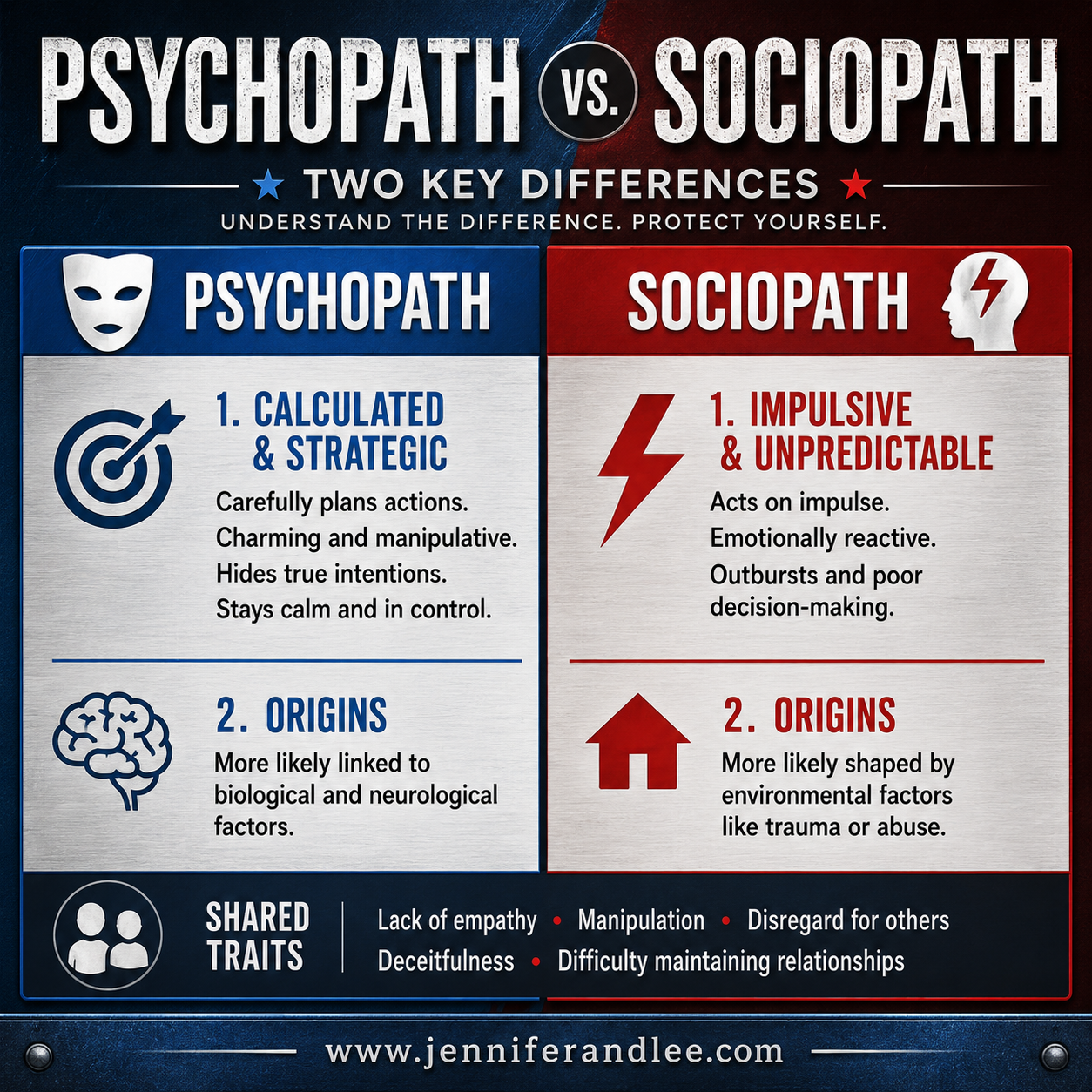
2 Ways to Tell Psychopaths and Sociopaths Apart (Mark Travers Ph.D., Psychology Today, May 17, 2024)
Editor’s Note: You have permission to use this graphic with attribution.
While psychopaths and sociopaths share many characteristics associated with Antisocial Personality Disorder, psychologists generally distinguish them in two primary ways:
- Psychopaths tend to be more calculated, emotionally detached, and skilled at concealing their behavior.
- Sociopaths are generally more impulsive, emotionally volatile, and less successful at hiding their antisocial behavior.
Understanding these differences can help people recognize unhealthy behavioral patterns without relying on Hollywood stereotypes. At the same time, mental health professionals caution against casually labeling individuals, as only qualified clinicians can evaluate personality disorders through comprehensive assessment.
Sources
- Psychology Today – Two Ways to Tell Psychopaths and Sociopaths Apart
- Forbes – A Psychologist Explains the Difference Between Psychopaths and Sociopaths
- PubMed – Symptoms and Main Differences Between a Psychopath and a Sociopath


5 thoughts on “Psychopath vs. Sociopath: Two Critical Differences That Can Help You Recognize Dangerous Behavior (May 17, 2024)”