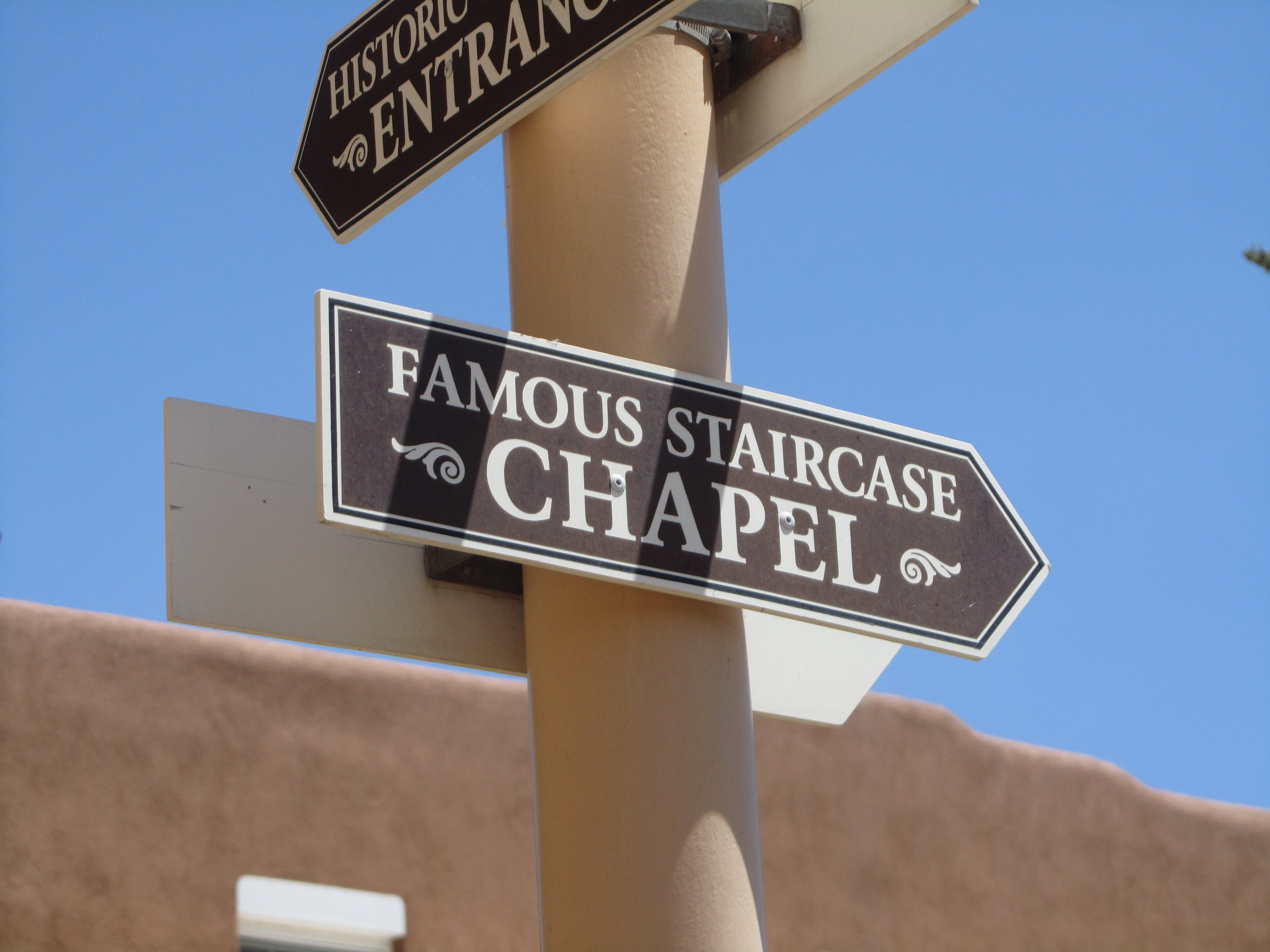
Welcome to Loretto Chapel, Santa Fe, New Mexico
A Gothic chapel, a vanished carpenter, and a staircase that continues to inspire questions nearly 150 years later
New Mexico has a way of placing mystery in plain sight. Among the adobe buildings and sun-washed streets of historic Santa Fe stands a small Gothic Revival chapel that looks as though it belongs in medieval Europe. Inside is an even greater surprise: a graceful wooden staircase that rises approximately 20 feet to the choir loft, makes two complete turns, and appears to stand without the central support normally associated with a spiral staircase.
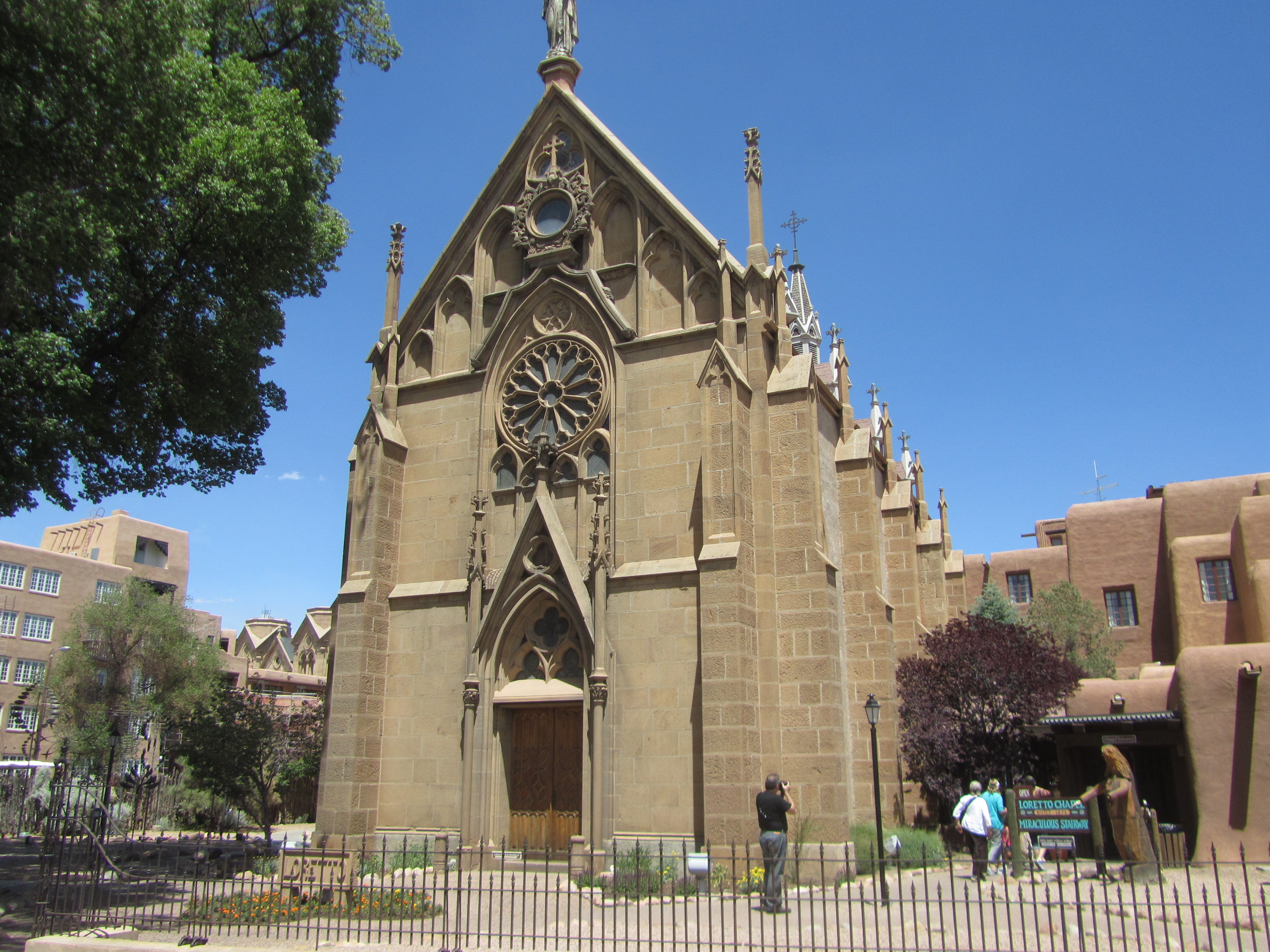
Loretto Chapel (Chapel of Our Lady of Light), Santa Fe, New Mexico
It is known around the world as the Miraculous Staircase of Loretto Chapel.
Although the chapel is sometimes mistakenly associated with Albuquerque, it is located at 207 Old Santa Fe Trail in Santa Fe, roughly an hour north of Albuquerque. Its story brings together frontier hardship, women’s education, French architecture, remarkable craftsmanship, religious faith, and a mystery that has endured for generations.
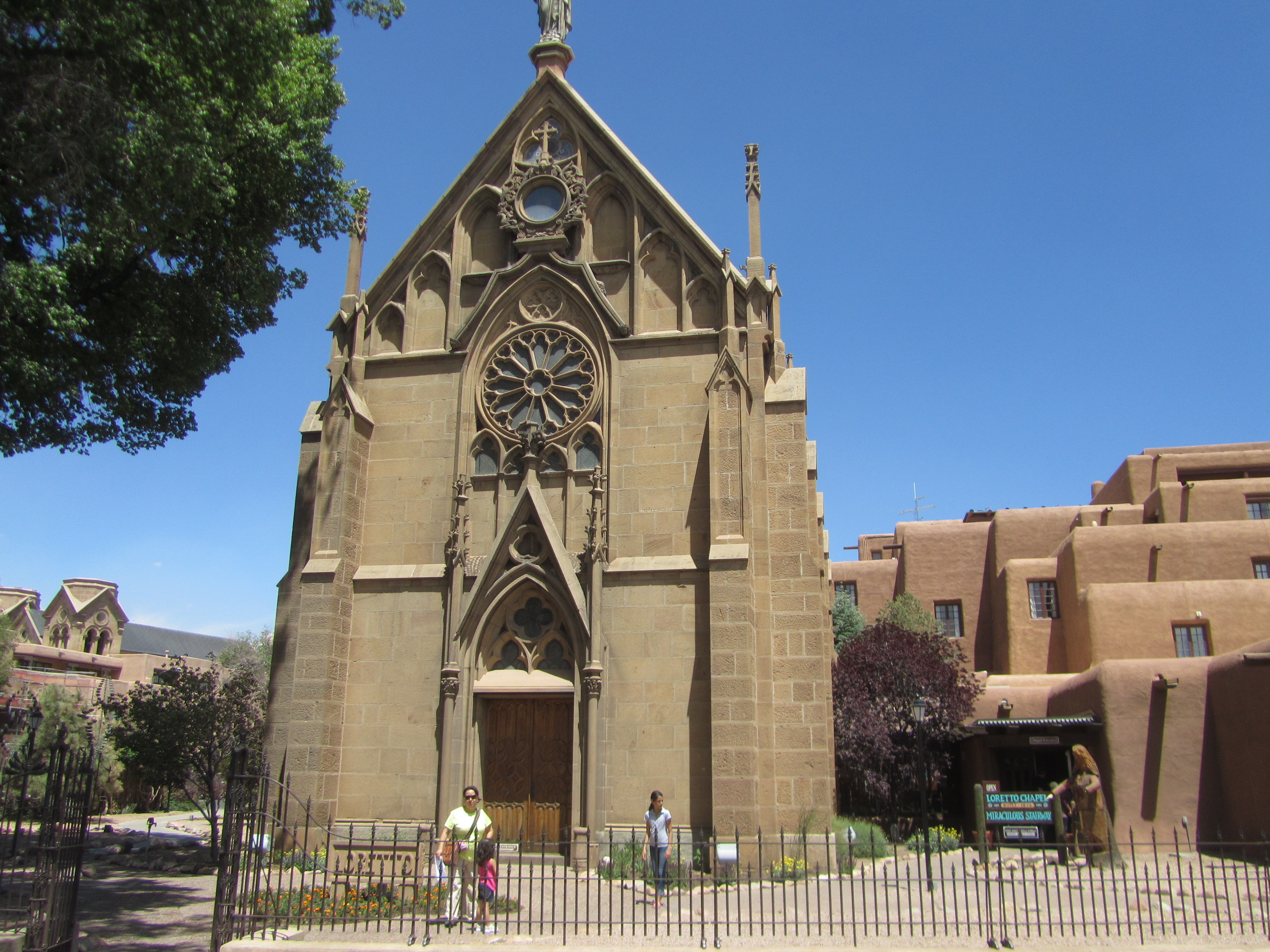
Loretto Chapel was built in 1878. This Gothic Revival-style chapel was patterned after King Louis IX’s Sainte-Chapelle in Paris; a striking contrast to the adobe churches already in the area. –New Mexico True
The Sisters Who Came to Santa Fe
The story began long before the staircase was built.
After French-born Bishop Jean-Baptiste Lamy arrived in New Mexico in 1851, he asked members of the Sisters of Loretto to come west and establish a school for girls. Their journey from Kentucky was dangerous. Cholera struck their group along the way, killing their superior and sickening several others. The surviving sisters continued across the Santa Fe Trail and arrived in September 1852.
In 1853, they opened the Academy of Our Lady of Light, recognized by the National Park Service as New Mexico’s first permanent school for girls. At a time when formal education for girls was far from guaranteed, the sisters created a place where young women could learn and build futures of their own.
Loretto Chapel & the Miraculous Staircase
As the academy expanded, the sisters began planning a chapel. Construction started in 1873 and was financed with income from the school. Completed in 1878, the Chapel of Our Lady of Light—now known as Loretto Chapel—was designed by French architect Projectus Mouly, who also worked on the nearby Cathedral of St. Francis.
The result was striking. With pointed arches, tall spires, a rose window, and stained glass transported from France by way of the Santa Fe Trail, the chapel stood in sharp contrast to Santa Fe’s earth-toned adobe architecture. Its façade was modeled after Sainte-Chapelle in Paris, placing a piece of French Gothic design in the heart of the American Southwest.
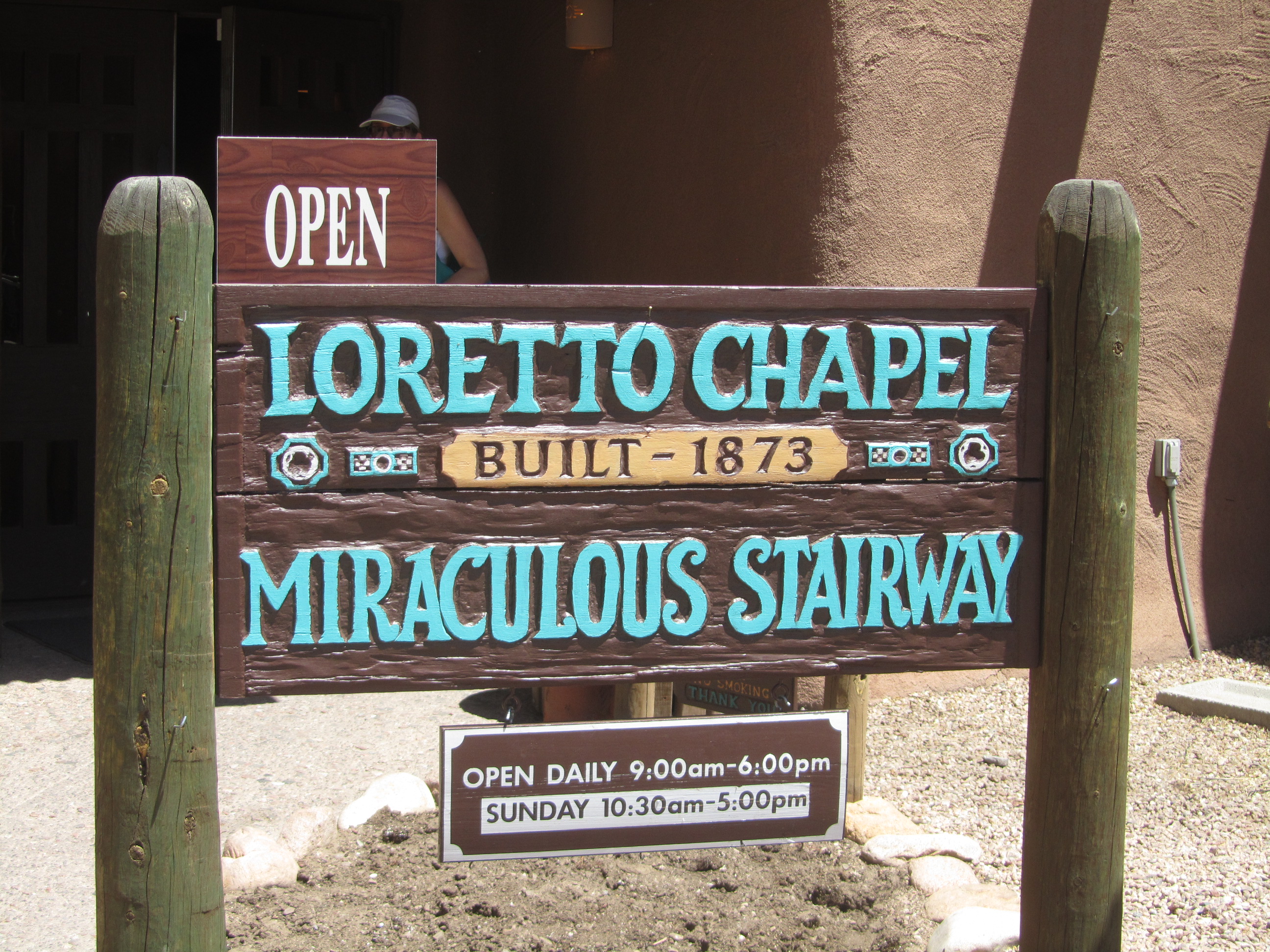
The Miraculous Staircase of Loretto Chapel: A Marvel of Mystery and Craftsmanship in New Mexico
A Beautiful Chapel With One Serious Problem
When the chapel was completed, there was no proper staircase leading to the choir loft approximately 20 feet above the floor.
A conventional staircase would have occupied too much of the small chapel’s interior. Tradition holds that local carpenters could not devise a practical solution and recommended a ladder instead. For the sisters, however, climbing a ladder in their habits was neither safe nor dignified.
According to the story preserved by the Sisters of Loretto, they turned to St. Joseph, the patron saint of carpenters. They prayed a novena for nine consecutive days, asking for help.
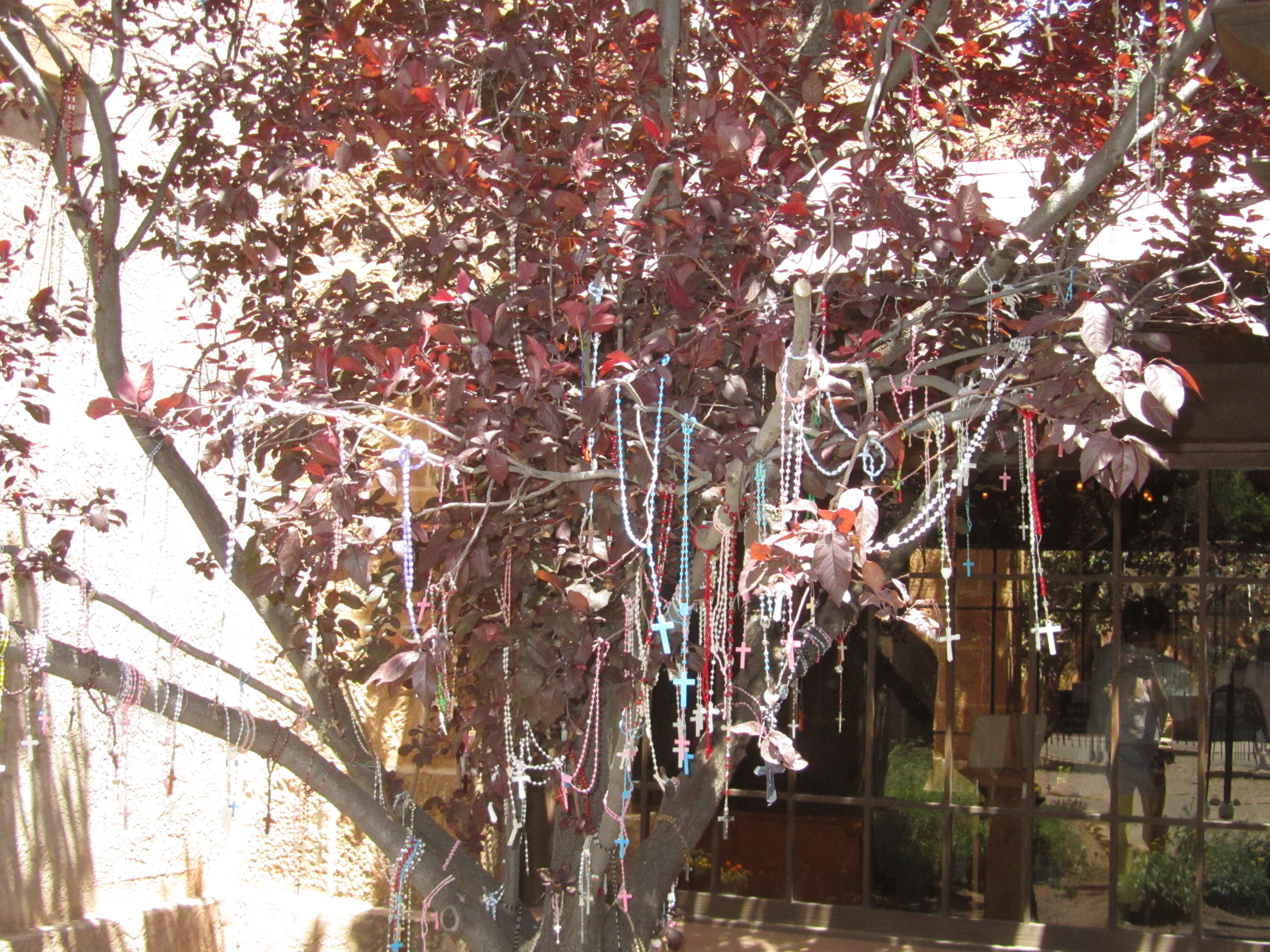
Rosaries hang from trees at Santa Fe’s Loretto Chapel
On the final day, a stranger reportedly appeared at the chapel looking for work.
He was said to have arrived with simple hand tools and asked to work in privacy. Over the following months, he constructed an extraordinary circular staircase. When the work was finished, the carpenter disappeared before the sisters could pay him or even learn his name. Attempts to locate him reportedly failed, and no ordinary explanation seemed sufficient to the women who believed their prayers had been answered.
Some concluded that the carpenter was St. Joseph himself. Others believed that St. Joseph had sent the mysterious craftsman in response to the sisters’ prayers.
The staircase soon became known as miraculous.
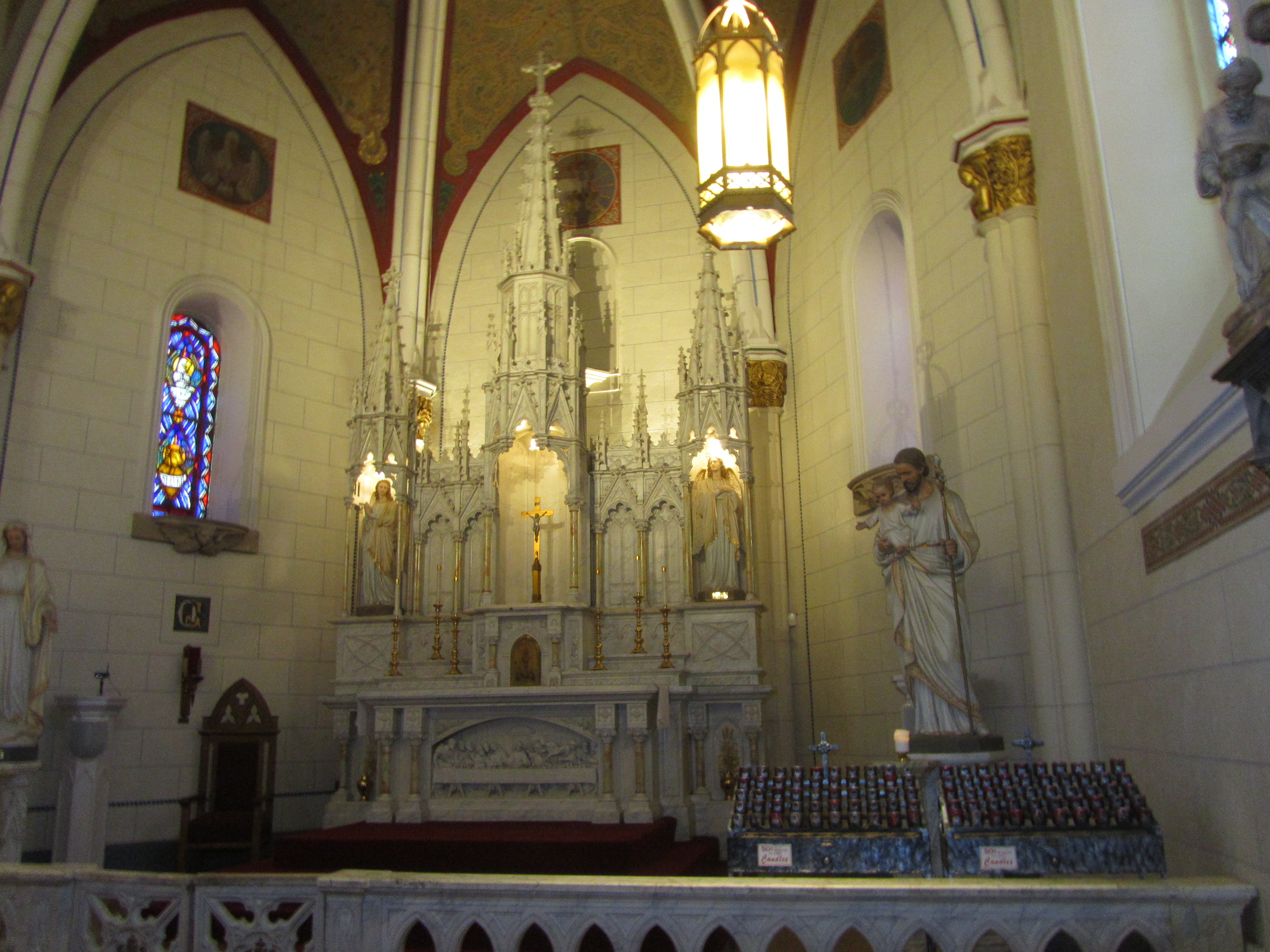
The Miraculous Staircase in Santa Fe’s Loretto Chapel
Why the Staircase Is So Unusual
Even without the legend, the staircase is an exceptional work of carpentry.
It rises approximately 20 feet and completes two full turns without a traditional central pole. Wooden pegs were used in its construction rather than metal nails, and its curved inner and outer stringers carry and distribute the load. The absence of an obvious center support creates the impression that the staircase is floating upward.
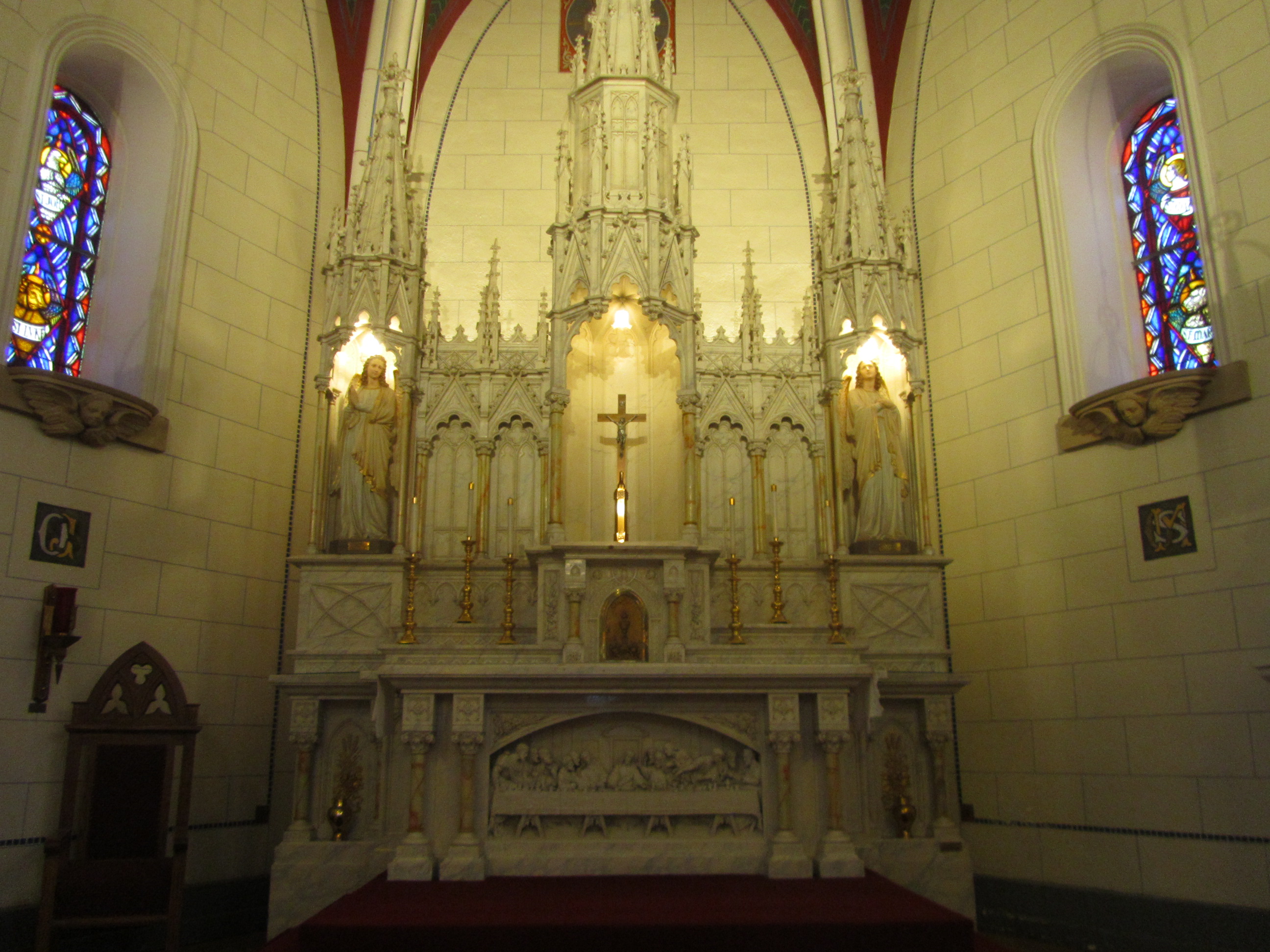
Loretto Chapel Staircase – Travels and Curiosities
The staircase was originally built without a railing, making the climb intimidating. A railing and additional stabilization were added later, but neither change erased the beauty of the original design.
The structure does not literally defy physics. Its tightly curved inner stringer functions as a major supporting element, while the helical form distributes weight through the wooden structure. Yet explaining how it stands does not make the craftsmanship ordinary. Designing and shaping such a staircase with 19th-century hand tools would require advanced geometry, patience, and exceptional woodworking skill.
It remains both structurally fascinating and visually breathtaking.
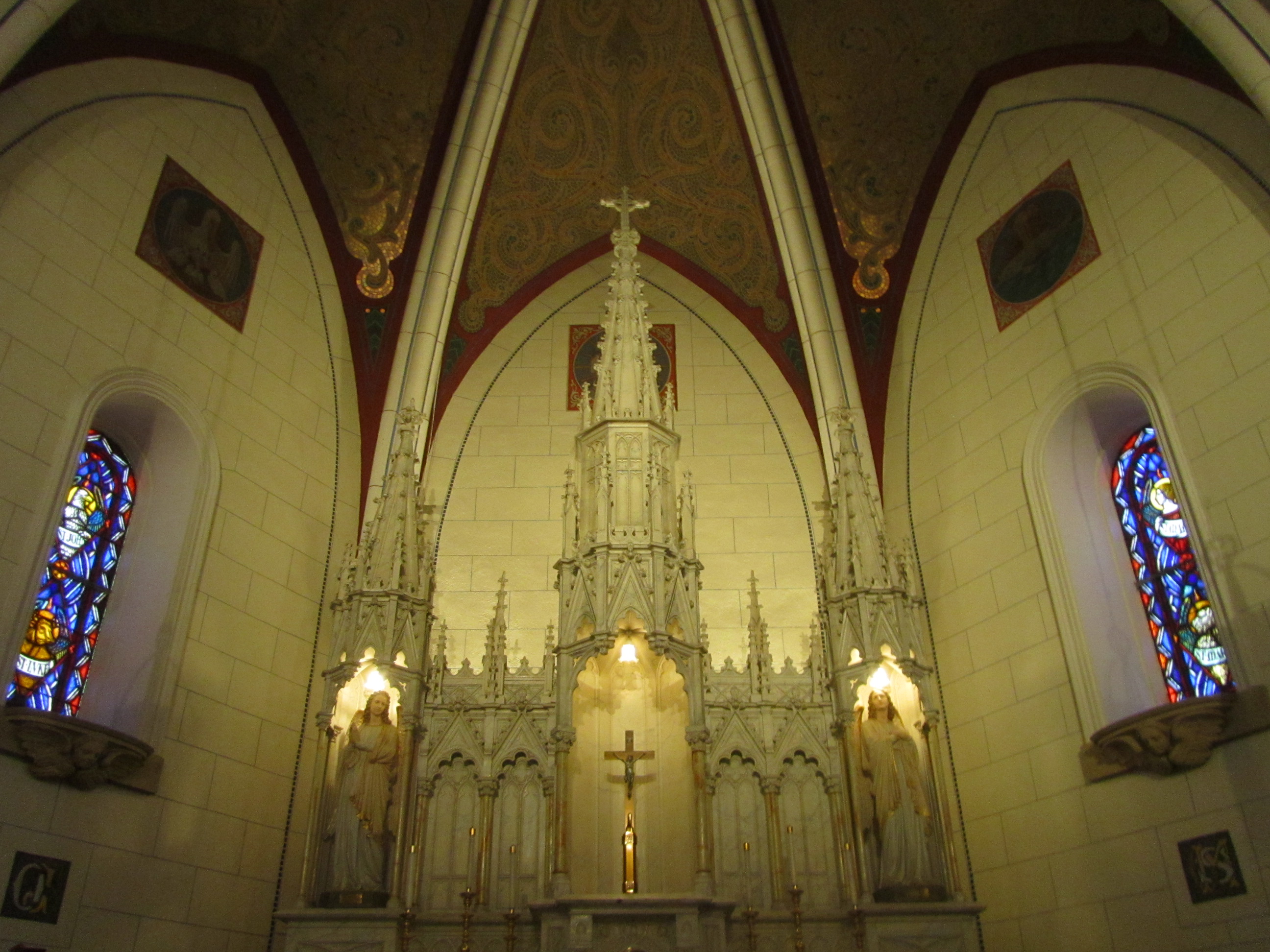
Legend of the Miraculous Loretto Chapel Staircase
Was the Mysterious Carpenter François-Jean Rochas?
For many years, the carpenter’s identity was treated as completely unknown. Historical research has since produced a compelling candidate: François-Jean “Frenchy” Rochas, a French immigrant and highly skilled woodworker who lived in New Mexico during the period when the staircase was built.
The National Park Service now identifies Rochas as the likely builder. Researchers have pointed to an 1881 entry recording a payment involving Rochas and wood, as well as an 1895 notice in the Santa Fe New Mexican that remembered him as an expert woodworker and credited him with building the Loretto Chapel staircase.
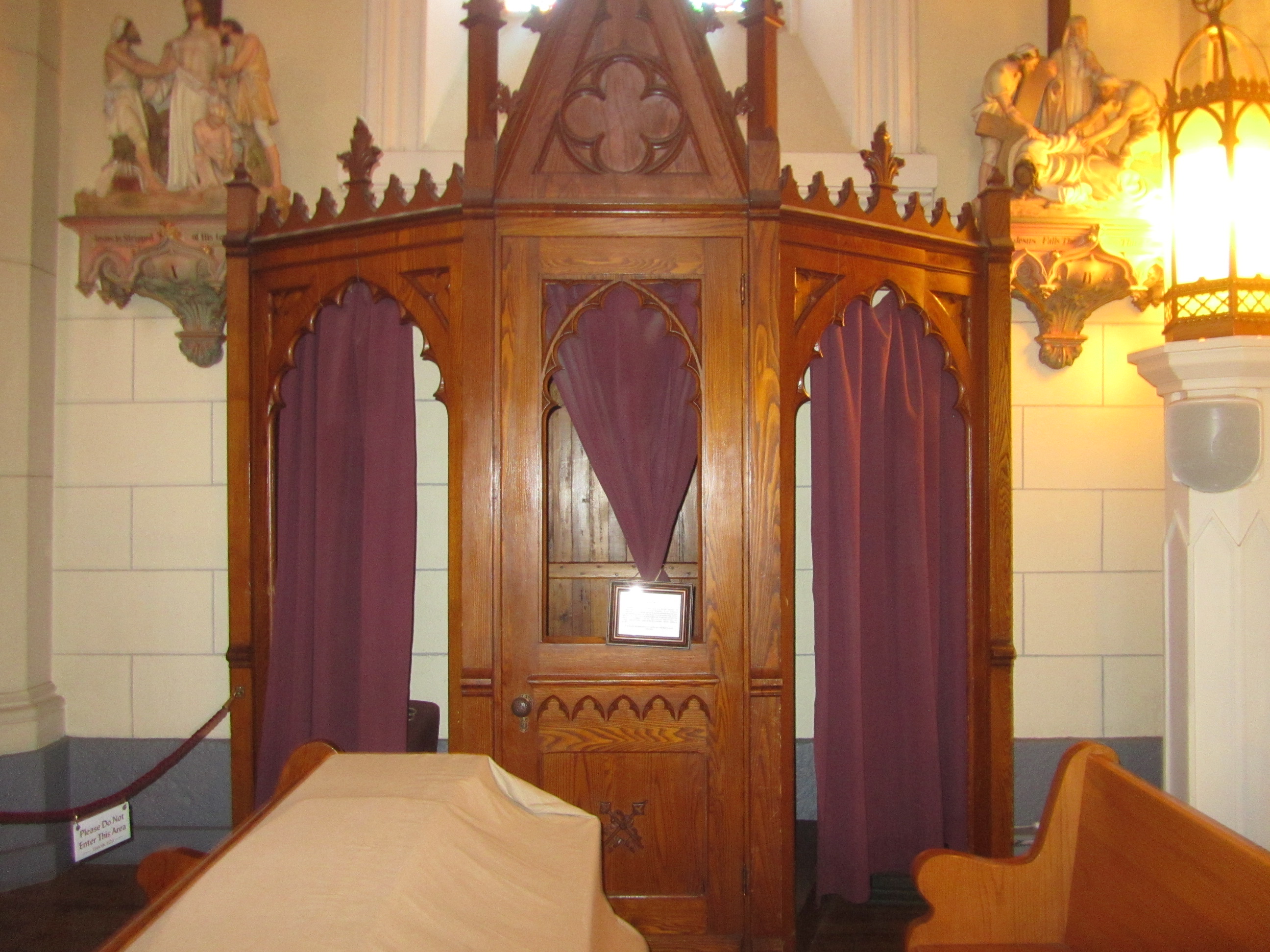
Loretto Chapel Santa Fe – Famous Spiral Staircase
That evidence is persuasive, but the complete story is still not documented beyond dispute. Questions remain about how Rochas may have been hired, why his identity disappeared from the popular account, and how the sisters’ religious tradition developed into the version repeated today.
History may have supplied the carpenter’s probable name, but it has not removed the meaning people find in the staircase.
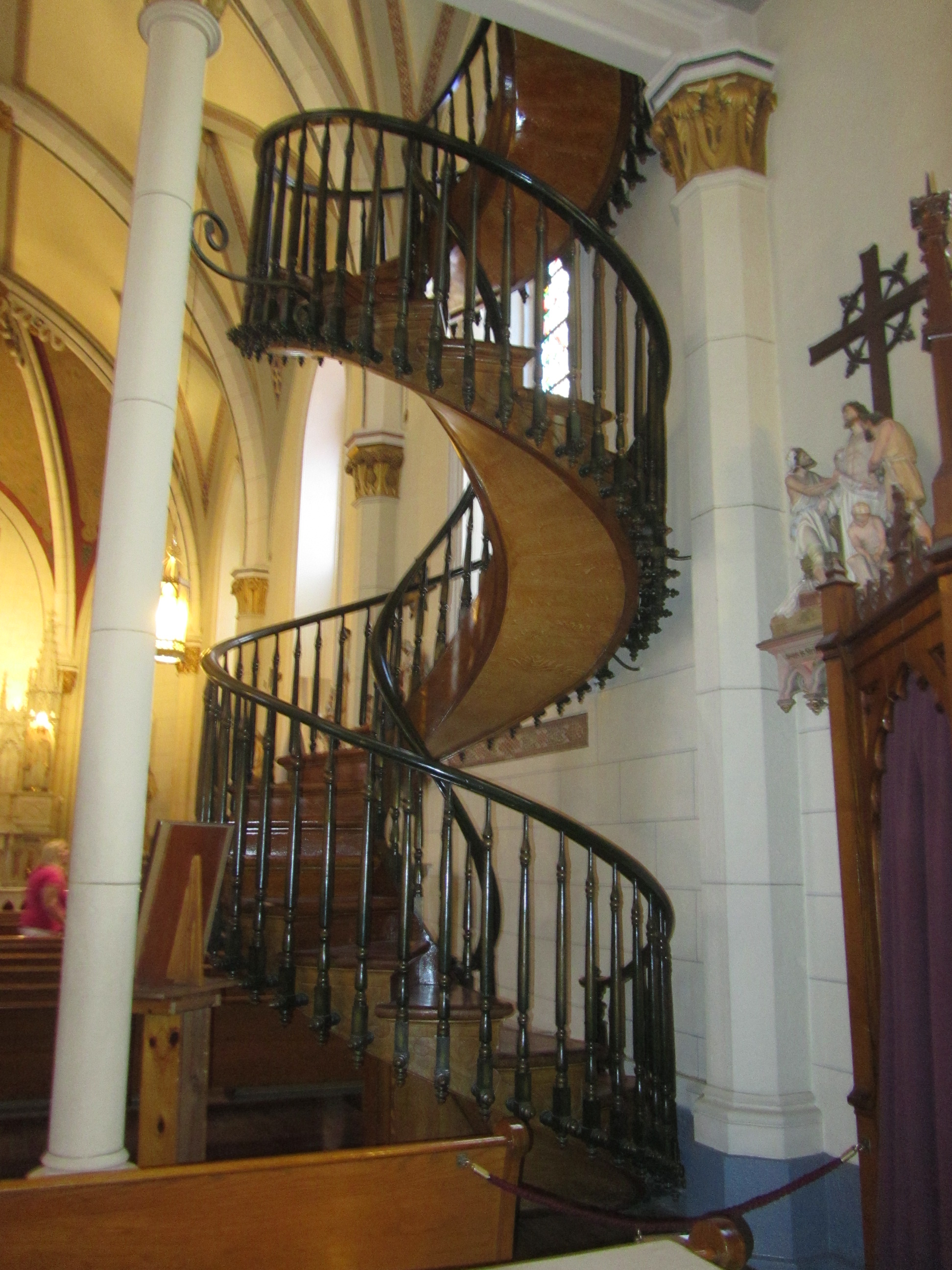
The Miraculous Staircase, which legend says was constructed or inspired by St. Joseph the Carpenter, was built sometime between 1877 and 1881. It took at least six months to build, and has two 360 degree turns with no visible means of support. –New Mexico True
Faith and History Do Not Have to Cancel Each Other Out
The Loretto staircase is often presented as a choice: either it was a supernatural miracle or it was the work of a talented human carpenter.
That may be the wrong question.
For a person of faith, identifying Rochas does not necessarily disprove the sisters’ belief that their prayers were answered. Help often arrives through human hands. The timing of the carpenter’s appearance, the ingenuity of his solution, and the beauty of what he created can still carry spiritual meaning even if history eventually identifies him.
For a historian or engineer, the staircase is no less remarkable because its design can be analyzed. Understanding the forces that support it only deepens respect for the intelligence and skill required to build it.
Perhaps the enduring power of the Loretto Chapel lies in its refusal to fit neatly into one category. It is simultaneously a place of faith, an architectural landmark, a monument to women’s education, a masterpiece of woodworking, and one of New Mexico’s most beloved mysteries.
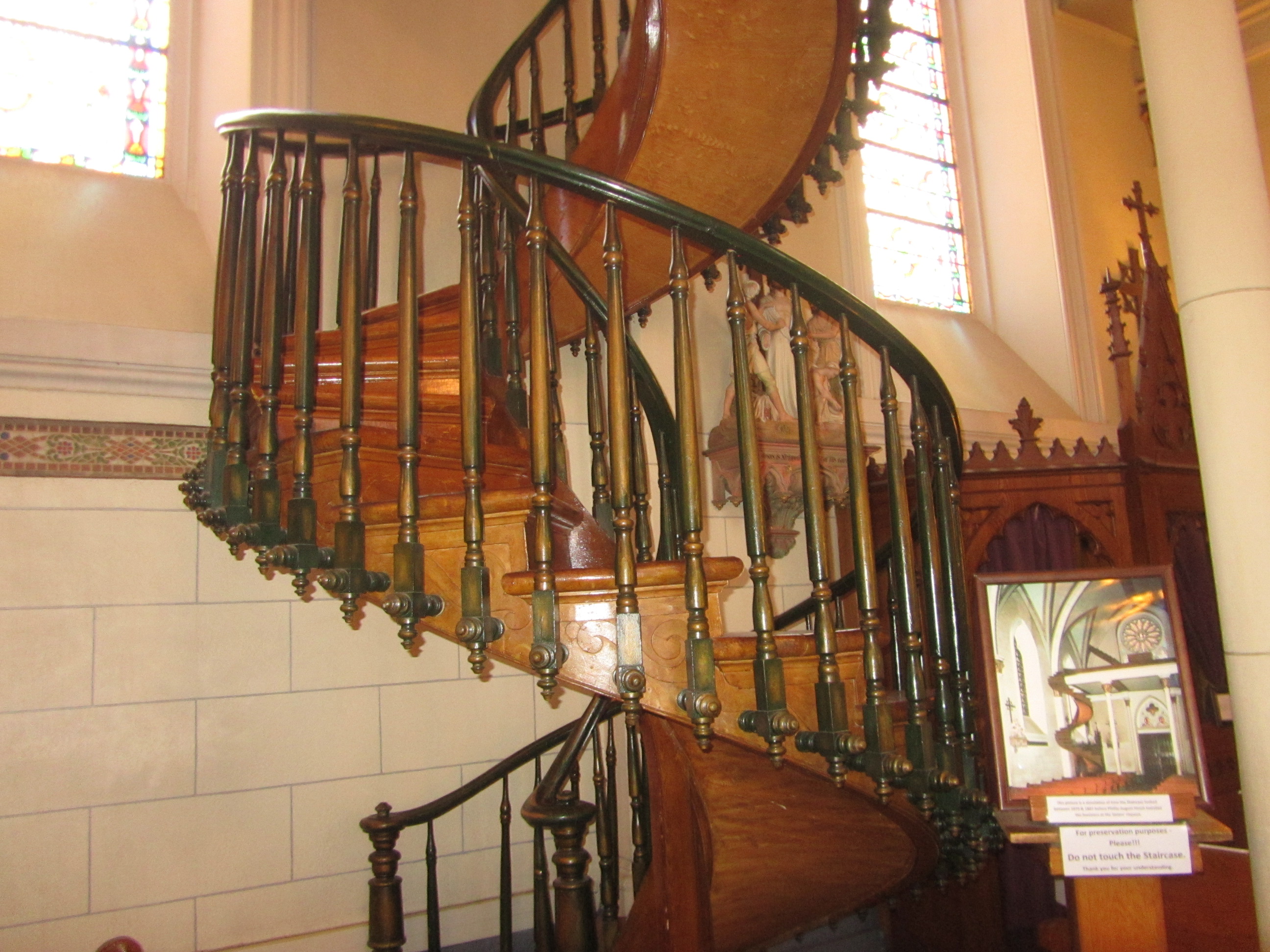
The Miraculous Loretto Chapel Staircase
Loretto Chapel Today
The chapel now operates as a privately maintained museum and wedding venue. Visitors can stand inside the intimate Gothic interior, view the staircase, and consider the generations of people who have climbed, studied, prayed, worked, and wondered there.
The staircase itself is no longer available for ordinary public use, but it remains the visual and emotional center of the chapel.
Located in historic Santa Fe, Loretto Chapel is an easy addition to a New Mexico trip and a worthwhile day trip from Albuquerque. Current hours, admission information, closures, and special-event schedules should be confirmed through the chapel’s official website before visiting.
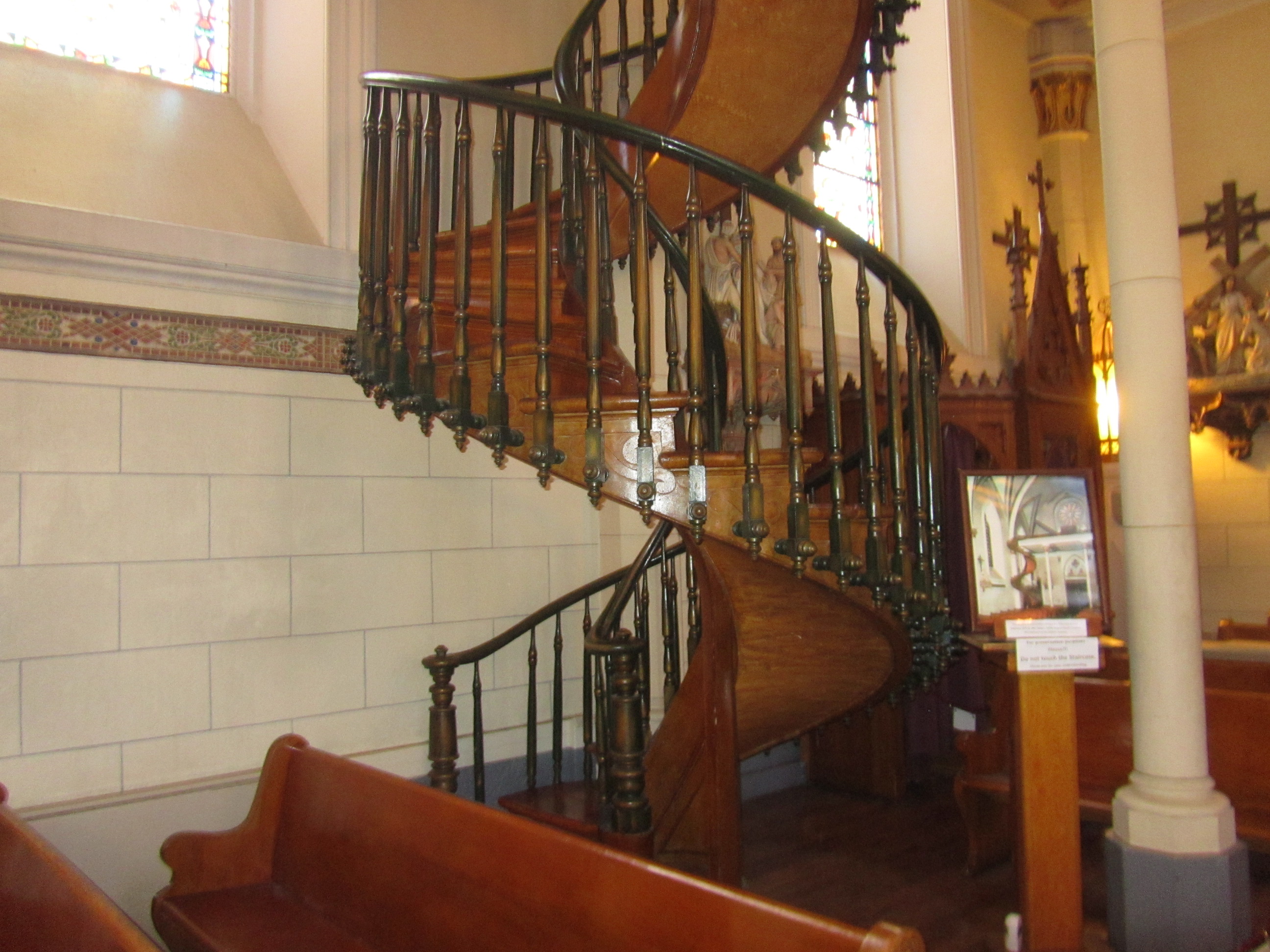
The Enduring Mystery of the Loretto Chapel Staircase
A Mystery Worth Preserving
Nearly 150 years after it was built, the Miraculous Staircase continues to draw visitors from around the world. Some arrive searching for proof of a miracle. Others come to examine the engineering, admire the craftsmanship, or experience one of New Mexico’s most unusual historic places.
What they find is something more layered than a legend.
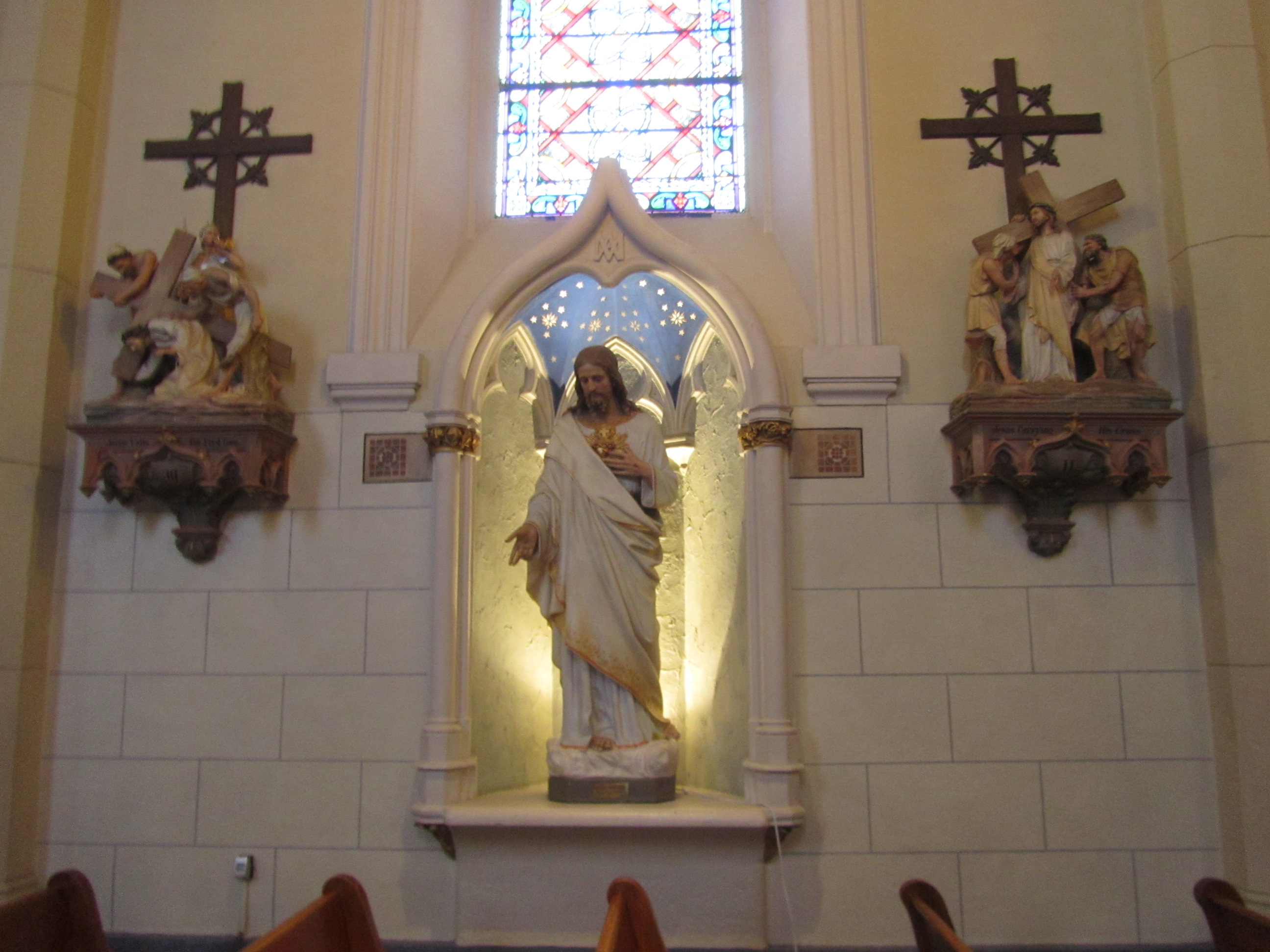
Loretto Chapel: Santa Fe’s Neo-Gothic Marvel and Its Mysterious Staircase
They find the legacy of courageous sisters who crossed the country to educate girls. They find French Gothic architecture rising from the New Mexico landscape. They find the work of a gifted carpenter whose name may have been lost and then recovered. And they find a staircase that still invites people to look upward and wonder.
Maybe that is why the Loretto Chapel continues to matter. Its mystery is not diminished by history, and its history is not diminished by faith. The two wind around each other like the staircase itself—separate, connected, and still rising.
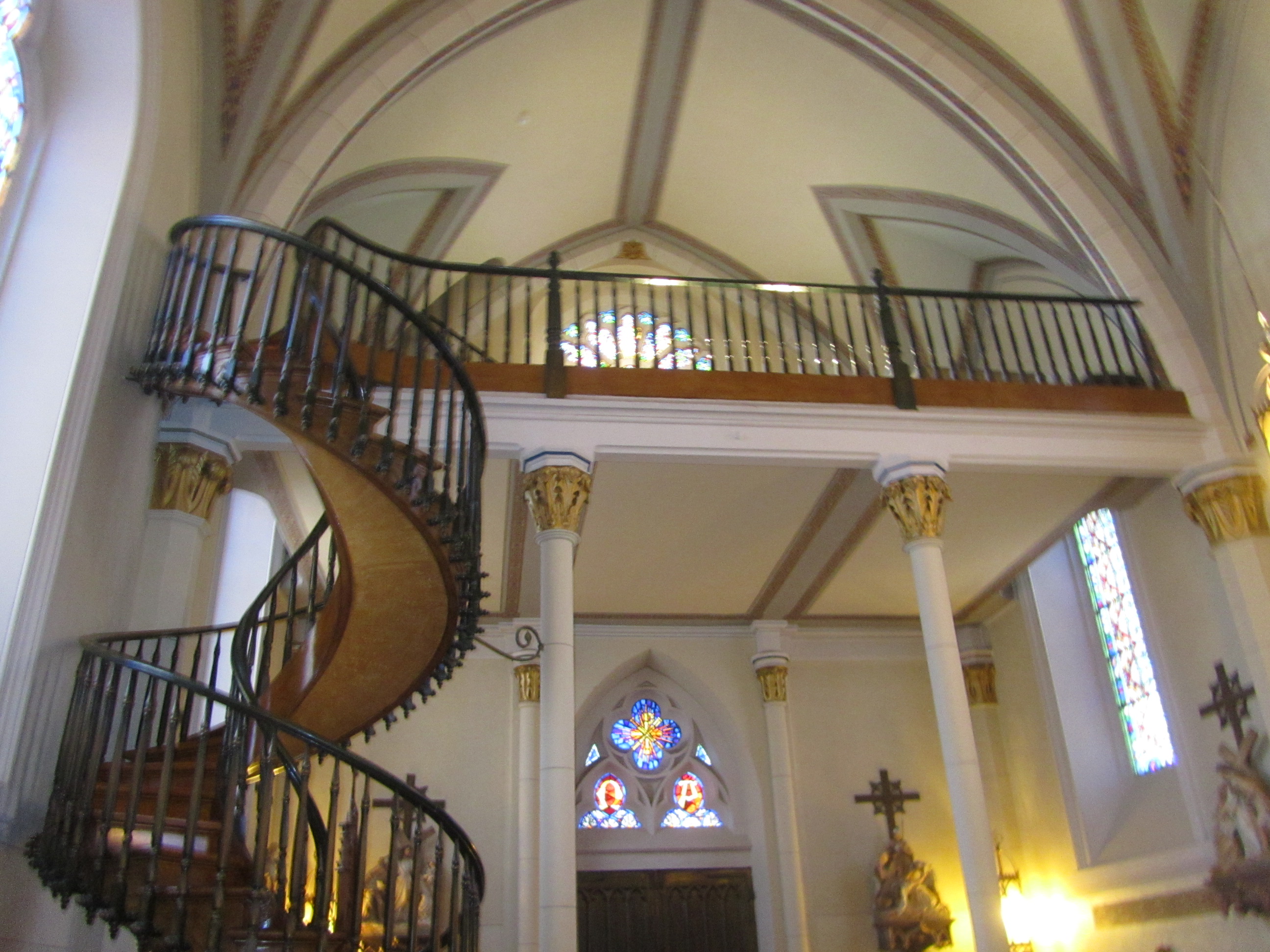
Miraculous Staircase at Loretto Chapel
Sources:
- Loretto Chapel: Our Story
- Loretto Chapel: The Staircase
- National Park Service: Loretto Chapel (Chapel of Our Lady of Light)
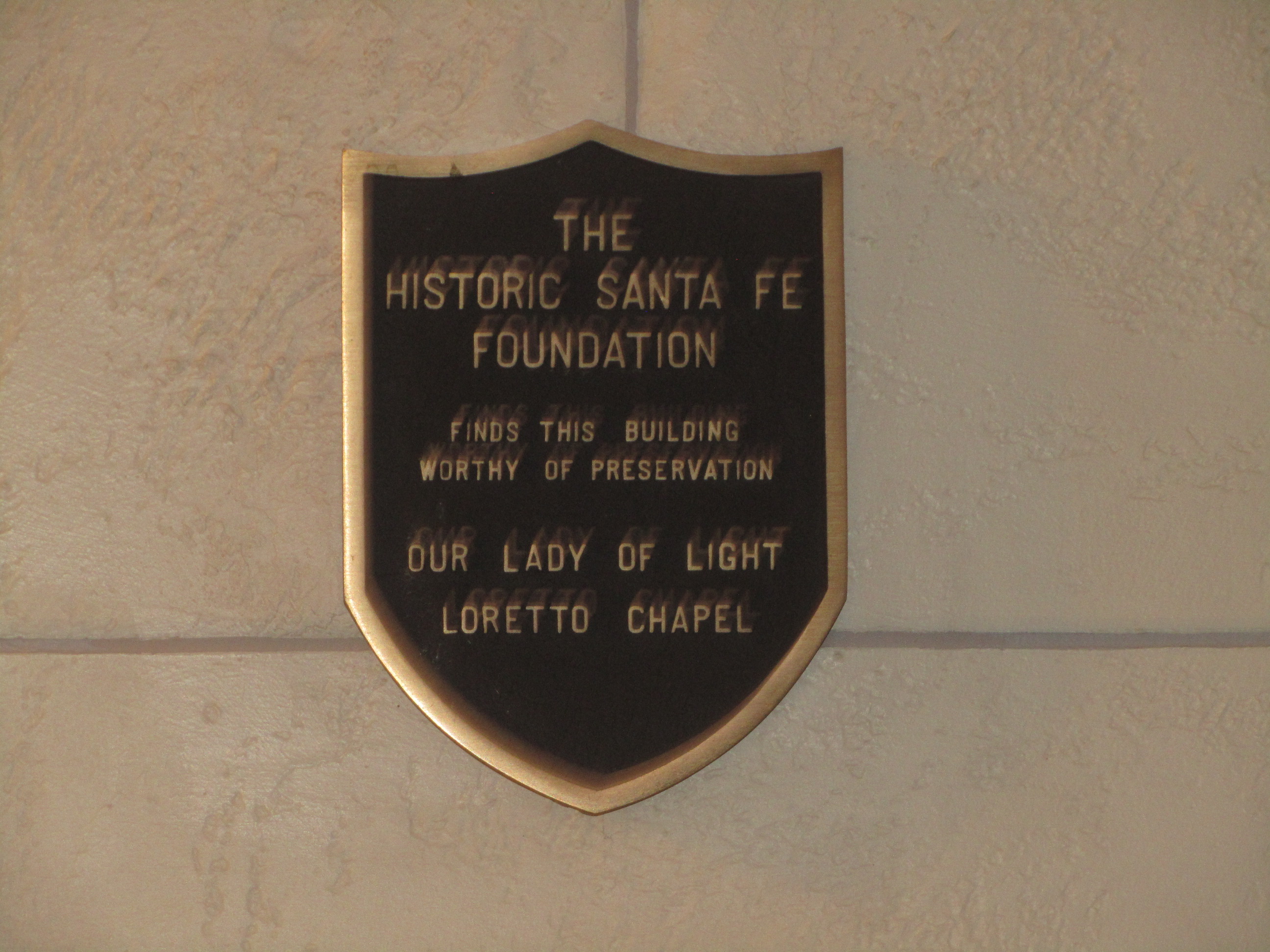
- Historic Santa Fe Foundation: Loretto Chapel


11 thoughts on “Loretto Chapel: The Mystery of Santa Fe’s Miraculous Staircase in New Mexico (June 4, 2013)”