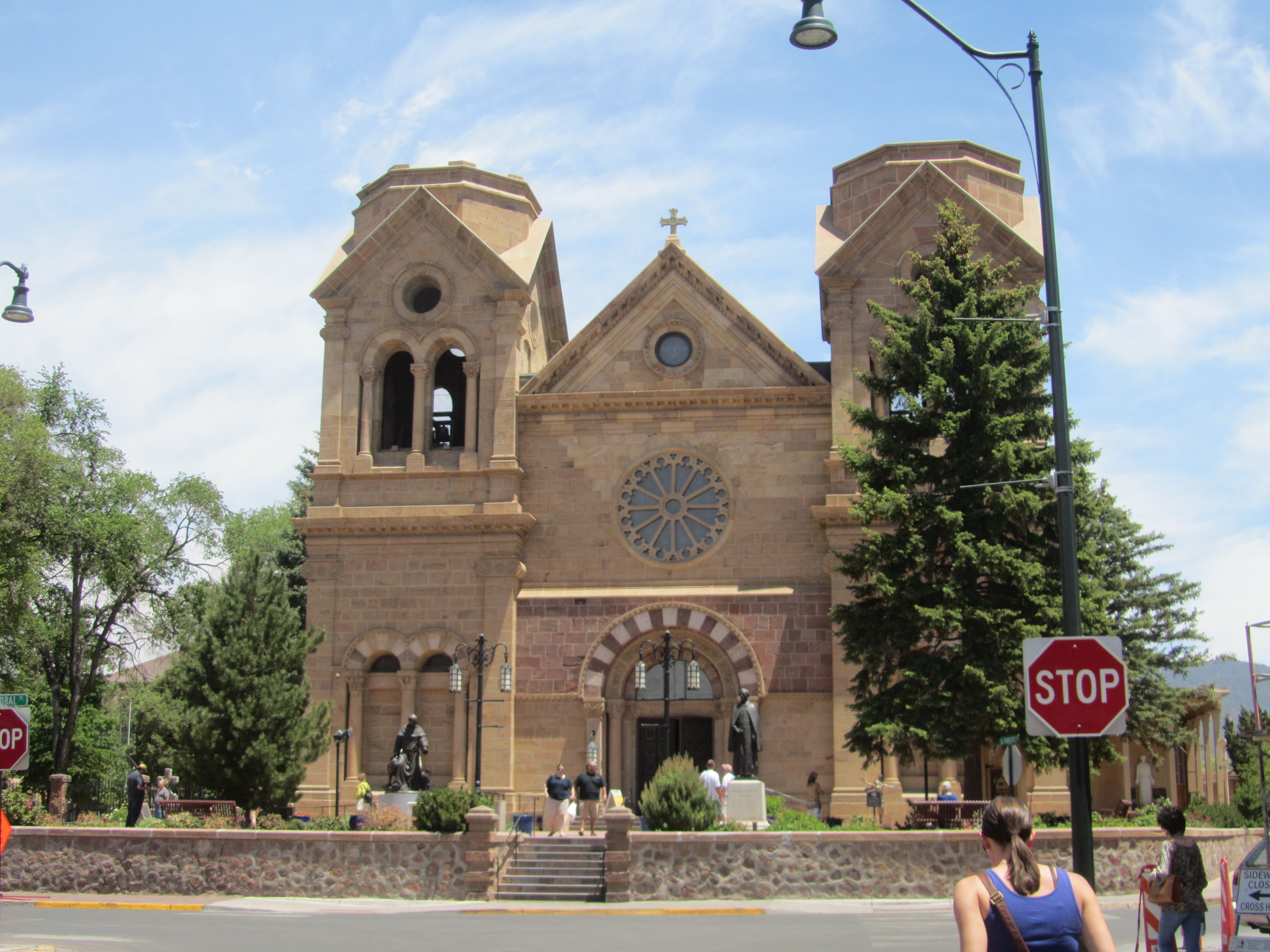
The Cathedral Basilica of St. Francis of Assisi, Santa Fe, New Mexico
Standing just east of the historic Santa Fe Plaza, the Cathedral Basilica of St. Francis of Assisi is one of New Mexico’s most recognizable religious and architectural landmarks. Its tall stone façade rises dramatically above the city’s low adobe buildings, immediately distinguishing it from the surrounding Pueblo and Spanish Colonial architecture. Yet the cathedral is more than an impressive monument. It is the mother church of the Roman Catholic Archdiocese of Santa Fe, an active parish, and a physical record of more than four centuries of faith, conflict, cultural change, and artistic expression in northern New Mexico.
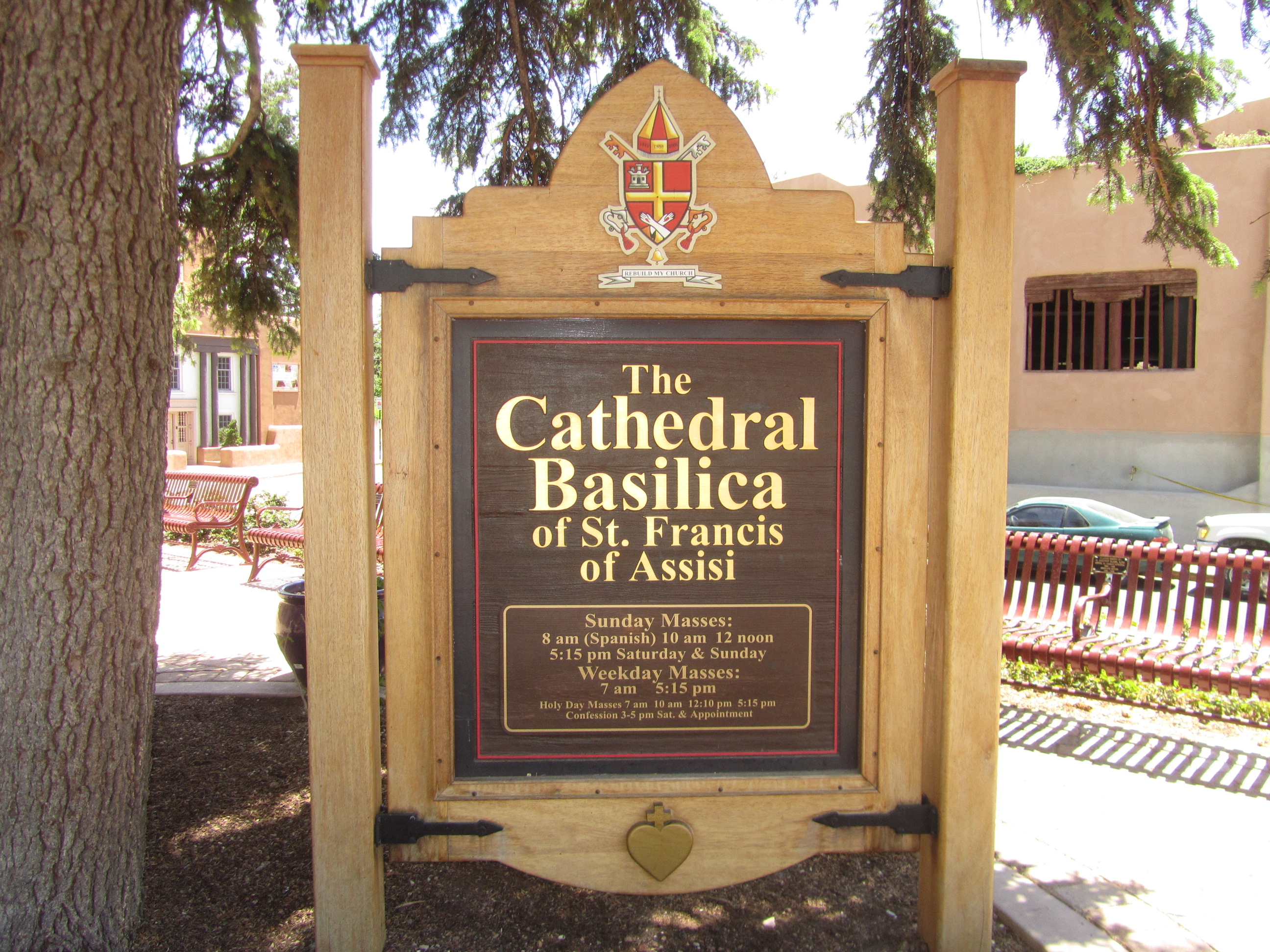
The cathedral’s history begins long before the present stone building appeared. Franciscan friars entered what is now New Mexico in 1598, accompanying Spanish colonists traveling north from Mexico. When Santa Fe was founded in 1610, a small adobe church was constructed on the site. A larger church replaced it around 1630, but that building was destroyed during the Pueblo Revolt of 1680, when Pueblo peoples rose against Spanish colonial rule and forced the Spanish from the region. This early history makes the site significant not only to Catholicism but also to the broader and often difficult story of Spanish colonization and Pueblo resistance in New Mexico. The cathedral’s official parish history traces this succession of churches back to Santa Fe’s founding.
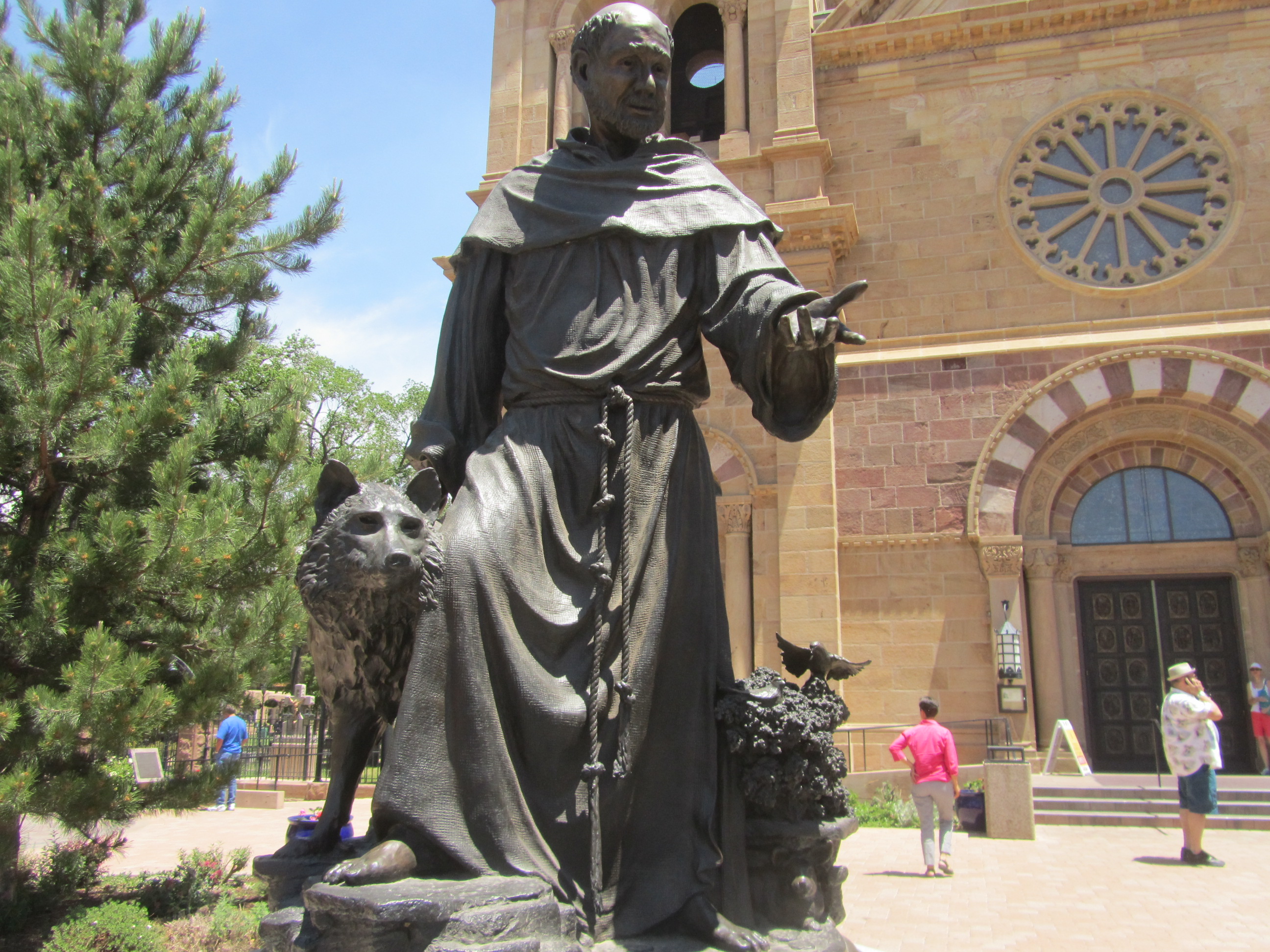
After the Spanish returned to Santa Fe in 1693, another adobe church was constructed in 1714. Known as La Parroquia, or “the parish church,” it was dedicated to St. Francis of Assisi, the patron saint of Santa Fe. For more than a century, La Parroquia served local worshippers, travelers, and residents of a city positioned near the routes that became the Santa Fe Trail, the Old Spanish Trail, and El Camino Real de Tierra Adentro. According to the National Park Service, the present cathedral should therefore be understood as part of a sequence of churches occupying the same sacred ground rather than as a single building with one beginning.
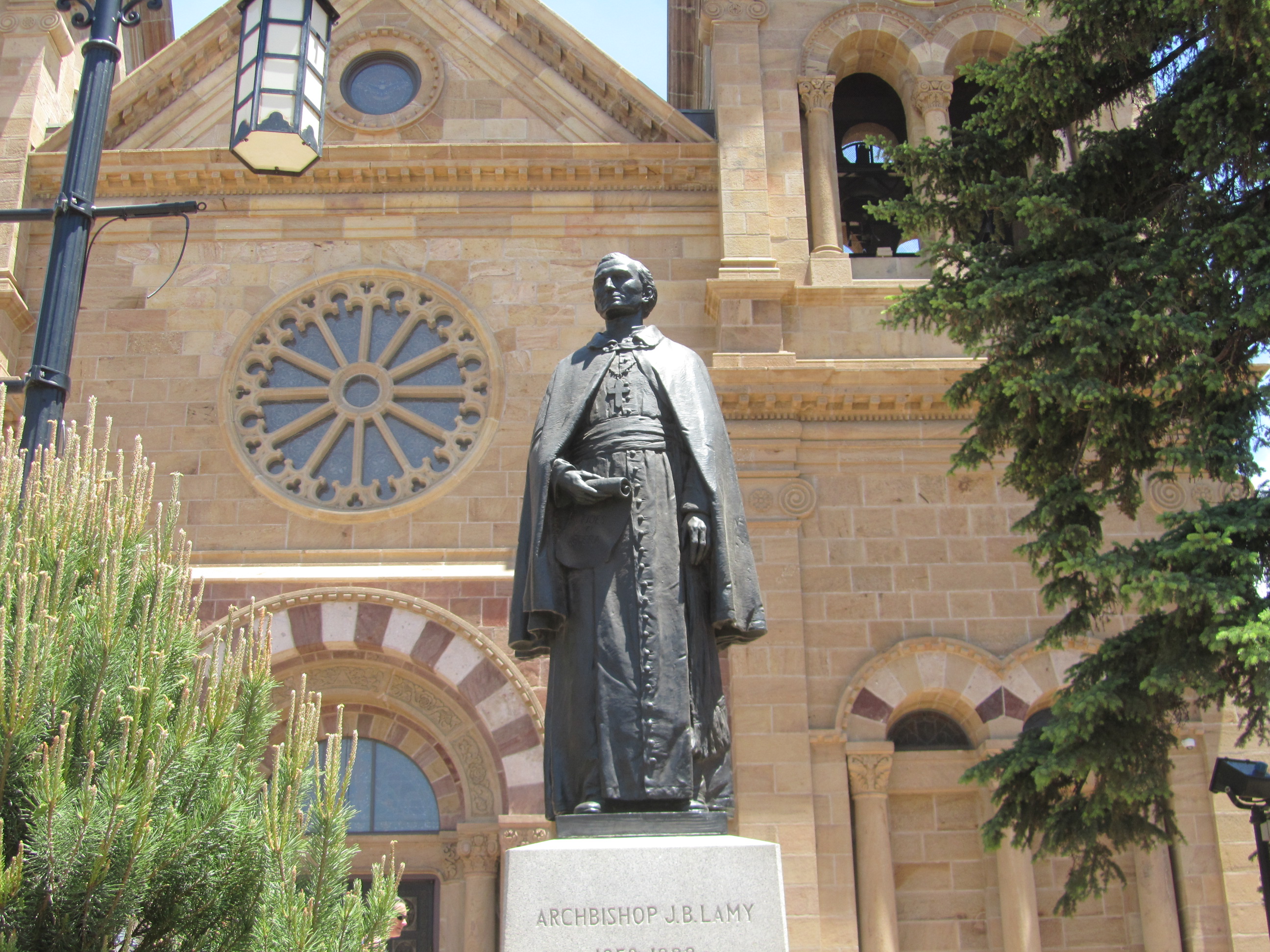
The site entered a new era with the arrival of Jean-Baptiste Lamy, the French-born churchman appointed to lead the Catholic Church in New Mexico in 1850. Lamy reached Santa Fe in 1851 and believed the aging adobe parish church was too small and modest to serve as the principal church of the growing territory. Influenced by the massive medieval churches of his native France, he envisioned a cathedral constructed from stone in the Romanesque tradition. Lamy would later inspire the fictional Bishop Jean-Marie Latour in Willa Cather’s celebrated 1927 novel Death Comes for the Archbishop.
Construction of the new cathedral began in 1869 under the direction of French architects and French and Italian stonemasons. Remarkably, its foundations and exterior walls were built around the existing La Parroquia so that the older church could continue to be used during construction. Once the stone walls were sufficiently complete, most of the adobe church was dismantled and carried out through the new cathedral’s front entrance. Stone was transported from several regional quarries, including locations near Lamy Junction, Arroyo Sais, and La Bajada Mesa. Construction continued through years of funding shortages, design changes, and interruptions.
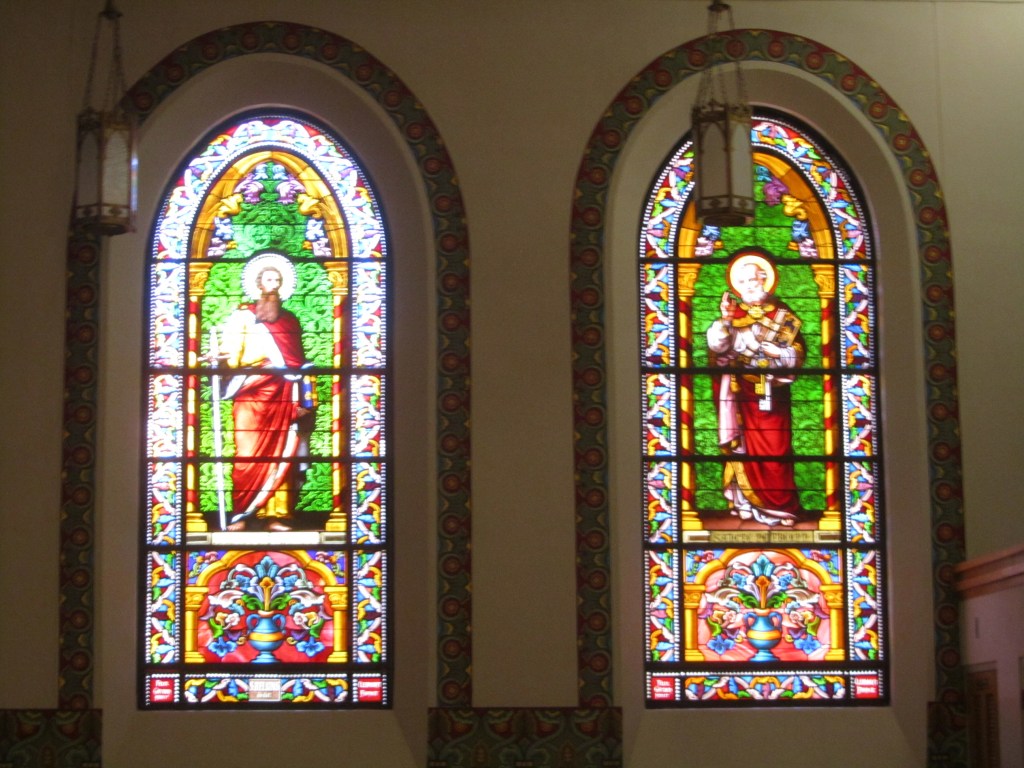
Architecturally, the cathedral is a striking example of Romanesque Revival design. Its heavy masonry, repeated rounded arches, large rose window, and strong symmetrical façade recall the churches of eleventh- and twelfth-century France. The warm brown and golden limestone allows the European-inspired building to remain visually connected to the colors of the New Mexico landscape. Two square bell towers frame the entrance, but the tall spires included in the original design were never constructed because of insufficient funding. The unfinished towers have since become one of the cathedral’s most recognizable characteristics. Inside, French stained-glass windows depict the Twelve Apostles, while the rose window fills the nave with changing light.
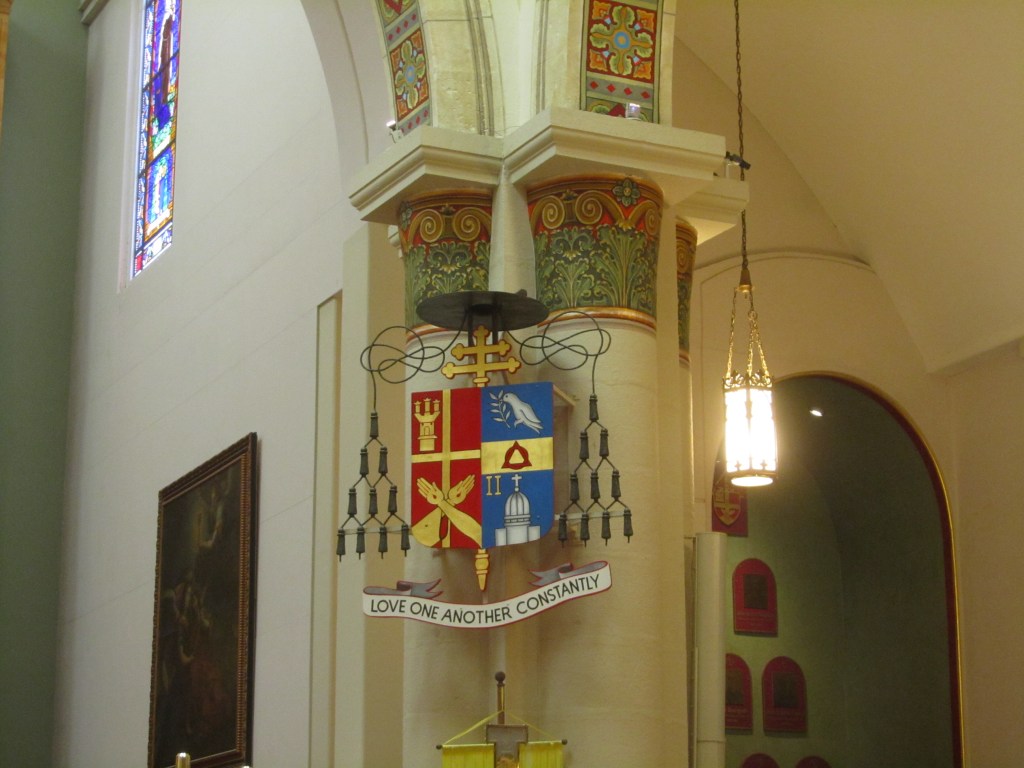
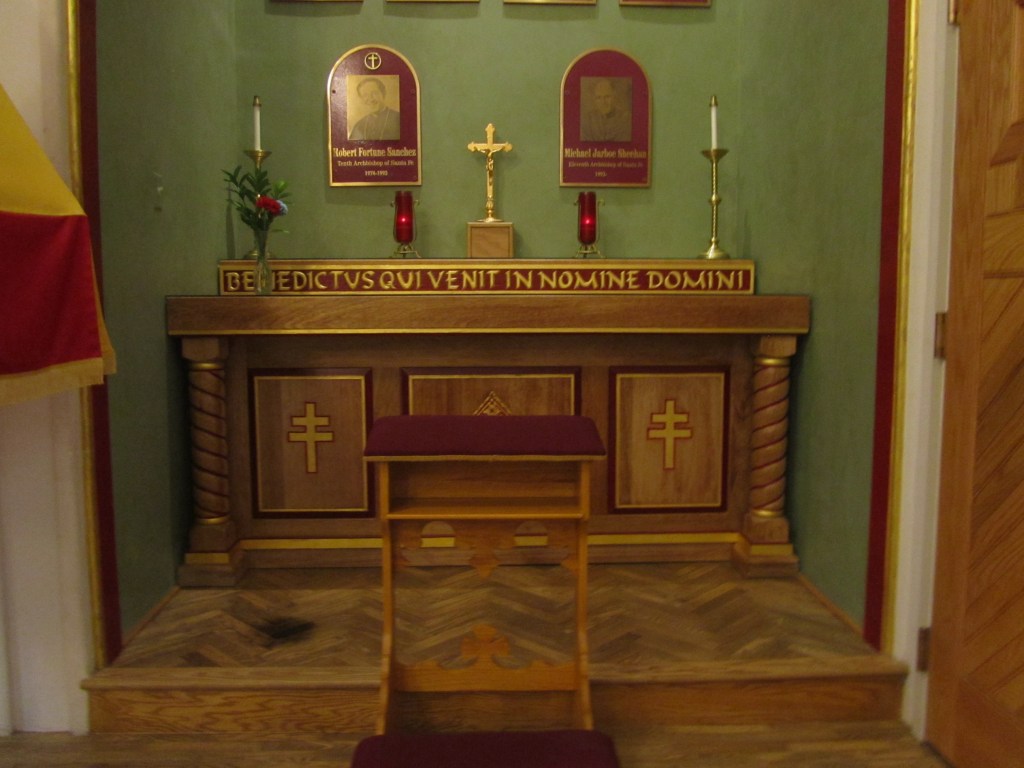
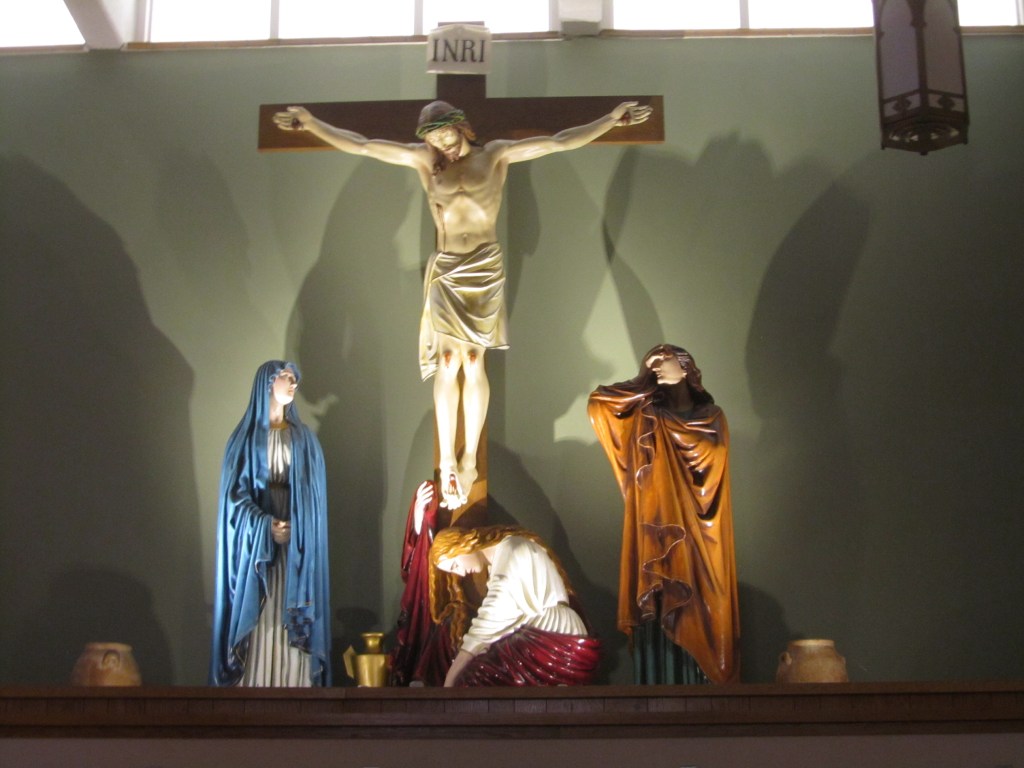
The cathedral’s entrance and sanctuary contain some of its most fascinating artistic details. Bronze panels created by Santa Fe artist Donna Quasthoff were installed on the main doors during the 1986 restoration and portray episodes from the history of Catholicism in New Mexico. The work is documented in the Smithsonian American Art Museum’s inventory. Above the entrance is an unusual carving of the Hebrew Tetragrammaton—the four Hebrew letters representing the name of God—set inside a triangle. A popular Santa Fe tradition holds that it honored Jewish merchants who contributed to the cathedral’s construction, although the exact reason for the symbol remains debated. Seven archbishops, including Lamy, are buried beneath the sanctuary.
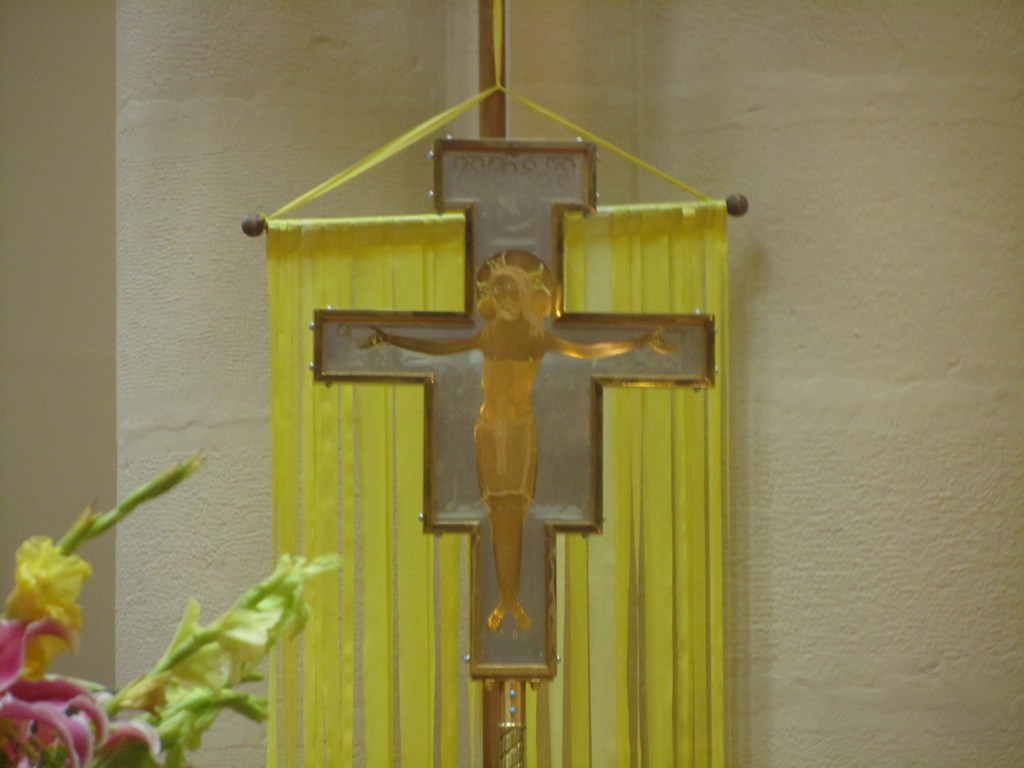
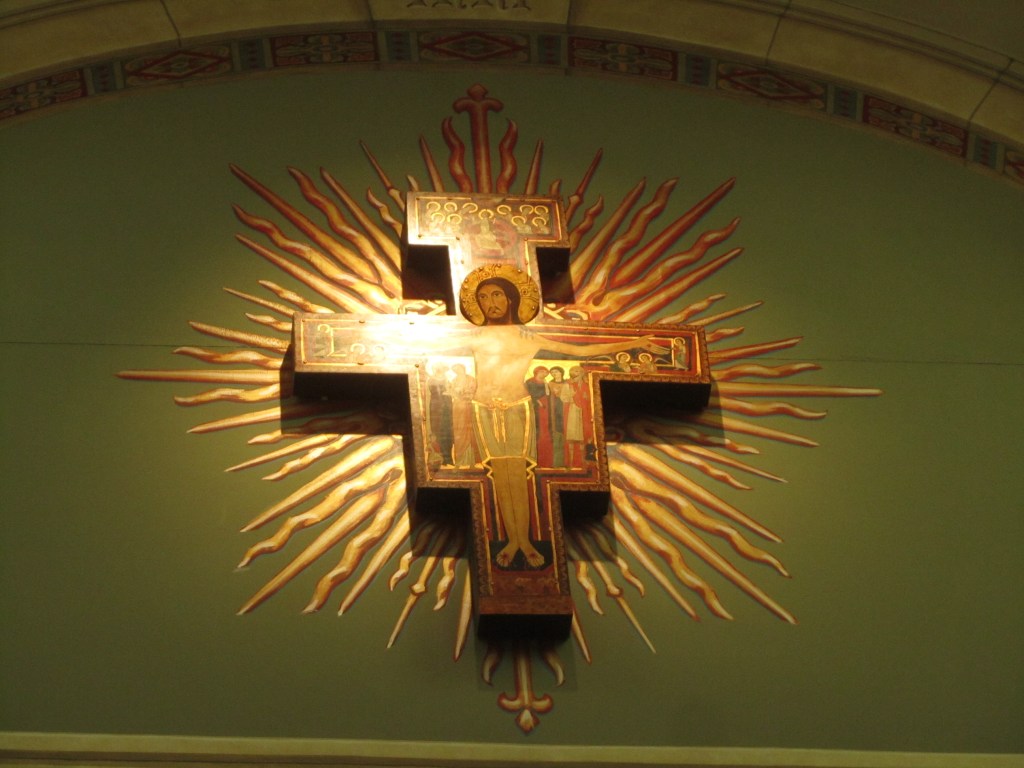
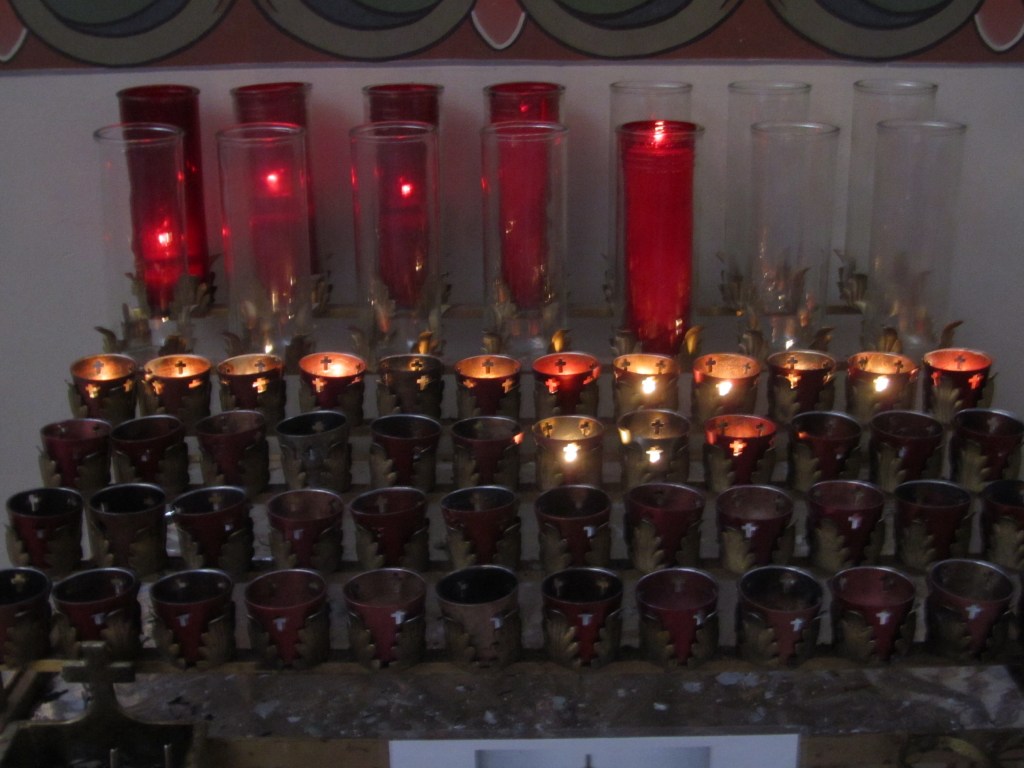
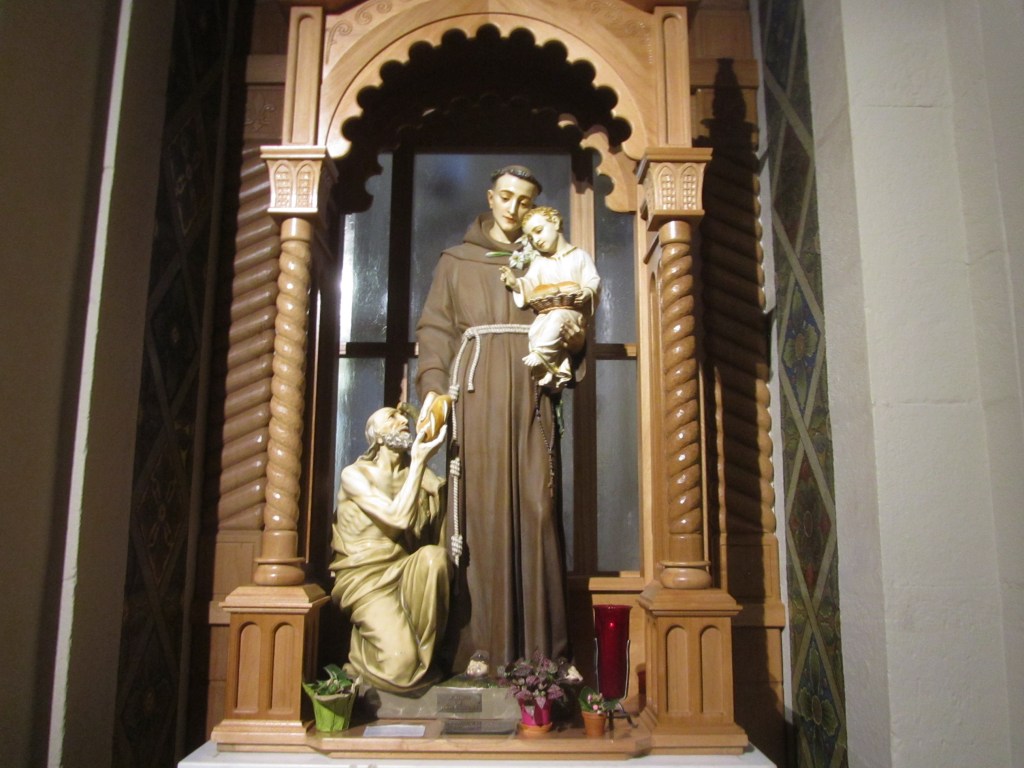
The cathedral’s greatest historical treasure may be the small adobe chapel dedicated to La Conquistadora, now also honored as Our Lady of Peace. The chapel is the only surviving portion of the earlier parish church. It houses a wooden statue of the Virgin Mary brought to New Mexico during the 17th century and described by the cathedral as the oldest representation of the Virgin Mary in the U.S. The statue was removed when the Spanish fled during the Pueblo Revolt and later returned to Santa Fe. Annual processions associated with the image have continued in various forms since the 18th century. Today, the devotion is maintained by La Cofradía de La Conquistadora, which cares for the statue, its wardrobe, its chapel, & the traditions surrounding it.
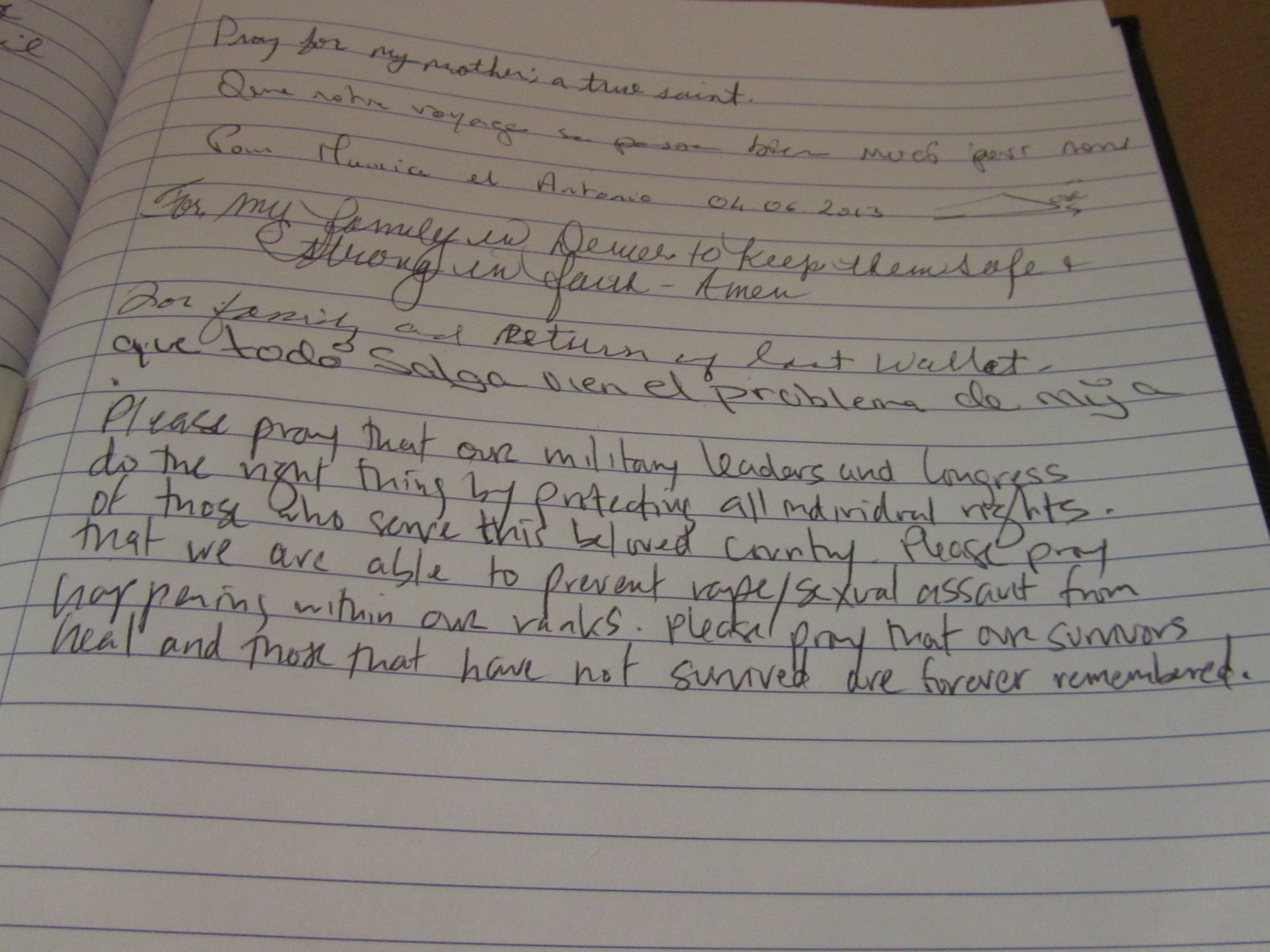
Please pray that our military leaders and Congress do the right thing by protecting all individual rights of those who serve this beloved country. Please pray that we are able to prevent rape/sexual assault from happening within our ranks. Please pray that our survivors heal and those that have not survived are forever remembered. -Jen Norris
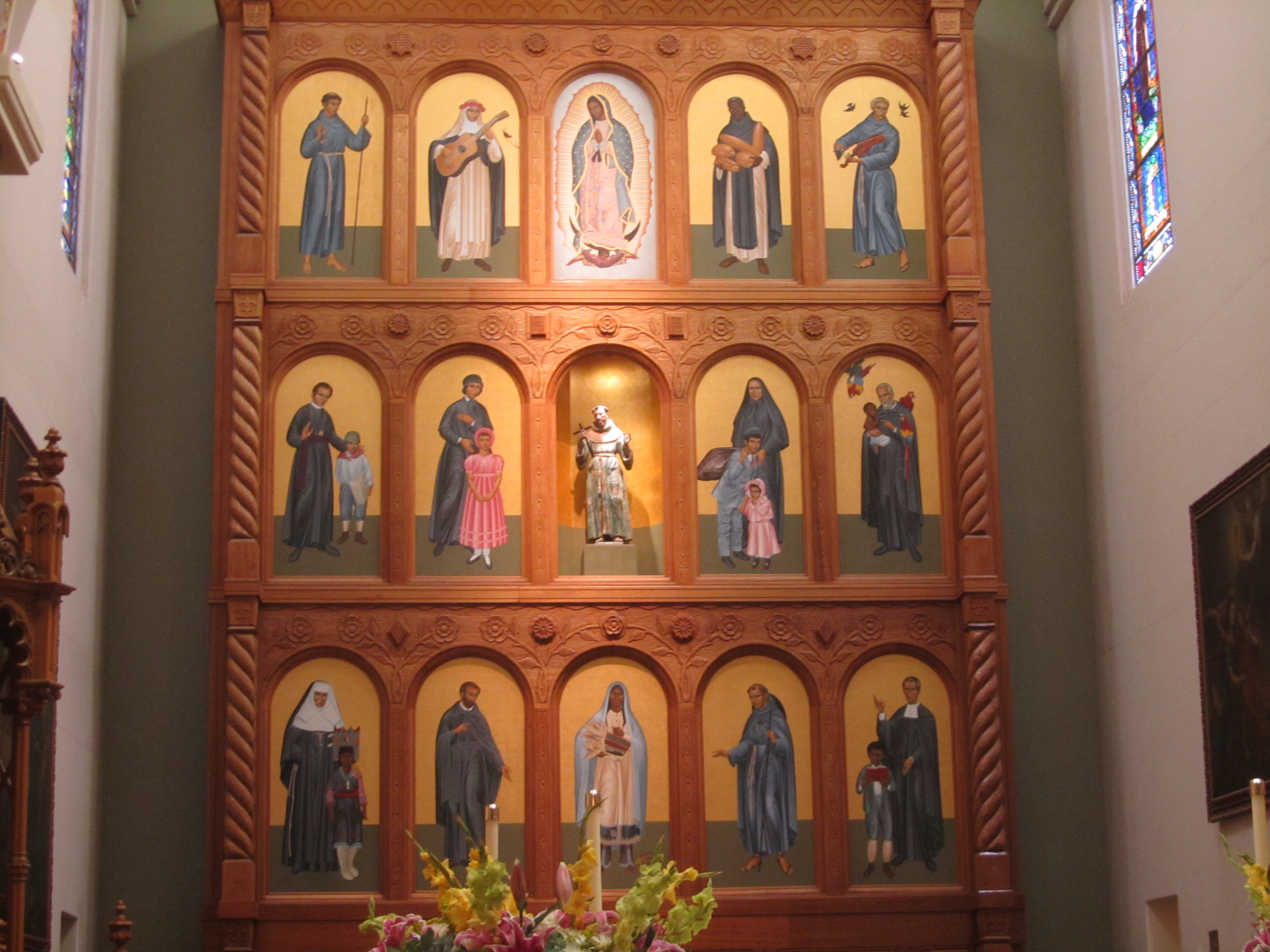
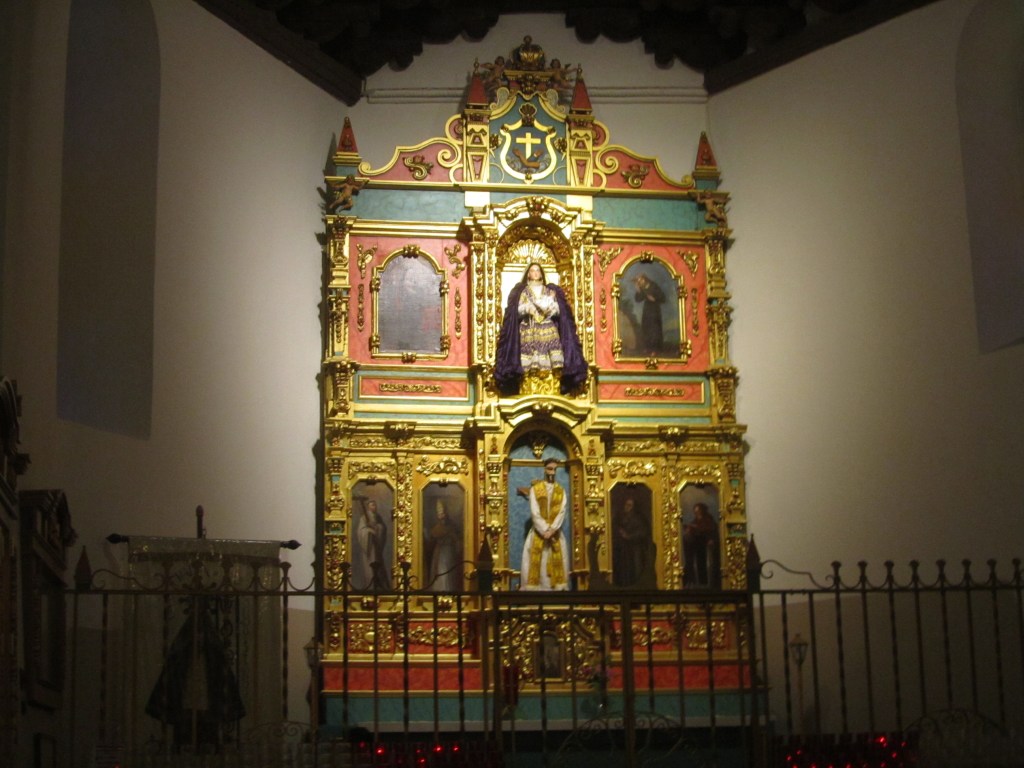
The cathedral has continued to change while preserving its historic character. A major structural renewal in 1967 strengthened the building, added sacristies, and created the Blessed Sacrament Chapel. The monumental altar screen was installed during the centennial period in the 1980s, and the cathedral was elevated to the status of a basilica by Pope Benedict XVI in 2005. “Cathedral” identifies the church as the seat of the archbishop, while “basilica” is an honorary title recognizing its exceptional historical and spiritual importance. Behind the church, the Stations of the Cross Prayer Garden preserves part of Lamy’s former garden. Despite the steady flow of tourists, historians, architecture enthusiasts, and literary pilgrims, the Cathedral remains a living house of worship where Mass, prayer, music, community service, and centuries-old traditions continue.
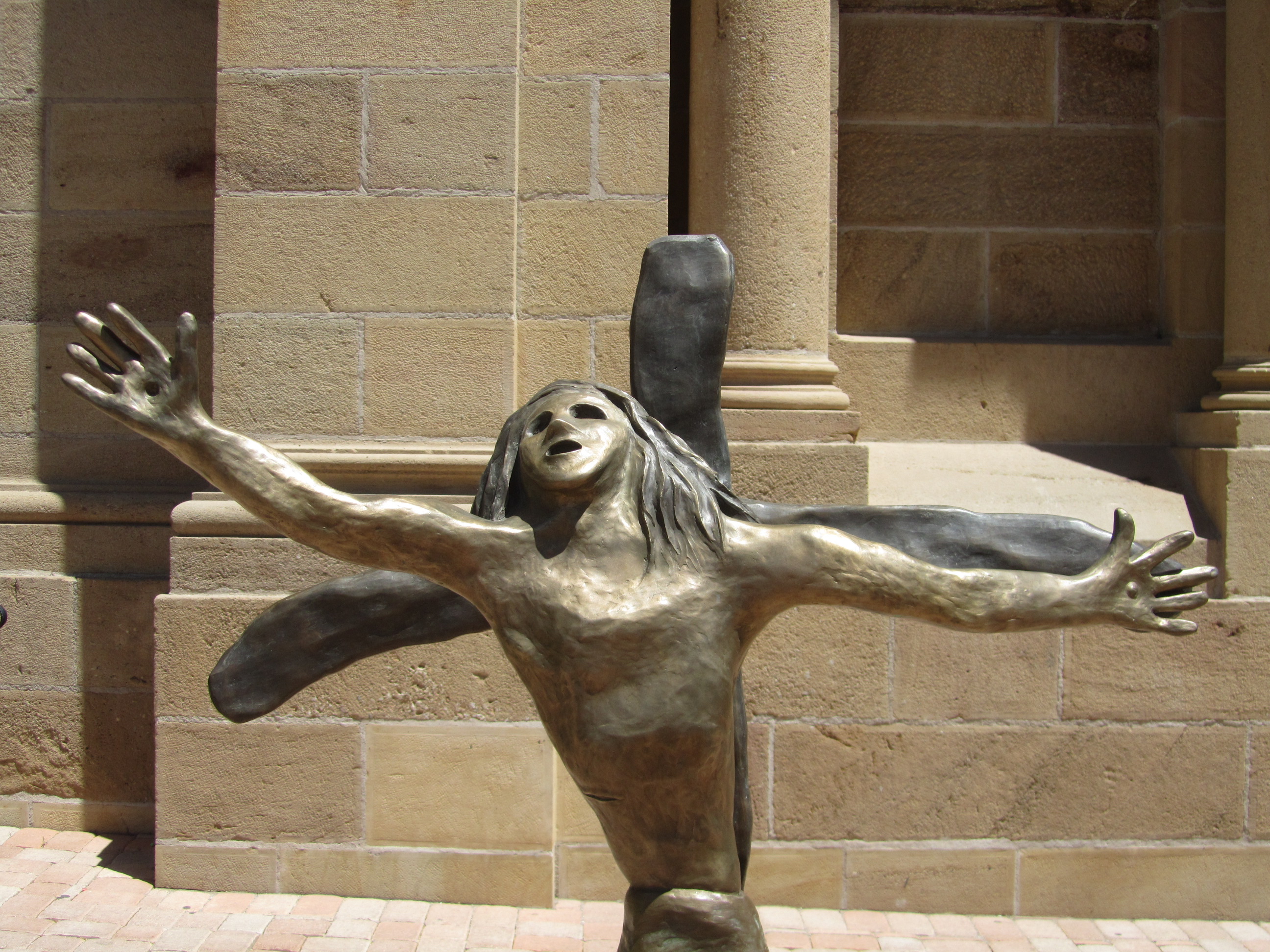
The Cathedral Basilica of St. Francis of Assisi is far more than a beautiful stone church. Its adobe chapel, French Romanesque architecture, New Mexican religious art, historic Marian devotion, and connection to Archbishop Lamy and Willa Cather make it a remarkable record of Santa Fe’s complex history. It stands today as a place where European, Spanish, Indigenous, Mexican, Jewish, and New Mexican stories meet—sometimes painfully, but always meaningfully—within one of the Southwest’s most enduring sacred landmarks.
Sources
- Cathedral Basilica of St. Francis of Assisi — Official Website
Current parish information, basilica status, services, and visitor information. - Our Parish History — Cathedral Basilica of St. Francis of Assisi
Early churches, Archbishop Jean-Baptiste Lamy, construction, stained glass, renovations, burials, and elevation to a basilica. - La Parroquia Site — National Park Service
Colonial history, the Pueblo Revolt, La Parroquia, stone quarries, Romanesque architecture, construction, and historic trails. - La Cofradía de La Conquistadora — Cathedral Basilica
La Conquistadora, Our Lady of Peace, annual traditions, processions, and preservation of the statue and chapels. - Doors of St. Francis Cathedral — Smithsonian Institution
Donna Quasthoff’s bronze cathedral doors and their depictions of New Mexico Catholic history. - Cathedral Basilica Rose Window — Library of Congress
Photographic documentation of the cathedral’s rose window and interior architecture. - Historic Cathedral Photograph, circa 1885 — Library of Congress
An early photograph documenting the cathedral while it was still under construction. - Cather’s Santa Fe Walking Tour — National Willa Cather Center
Archbishop Lamy’s connection to Willa Cather’s Death Comes for the Archbishop and the cathedral’s prayer garden. - Willa Cather’s Santa Fe — University of New Mexico Press
Cather’s visits to Santa Fe, her research, and Lamy’s influence on the fictional Bishop Latour. - Support from the Jewish Community at the Cathedral — History in Santa Fe
Background on Jewish merchants who supported construction and the Hebrew Tetragrammaton above the entrance.


9 thoughts on “Cathedral Basilica of St. Francis: History, Art and Architecture, Santa Fe, New Mexico (June 4, 2013)”