In the late 1970s, residents of Love Canal, a working-class neighborhood in Niagara Falls, New York, discovered that their homes, schools and playgrounds were built on top of a former chemical waste dump, which was now leaking toxic substances and wreaking havoc on their health. Through interviews with many of the extraordinary housewives turned activists, POISONED GROUND: THE TRAGEDY AT LOVE CANAL shows how they effectively challenged those in power, forced America to reckon with the human cost of unregulated industry, and created a grassroots movement that galvanized the landmark Superfund Bill. (American Experience, PBS, April 22, 2024)
Love Canal: The Environmental Disaster That Changed America
Love Canal is one of the most significant environmental disasters in United States history. Located in the LaSalle neighborhood of Niagara Falls, New York, the crisis exposed the devastating consequences of improperly managed hazardous waste and forever changed the nation’s environmental laws.
A Dream That Became a Disaster
The area known as Love Canal was originally intended to become a model industrial city. Around 1890, entrepreneur William T. Love envisioned digging a canal between the upper and lower Niagara Rivers to generate inexpensive hydroelectric power and create a thriving planned community. However, advances in electrical transmission and financial difficulties caused the project to fail before completion, leaving behind only a partially excavated canal.
From Canal to Chemical Dump
Beginning in the 1920s, the abandoned canal was used as a municipal and industrial waste disposal site. Between approximately 1942 and 1953, Hooker Chemical Company (later acquired by Occidental Petroleum) disposed of more than 21,000 tons of chemical waste in the canal.
The waste included hundreds of chemical compounds, many of which were toxic or later identified as probable or known carcinogens. After filling the canal with waste, the company sealed it with clay and soil.
In 1953, Hooker Chemical sold the property to the Niagara Falls Board of Education for one dollar, while documenting the presence of buried chemical wastes and including liability warnings in the deed. Despite these warnings, development continued.
AI Recreation of a photo from the Levin Center called Portraits in Oversight: Congress and the Love Canal Disaster
(Wayne State Law School, 2022)
Homes and Schools Built on Toxic Waste
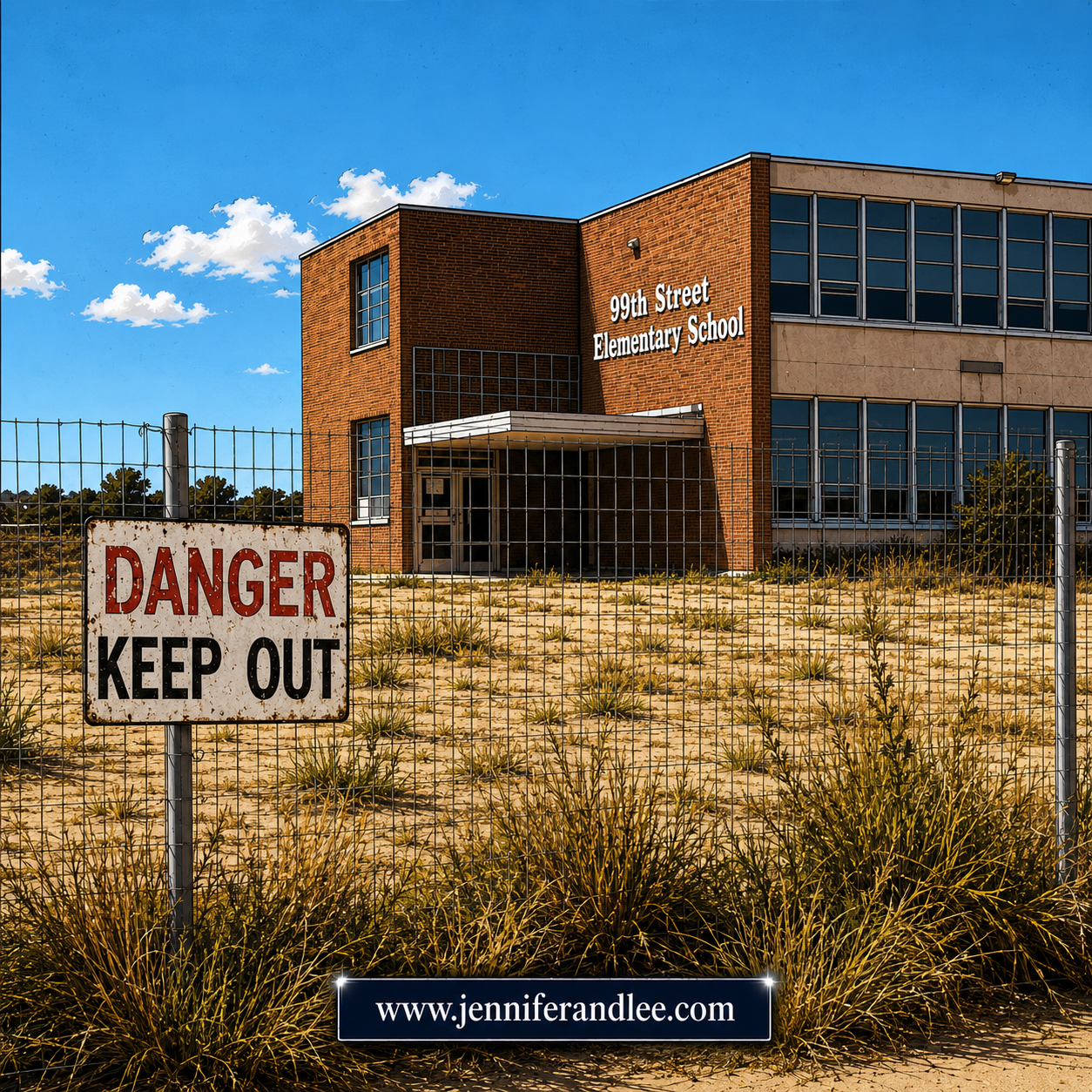
During the 1950s and 1960s, approximately one hundred homes and the 99th Street Elementary School were constructed directly adjacent to—and in some cases on top of—the former landfill.
Construction projects, utility installation, and road building disturbed the protective clay cap covering the waste. Over time, unusually heavy rainfall and rising groundwater allowed chemicals to migrate through the soil into basements, yards, playgrounds, and storm sewers.
Residents reported:
- Chemical odors inside their homes
- Black sludge seeping into basements
- Chemical residues surfacing in backyards
- Corroding waste drums emerging from the ground
Laboratory testing ultimately identified dozens of chemical compounds contaminating the neighborhood.
Growing Health Concerns
Residents increasingly reported serious health problems, including:
- Miscarriages
- Birth defects
- Childhood illnesses
- Seizures
- Skin burns
- Respiratory conditions
- Elevated rates of certain cancers
- Liver damage
- Neurological symptoms
Although scientists have continued to debate the precise extent to which individual illnesses were directly attributable to chemical exposure, there was broad agreement that residents had been exposed to hazardous substances at unacceptable levels and that the contamination posed a significant public health risk.
Community Activism
One of the defining features of the Love Canal disaster was the determination of local residents.
Lois Gibbs, whose son attended the elementary school built on the contaminated site, organized the Love Canal Homeowners Association. Residents gathered health information, documented illnesses, pressured local, state, and federal officials, and attracted national media attention.
Their grassroots activism transformed Love Canal into a national symbol of environmental justice and citizen advocacy.

AI Recreation of a Love Canal Superfund Site Information photo (U.S. EPA)
Government Response
In August 1978, New York Governor Hugh Carey declared a public health emergency and announced that the state would purchase homes in the most contaminated area.
That same month, President Jimmy Carter approved emergency federal disaster assistance—the first time in U.S. history that federal emergency funds were authorized for a disaster caused by hazardous waste rather than a natural event.
Ultimately, hundreds of families were relocated from the neighborhood. Additional evacuations followed in 1980 after continuing contamination concerns.
Birth of the Superfund Program
Perhaps Love Canal’s most enduring legacy was the creation of the Comprehensive Environmental Response, Compensation, and Liability Act (CERCLA), commonly known as the Superfund Act, signed into law in 1980.
The law established:
- Federal authority to investigate hazardous waste sites
- Emergency cleanup powers
- A trust fund for abandoned hazardous waste sites
- Legal mechanisms requiring responsible parties to pay cleanup costs
- Long-term monitoring of contaminated locations
Love Canal became one of the first major Superfund cleanup projects and remains one of the defining events that shaped modern environmental regulation in the United States.
Cleanup and Long-Term Monitoring
Cleanup activities continued throughout the 1980s and 1990s and included:
- Installation of drainage and collection systems
- Construction of containment barriers
- Capping contaminated areas
- Collection and treatment of contaminated groundwater and leachate
- Long-term environmental monitoring
In 2004, after decades of remediation, EPA removed Love Canal from the National Priorities List (Superfund list), concluding that the completed cleanup was protective of human health and the environment under the site’s intended land uses. Monitoring continues to ensure the remedy remains effective.

An AI recreation of an abandoned home in the Love Canal neighborhood in Niagara Falls, New York (Buffalo News, 2018)
Lasting Legacy
Love Canal fundamentally changed how the United States manages hazardous waste.
Its legacy includes:
- Stronger hazardous waste regulations
- Creation of the federal Superfund program
- Increased environmental accountability for polluters
- Greater public awareness of toxic chemical exposure
- Expanded community involvement in environmental decision-making
- Improved environmental site assessments before development
The disaster also demonstrated how environmental contamination can disproportionately affect ordinary working-class communities and highlighted the importance of transparency, environmental health research, and government accountability.
Today, Love Canal remains one of the most studied environmental disasters in American history and continues to serve as a cautionary example for policymakers, scientists, environmental professionals, and communities across the country.
SOURCES:
The Love Canal Tragedy (EPA Journal, 1979)
EPA History: Love Canal
Love Canal Revealed a National Problem; Superfund Provided a Solution (EPA)
EPA Superfund Program Overview
ATSDR – Love Canal Public Health Information
EPA Superfund Site: LOVE CANAL, NIAGARA FALLS, NY, Photos, Videos & Audio
National Institute of Environmental Health Sciences (NIEHS) – Environmental Health Topics
Library of Congress – Environmental History Collections
Poisoned Ground: The Tragedy at Love Canal (American Experience PBS)
The Levin Center | Portraits in Oversight of Love Canal (Wayne State Law School, 2022)


One thought on “Love Canal: The Environmental Disaster That Changed America and Became the Birthplace of the EPA Superfund Program (Niagara Falls, New York)”