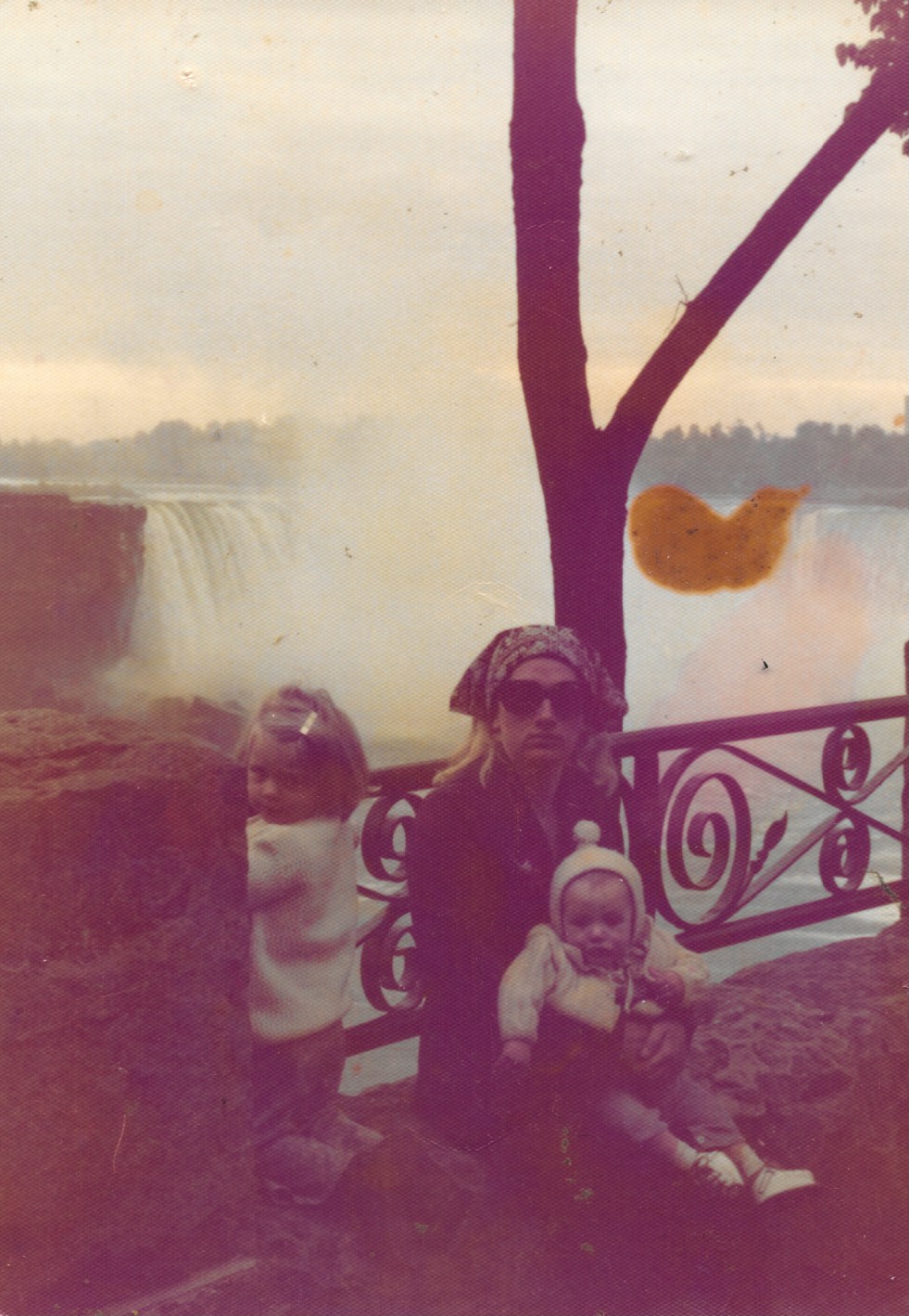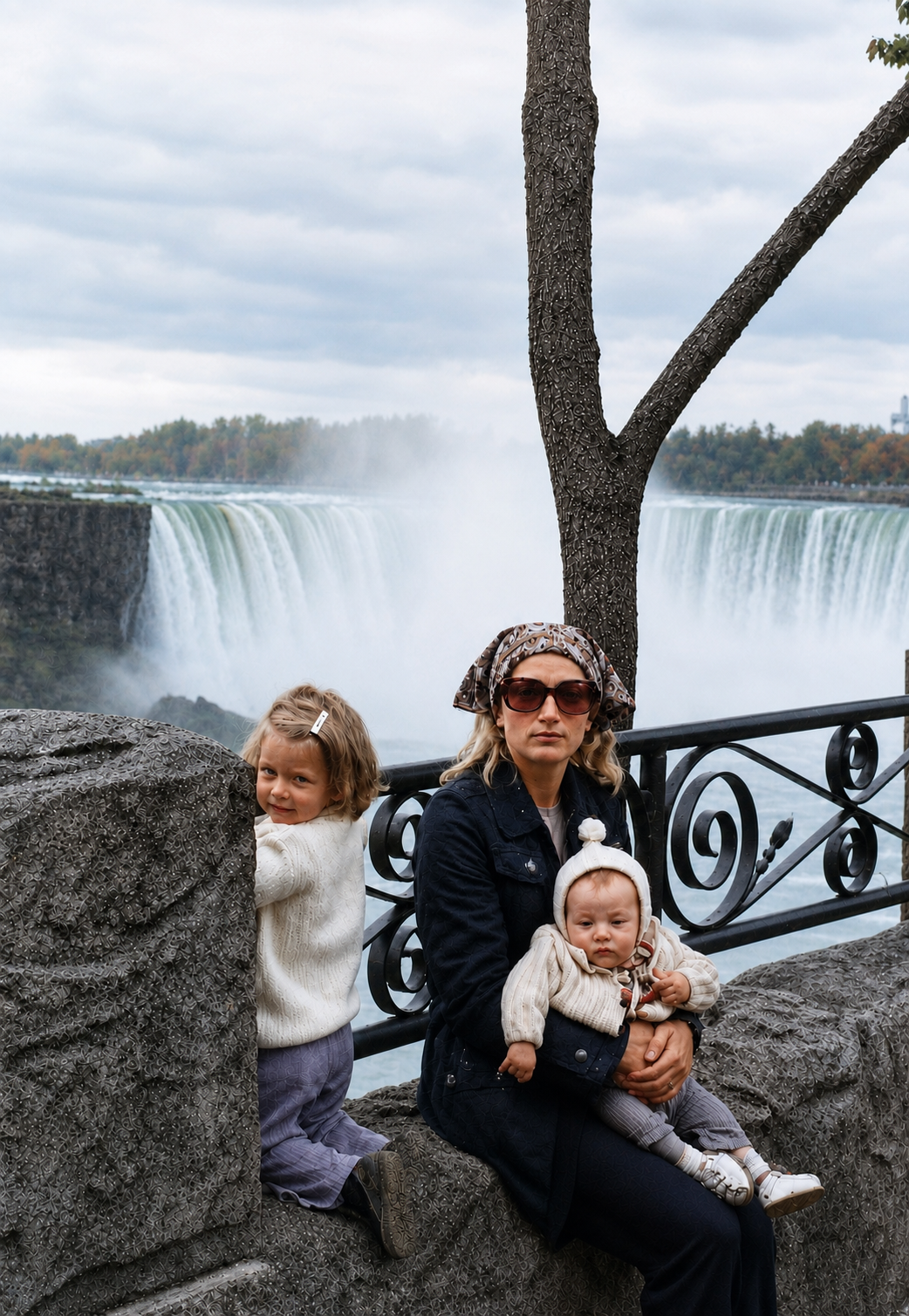
Jennifer with her mother and brother at Niagara Falls, New York (1974)
By Jennifer Norris
For as long as I can remember, Niagara Falls has been one of those places I wanted to see with my own eyes. I imagined standing near the water, hearing its power and feeling the mist in the air. Yet somehow, despite all the places I have traveled, I never made it there—or at least, that is what I believed.
Then I started looking through our old family photographs.
Among the faded pictures from my childhood was an image of my mother, my brother, and me sitting together in front of Niagara Falls. It was taken on the New York side in the fall of 1974, when I was only two years old.
There I was, wearing a little knitted cardigan sweater clearly enjoying the falls, only turning around for the picture. My young brother was sitting on my mother’s lap, and behind our family was the unmistakable force of Niagara Falls. The photograph captured a moment I had no conscious memory of living.
I had spent years wanting to visit a place I had already been.
There is something strangely moving about discovering part of your own life through a photograph. At two years old, I was too young to remember the sound of the falls or the feeling of the mist. I cannot recall the drive, the weather, or what my mother and brother may have done that day. But the photograph proves that I was there. My body experienced that place even if my mind could not preserve the memory.
That realization made the photograph feel like more than a family picture. It became a missing piece of my personal history.
Photographs have a way of remembering for us. They quietly hold the places, people, and moments our minds can no longer reach. Decades later, they can reveal that our lives were larger and more complicated than we realized.
Finding this photograph has made me want to return to Niagara Falls more than ever—not simply as a tourist, but as an adult trying to understand both my own past and the environmental history of the area.
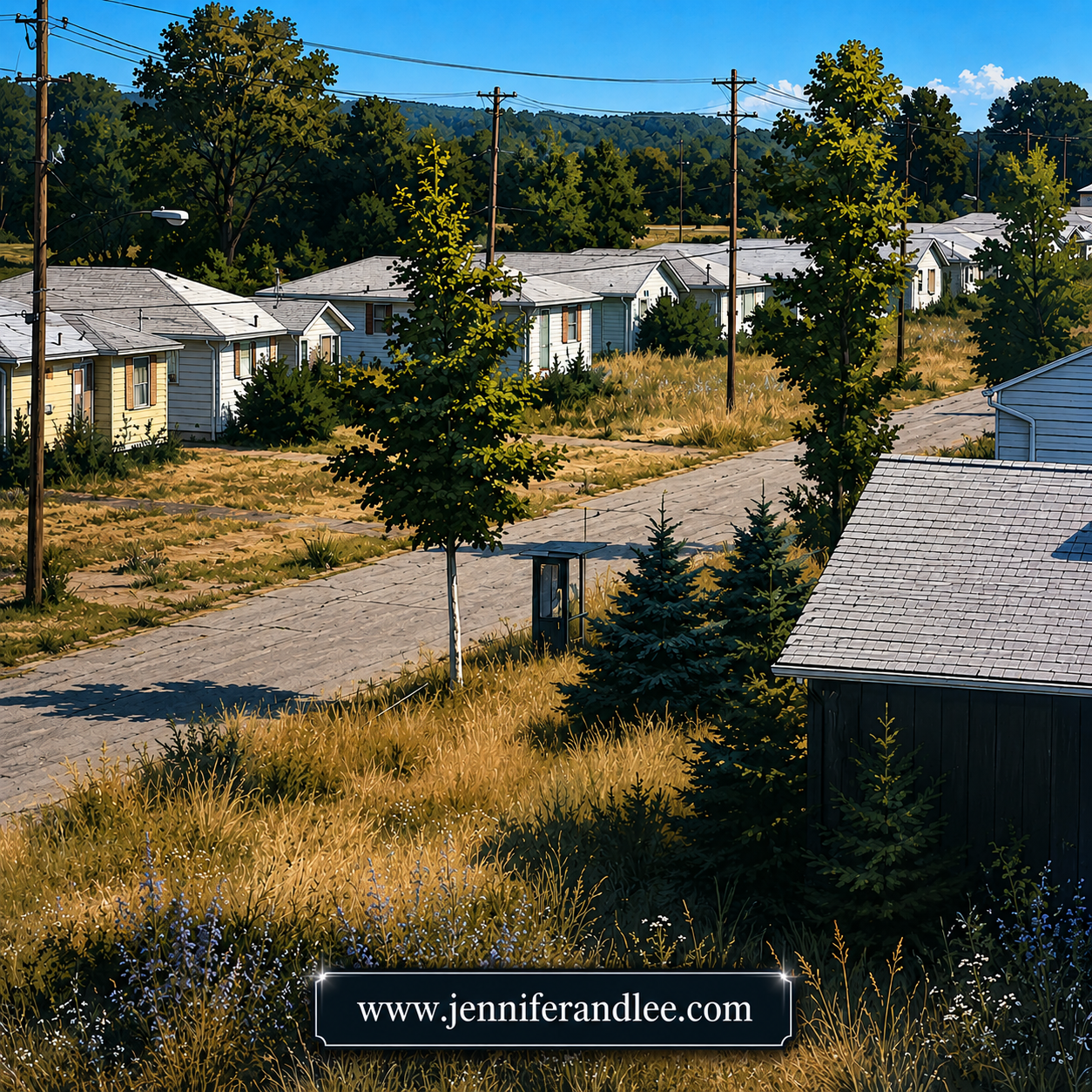
My research into Love Canal changed the way I think about western New York. It taught me how easily beauty, family life, industry, environmental contamination, and institutional failure can exist within the same landscape. Niagara Falls is known around the world for its breathtaking natural power, yet nearby communities lived through one of the most disturbing environmental disasters in American history.
After studying Love Canal, I began wanting to understand the geography for myself. I want to see how the neighborhoods, roads, industrial areas, waterways, and Niagara Falls all relate to one another. Maps and historical records can teach us a great deal, but physically standing in a place creates another kind of understanding. It allows history to become real and three-dimensional.
I want to walk through the area slowly. I want to observe the landscape, study how everything is laid out, and consider what families living there would have seen and understood at the time. I want to feel the distance—or perhaps the unsettling closeness—between one of the world’s great natural wonders and a community forever associated with toxic contamination.
Environmental history is not only about chemicals, government reports, property lines, or cleanup plans. It is about people. It is about families who believed their homes were safe, children who played outside, and residents who eventually realized that something was terribly wrong. It is about what happens when human health and the natural world are treated as acceptable sacrifices.
That history matters deeply to me because I understand what it means to search for answers about environmental exposure. I understand the frustration of learning that important truths may have been buried, minimized, or ignored. Once you have experienced that kind of search personally, environmental disasters stop feeling like distant historical events. You recognize the human beings inside them.
Returning to Niagara Falls would therefore be both personal and educational. I would be revisiting a place where I once sat with my mother and brother as a two-year-old child, while also connecting with an area whose environmental history now means something entirely different to me.
I wonder who took the picture of my family. I wonder why we were there and how my mother felt when she looked at the falls that day in 1974. Both my brother and I were too young to remember this event. I wonder whether anyone imagined that I would be confronting this more than fifty years later. It’s funny how I looked at old photographs and began piecing together a moment in time from frozen moments.
The photograph gave me something else: proof that a place I had always dreamed of seeing was already woven into my story. Now I want to return with the knowledge, awareness, and curiosity I did not have at two years old.
This time, I want to remember everything—the sound of the water, the layout of the land, the history beneath the streets, and the feeling of standing where my younger self once sat.
Niagara Falls is no longer simply somewhere I hope to visit someday. It is a place I want to return to—a place where my childhood, my family history, my environmental advocacy, and my search for truth unexpectedly meet.
Niagara Falls, New York (Erik The Travel Guy)
Related Links:
- A Letter to the Brother I’ve Wondered About My Entire Life (August 17, 2026)
- After Lead Poisoning Symptoms Dismissed by PTSD Diagnosis, It Results in Brain Inflammation, Fatigue, Muscle Weakness, Digestion Issues & Chronic Pain (2024)
- Love Canal: The Environmental Disaster That Changed America and Became the Birthplace of the EPA Superfund Program (Niagara Falls, New York)
Photo Source: