A cautionary tale for anyone with unexplained symptoms
By Jennifer S. Norris, U.S. Air Force Retired
I took care of myself my entire life because I knew I had no one to fall back on. I paid attention to my body. I tried to eat well, stay capable, work hard, and make the kind of choices that would let me remain independent. I believed that if I did my part, I could protect my future.
Then I got sick while serving in the Air Force. I did not know that the environment around me might be part of the story. I could control what I ate and how hard I worked. I could not control what had been left in the soil, what was moving through groundwater, or whether anyone thought to warn the people serving there.
That is why I am writing this. If you have symptoms that no one can explain, please do not let a familiar diagnosis end the investigation.
When the symptoms began
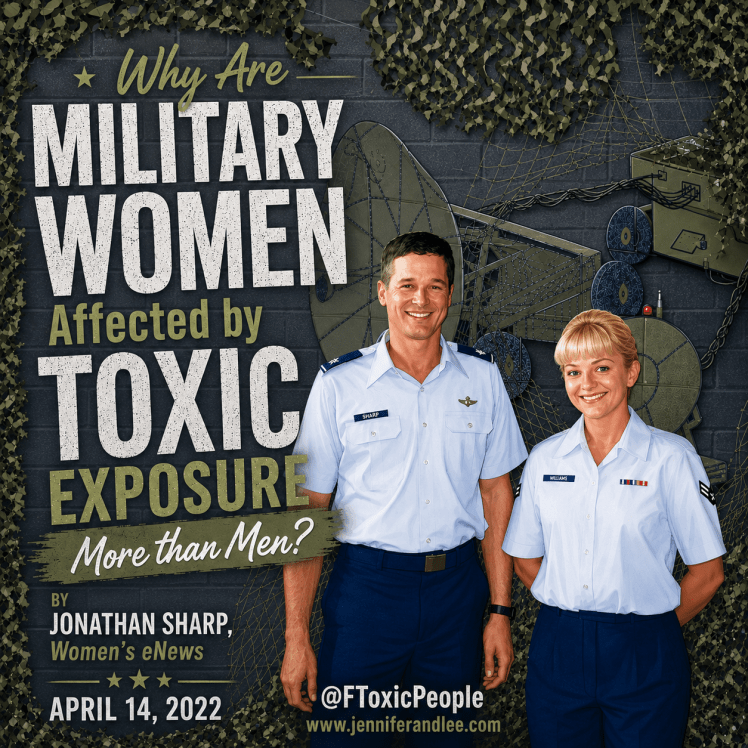
Why Are Military Women Affected by Toxic Exposure More than Men? – Women’s eNews (April 14, 2022)
From 2001 to 2005, I served at Otis Air National Guard Base on what is now Joint Base Cape Cod, Massachusetts. During those years, I dealt with vomiting, debilitating headaches, exhaustion, pain, and a body that seemed less able to do what I asked of it. My father died during that period. I was also carrying trauma and enormous stress. There was always another explanation ready for my symptoms: grief, PTSD, the demands of service. Each was real. None should have prevented anyone from looking further.
Over the years, my health and cognitive abilities deteriorated. By 2013, I noticed changes in my ability to speak and express myself, and I withdrew from public work that required me to talk. By 2019, I was struggling so badly that I felt I was dying. Lee and I eventually sold the home my father had left me and moved from Maine to Southern California to find care. That house became our way out when we had run out of other options.
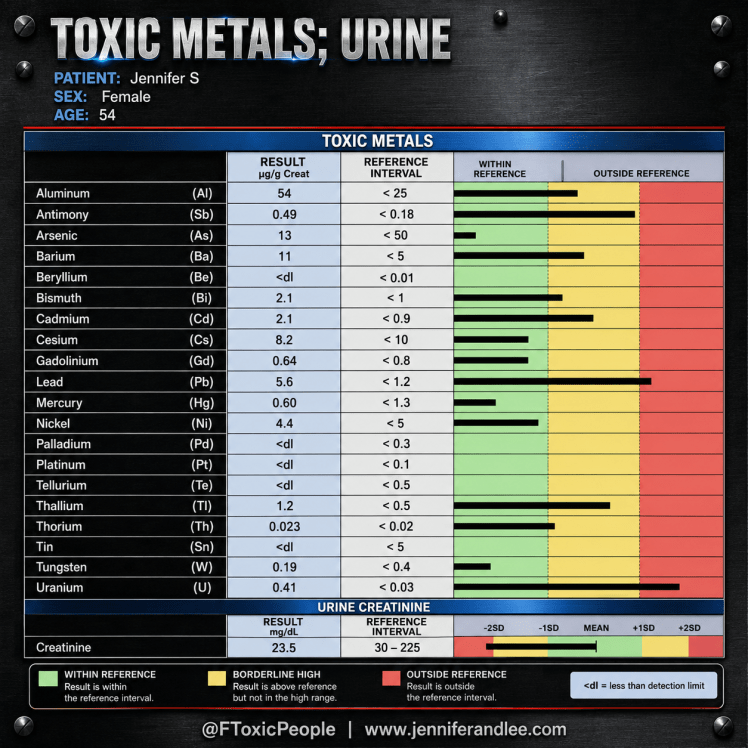
I have written before about the years when my symptoms were attributed to PTSD and about being stop-lossed while serving at Cape Cod. In the fall of 2023, I learned I had elevated lead. Later testing raised concerns about antimony and uranium as well. I have pursued treatment with clinicians, including chelation. I have regained some independence, but getting answers has not erased what those lost years cost me.
I also live with CPTSD and have dealt with tick-borne illness. I refuse the idea that one diagnosis must cancel out the others. Several things can be happening to one person at the same time.
I have also written about the metals woven into the history of military weapons and how trauma and toxic exposure can overlap in a service member’s life. The more I learned, the more I wanted other people with unexplained illness to know what questions had taken me so long to get answers for.
The risk was documented. My exposure route still deserves investigation.
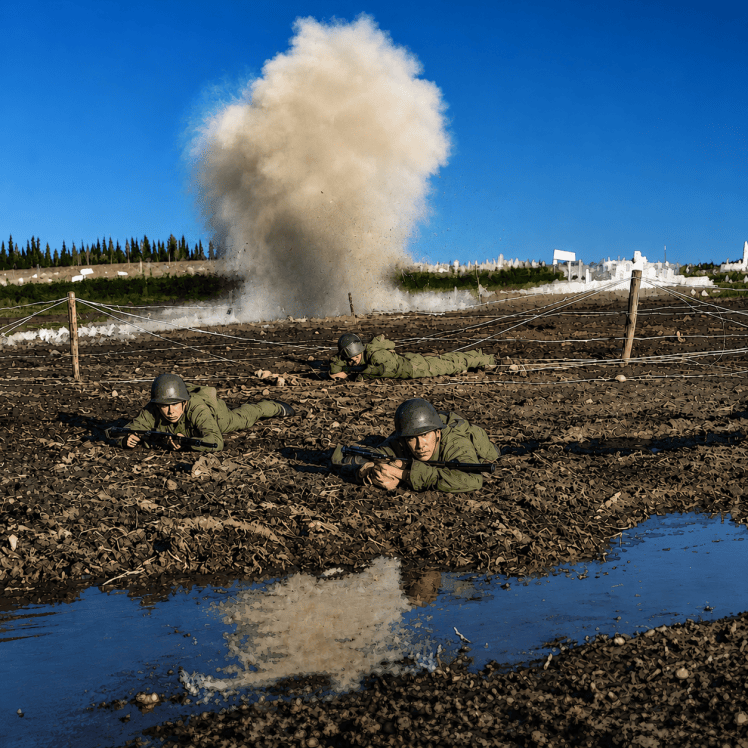
After my test results, I looked more closely at the base where I had become ill. EPA records show that Otis Air National Guard Base entered the Superfund National Priorities List in 1989. At Joint Base Cape Cod, federal agencies have investigated contaminated soil and groundwater, including the legacy of military training. EPA has also documented lead and antimony associated with small-arms ranges.
Those records matter. They establish that contamination and cleanup concerns were real. They cannot, by themselves, establish exactly where, when, or how much of any metal entered my body. That distinction should lead to better exposure histories and better investigation, not to silence.
I was treated as an acceptable risk. My labor was needed; my symptoms could wait. By the time I understood what questions to ask, years had passed. I had done everything I could to protect my health, and it still had not been enough to protect me from a hazard I could not see.
The stories we keep being asked to forget

Consider Love Canal. Families in Niagara Falls lived near buried industrial chemicals and pressed for action as contamination came to light. Their struggle helped spur the 1980 law that created the federal Superfund program. Love Canal was placed on EPA’s first Superfund National Priorities List in 1983. It is often called the first Superfund site; the precise history is that the crisis helped create the program and Love Canal was among its first listed sites. Its residents should never have had to fight so hard to make buried waste visible. Turns out it was only the tip of the iceberg.
- Read: Thundering Waters: The Toxic Legacy of Niagara Falls
- Read: Paradise Falls: The True Story of an Environmental Catastrophe
- Read: Love Canal: and the Birth of the Environmental Health Movement
- Read: Love Canal: The Environmental Disaster That Changed America and Became the Birthplace of the EPA Superfund Program (Niagara Falls)
- Watch: Poisoned Ground: The Tragedy at Love Canal on Amazon Prime
In Inventing Niagara: Beauty, Power, and Lies, Ginger Strand looks behind the tourist image of Niagara Falls at the industrial ambition and environmental damage surrounding it. That contrast stays with me: the landscape we are encouraged to admire and the history we are discouraged from seeing.
Closer to my own life, Kerri Arsenault’s Mill Town: Reckoning with What Remains examines life in Mexico and Rumford, Maine, where generations of families, including hers, depended on the paper mill across the Androscoggin River. In my review, I wrote about photographing the river in winter, when I saw open water below the mill’s discharge while it was typically frozen upstream. That observation left me with questions. Arsenault’s book raises the harder one: how can families ask what is in their air and water when the industry they are questioning also pays the bills? Loving a mill town means caring enough about its workers and neighbors to seek clear answers.
- Read: Mill Town: Reckoning with What Remains
- Read: Mill Town Book Review and the Questions Every Maine Family Should Ask
- Read: Finance Committee Member Receives First Menacing Anonymous Letter
- Read: The RPD and Sun Journal Newspaper Regime: Two Veterans Speak Out
- Read: Why Rumford Maine Needs Independent Police Shooting Reviews
- Read: Former Maine Police Chief Stacy Carter’s Missed Personnel Intervention
- Read: Would You Hire Him? Tracey Higley and the Cost of Ignoring Red Flags
Jordan Chariton’s We the Poisoned investigates the Flint water crisis. CDC records describe how Flint switched water sources in 2014 without the corrosion control needed to prevent lead from leaching from pipes and plumbing. Residents could see and smell that something was wrong. Understanding the danger, and forcing a response, took far longer than it should have. No one talks about how rare, expensive, and difficult it is to get treatment. The symptoms show up gradually over the years.
Caroline Fraser’s Murderland traces the toxic legacy of smelting in the Pacific Northwest alongside a history of violence. The environmental damage merits attention in its own right. Tacoma, Washington residents are still living with the impacts of heavy metals poisoning and awaiting soil replacement but of course they are running out of money.
Michael C. Carroll’s Lab 257 examines safety and accountability at the Plum Island Animal Disease Center. Kris Newby’s Bitten begins with her own difficult path to a Lyme diagnosis and investigates a scientist’s claims about Cold War biological-weapons research. Their questions about oversight deserve scrutiny. We know ticks existed prior to the Plum Island lab leak but what we learned from Kris Newby was that the scientists weaponized the ticks with more bacteria, virus, and parasites for biological warfare purposes.
- Read: Lab 257 : The Disturbing Story of the Government’s Secret Plum Island Germ Lab
- Read: Bitten: The Secret History of Lyme Disease and Biological Weapons
And then there are the burn pits. The military burned waste in open air near places where people served. VA describes the range of material burned and recognizes that veterans may have health concerns related to those exposures. The PACT Act expanded care and benefits for veterans facing toxic-exposure-related conditions. Recognition came after many people had already spent years living with uncertainty, deteriorating health, and gaslighting. The Burn Pits by Joseph Hickman helped me realize I wasn’t the only service member denied care at the VA for toxic exposure. It’s absolutely heart breaking to learn how our government has sacrificed us with poisons. The VA recognizes the toxic exposure from burn pits in Iraq and Afghanistan and Camp Lejuene only. Those veterans are playing the delay, deny, until you die game too. I went outside the system and found an inflammation related disease specialist and Lyme literate doctor.
- Read: Burn Pits: The Poisoning of America’s Soldiers by Joseph Hickman
- Read: Honoring the Victims of Agent Orange and Confronting Institutional Failure
- Read: The History of Camp Edwards and Otis Air Force Base: From WWII Training to JBCC
- Read: From Weapons to Wounds: The Toxic Legacy of World War II’s Strategic Metals Behind Every Bullet, Tank, and Bomber
- Read: After Lead Poisoning Symptoms Dismissed by PTSD Diagnosis, It Results in Brain Inflammation, Fatigue, Muscle Weakness, Digestion Issues & Chronic Pain
These are different places, hazards, illnesses, and books. What connects them is a question of responsibility. Who knew what was in the environment? Who measured it? Who told the people living and working there? And when those people became sick, who was expected to prove every link while still trying to survive?
If you are sick and no one knows why
NBC News: Veterans Wait 30 Years on Average for the U.S. to Acknowledge Toxic Exposures (2024)
You do not need to know the answer before you ask for a fuller evaluation. Write down when your symptoms began and where you lived, worked, trained, or deployed before and during that time. Bring your medical records and any information about water, soil, dust, fumes, chemicals, or tick exposure to a clinician willing to look at the whole picture. Ask what has been tested, what has not, and whether a specialist in occupational or environmental medicine would help. We found a Lyme literate doctor who also understood the inflammation related to heavy metals poisoning.
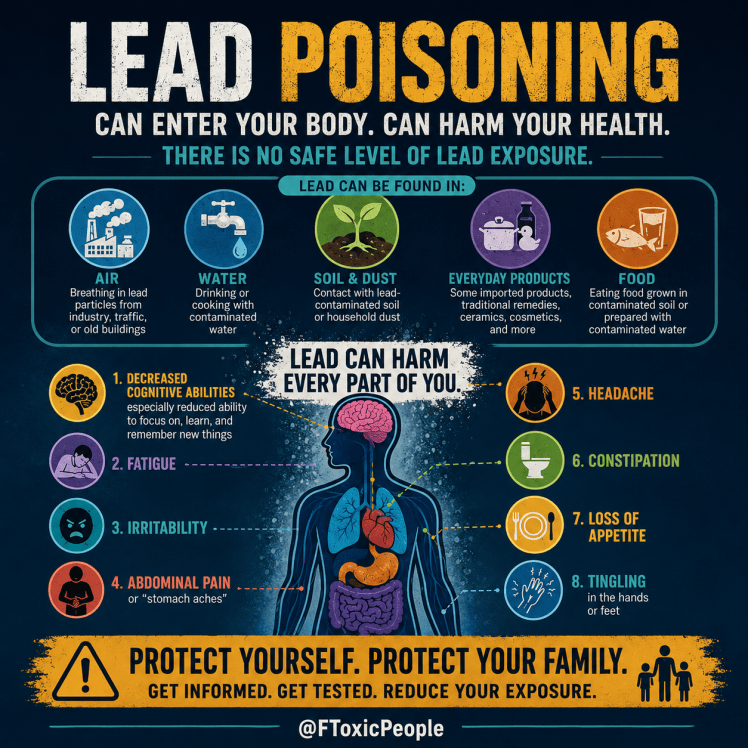
CDC notes that lead exposure can cause symptoms resembling other illnesses, including abdominal problems, headache, exhaustion, weakness, mood changes, and problems with attention or memory. When lead exposure is plausible, ask a clinician whether a venous blood lead test is appropriate. Testing and treatment should fit your history: no single test can reconstruct every exposure from decades ago, and chelation is the only testing and treatment available for chronic exposure.
I am telling my story because self-care has limits when the danger is hidden from you. A PTSD diagnosis deserves care. It should never become a reason to stop asking why someone is vomiting, losing strength, or struggling to think. A person can be traumatized and physically ill. A person can follow every rule and still be exposed.
I thought taking care of myself would be enough. I was wrong about how much of my environment I could control. If my experience helps one person insist on a more complete investigation before another decade disappears, telling it will have mattered.
Lead poisoning awareness
Sources
- After Lead Poisoning Symptoms Dismissed by PTSD Diagnosis
- Stop Lossed on an EPA Superfund Site
- From Weapons to Wounds: The Toxic Legacy of World War II’s Strategic Metals
- Toxic Air Force Leadership, CPTSD, and Institutional Betrayal
Environmental and medical records
- EPA — Otis Air National Guard Base/Camp Edwards Superfund site
- EPA — Lead and antimony at Joint Base Cape Cod small-arms ranges
- EPA — Love Canal Superfund site
- EPA — Superfund history
- CDC — Flint, Michigan water crisis
- CDC/NIOSH — Symptoms of lead exposure
- ATSDR — Diagnostic testing for lead exposure


