A manipulator can make you feel like a hero while encouraging you to do something that could destroy your life. Before you confront someone on another person’s behalf, consider whose problem you are being asked to solve—and who will face the consequences.
The Spencer Newcomer case deserves another look through that lens. The fatal neighborhood dispute featured in Fear Thy Neighbor’s “Monkey in the Middle” raises questions about escalation, private encouragement, and the accountability of people outside the final confrontation. This episode portrayed a neighbor repeatedly feeding the conflict between David Wintermyer and Spencer Newcomer.
On June 10, 2012, Newcomer fatally shot Wintermyer during a confrontation in Springettsbury Township, Pennsylvania. Newcomer maintained that he believed Wintermyer was drawing a gun. Wintermyer was unarmed; the object at issue was a cell phone. Newcomer was prosecuted and ultimately acquitted of first-degree murder, third-degree murder, and voluntary manslaughter in March 2013.
The trial involved sharply conflicting accounts. Contemporary York Daily Record reporting described an eyewitness who disputed Newcomer’s account and a prosecutor who argued that Newcomer had become the aggressor. The defense argued that earlier intimidation and threats were essential to understanding his fear.
Preview: A man finds himself living between hostile neighbors on both sides, including a former marine with severe PTSD. Their campaign of intimidation ramps up to the point of no return, ending with a deadly confrontation on the street outside their homes. –Monkey in the Middle, Fear Thy Neighbor (S4, E8)
In a later interview, Newcomer said another neighbor had been inciting Wintermyer with claims about his dogs. He described repeated police calls and escalating harassment. His attorney, Christopher Ferro, explained that this history helped the defense show Newcomer’s state of mind. Newcomer and Ferro were speaking from the defense perspective.
Investigation Discovery used the name Greg Taylor. The trial transcript identifies the neighbor involved in the text exchanges as Craig Becker. We follow the court record’s name here. The messages deserve attention. During Becker’s testimony, the court examined exchanges with Wintermyer that included Becker’s statements, “We have to keep closing the walls in” and “We can force him out.”
Becker testified that he meant continuing to pursue township action over Newcomer’s property, not harming him. In our view, those exchanges warrant scrutiny of how two people were reinforcing hostility toward a third. The pressure was being discussed privately.
The broader behavioral concern is using another person’s emotions as a means to an end. In an exploitative relationship, both people can become expendable: one is treated as the obstacle, the other as the means of removing it. Someone who keeps a grievance alive, rewards hostility, and encourages another person to take the risks may be using that person. Calling it friendship or solidarity does not answer the question of whose interests the behavior serves.
Spencer Newcomer and his neighbor Dave Wintermyer have had a long-running dispute. When tensions rise one morning, Dave ends up shot and Spencer claims self-defense. Season 1 Episode 5. Watch new episodes of Kill or Be Killed on Oxygen and next day on Peacock. (April 1, 2024)
The hero trap works by giving someone a flattering role. They become the protector, the loyal friend, or the person brave enough to “do something.” Doubt starts to feel like betrayal. Restraint starts to feel like weakness. The target becomes a problem to eliminate instead of a person whose account deserves to be heard.
Once that happens, an ordinary disagreement can become a test of identity. Someone who might otherwise walk away may feel compelled to prove courage, loyalty, or authority. Meanwhile, the person supplying the encouragement can remain removed from the most visible conduct.
That is the danger we want readers to recognize. The person praising your willingness to act may have very little to lose if you act recklessly. You could lose your freedom, your livelihood, your relationships, or your life.
The reported lack of criminal accountability for the encouraging neighbor is central to why we are revisiting this case. Our original recap stated that the neighbor it described as the instigator was never charged. We found no reliable later reporting establishing a prosecution for that conduct.
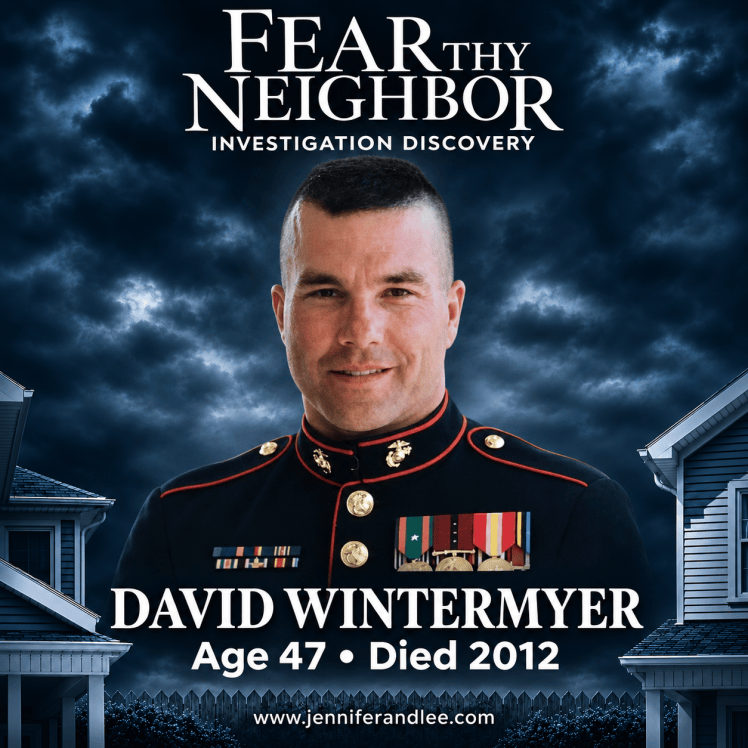
Even with that distinction, the question deserves attention. Wintermyer died. Newcomer spent nine months in jail before his acquittal, according to the later interview with him and his attorney. In that interview, the defense also described the substantial financial demands of bringing the case to trial.
An accountability discussion should examine the communications and conduct preceding a confrontation, as well as the final act. Investigators and the public should ask who encouraged escalation, what they knew, what they communicated, and whether the evidence supports further action.
As veterans, we also reject the suggestion that PTSD makes someone inherently dangerous. The VA’s National Center for PTSD emphasizes that most people with PTSD have never engaged in violence and that violence risk requires attention to other factors. Someone encouraging a veteran’s anger is not necessarily helping that veteran.
People also retain responsibility for their choices when they have been influenced. Recognizing manipulation should strengthen our ability to interrupt harm, including harm to the intended target. It should never become permission to threaten, harass, or attack someone.
False Narratives with National Consequences: How Our Traumatic Past Was Weaponized Against Us
Before you take up another person’s feud, watch for these warning signs:
- They keep you angry while discouraging you from checking the facts independently.
- They describe confrontation as proof of loyalty or courage.
- They privately encourage conduct they would hesitate to defend publicly.
- They expect you to take risks while offering themselves room to deny involvement.
Keep complete communications. Verify claims independently. Refuse pressure to confront or punish someone. When threats or harassment are involved, seek appropriate help without turning the dispute into a personal showdown.
The lesson we take from this case reaches beyond a neighborhood. Whenever someone invites you to become their enforcer, ask whether your judgment is being respected or replaced by a story designed to keep you angry.
Before you become someone’s hero, make sure you are not being recruited to become their weapon—and left to carry the consequences.
Sources
- Military Justice for All. “Fear Thy Neighbor Premiered ‘Monkey in the Middle’ on Investigation Discovery.” May 25, 2017.
- MoreLaw. “Commonwealth of Pennsylvania v. Spencer ‘Lee’ Newcomer IV.” March 16, 2013. Case summary and acquittal.
- Hayes, Marty. “The Anatomy of a Self-Defense Shooting, Part 1.” Armed Citizens’ Legal Defense Network, January 2019. Interview with Spencer Newcomer and defense attorney Christopher Ferro.
- York Daily Record. “Eyewitness Testifies About the Murder of David Wintermyer in Springettsbury Township.”March 12, 2013. Syndicated by TMCnet.
- York County Court of Common Pleas. Commonwealth v. Spencer Newcomer, trial transcript. Case No. CP-67-CR-0005403-2012, March 11–15, 2013. Relevant passages include Becker’s text messages and explanations on printed pages 222–225 and the verdict on pages 631–632.
- Walsh, Zach; Swogger, Marc T.; and Kosson, David S. “Psychopathy and Instrumental Violence: Facet Level Relationships.” Journal of Personality Disorders, 23(4), 416–424, 2009.
- Hayes, Marty. “The Anatomy of a Self-Defense Shooting, Part 2.” Armed Citizens’ Legal Defense Network, February 2019. Interview addressing trial preparation and defense costs.
- U.S. Department of Veterans Affairs, National Center for PTSD. “Research Findings on PTSD and Violence.”


