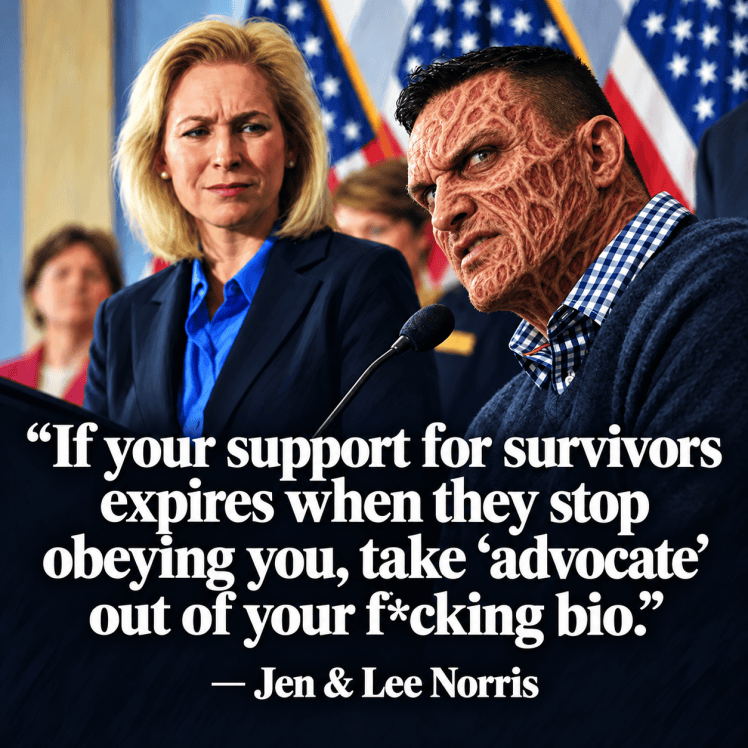
Four people pictured here either mistreated me or ignored my requests for help. In my experience, advocates aligned with Nancy Parrish and Jackie Speier helped shut down discussion of the Military Justice Improvement Act with their toxic advocates. Protecting those alliances took priority over addressing the concerns I raised. This was never about victims.
I Refused to Work with Colleen Bushnell. Then Came the Set Up, False Accusations, and a Public Notice on Facebook to “Cease and Desist” with a Demand for a Financial Settlement Agreement. Please F*ck Off.
Copyright © Jennifer and Lee Norris. All rights reserved.
INTRODUCTION
I went before Congress to explain how retaliation can destroy a service member’s career, health, and sense of safety. Sharing my story publicly came at an enormous personal cost, but I believed it could help protect others. When Senator Kirsten Gillibrand, Senator Susan Collins, and other lawmakers listened and introduced the Military Justice Improvement Act, I felt profoundly proud. Its reach across a broad range of serious crimes offered hope to survivors and families whose experiences had too often been overlooked. I poured my heart and soul into that effort because accountability mattered to people still serving—and to families still waiting for answers.
What followed forced me to confront retaliation inside the “advocacy community” itself. This account brings together my testimony, published chronology, preserved communications, and the public record of the reform effort. It explains why I became a victim of coordinated attacks on my credibility and helped push me aside while people whose conduct I had challenged gained influence around the work. Behind the public appearances and promises of survivor support, Lee and I were being abused by these same “public figures.” Thanks to them, we were struggling further with brain damage, isolation, abuse, and nowhere to turn.
COLLEEN BUSHNELL USED NEUROLOGICAL BATTERY TO SHUT ME DOWN
The only thing I ever said to someone else about Colleen Bushnell was that I did not want to work with her, once. Now we believe this person was a plant to help set us up, because she ran back to Colleen to report our response. Then came the public Cease and Desist on Facebook.
I found her domineering and controlling. Collaboration did not feel like teamwork, and I needed my limited energy for advocacy, my health, and the people I was trying to help. I expected to be able to choose my colleagues and move on.
Instead, she wrecked my central nervous system with abuse and neurological battery.
In January 2013, I testified before the House Armed Services Committee at its hearing on sexual misconduct at Lackland Air Force Base. I believe Bushnell resented that opportunity and that jealousy contributed to her mistreatment of me. My decision was simple: I wanted distance.
Then came a cease-and-desist notice dated July 23, 2013, accusing me of spreading defamatory rumors. Actually b*tch I was working my a$$ of and all you fools knew that. You conspired to sabotage a survivors bill because you thought you deserved to be worshipped.
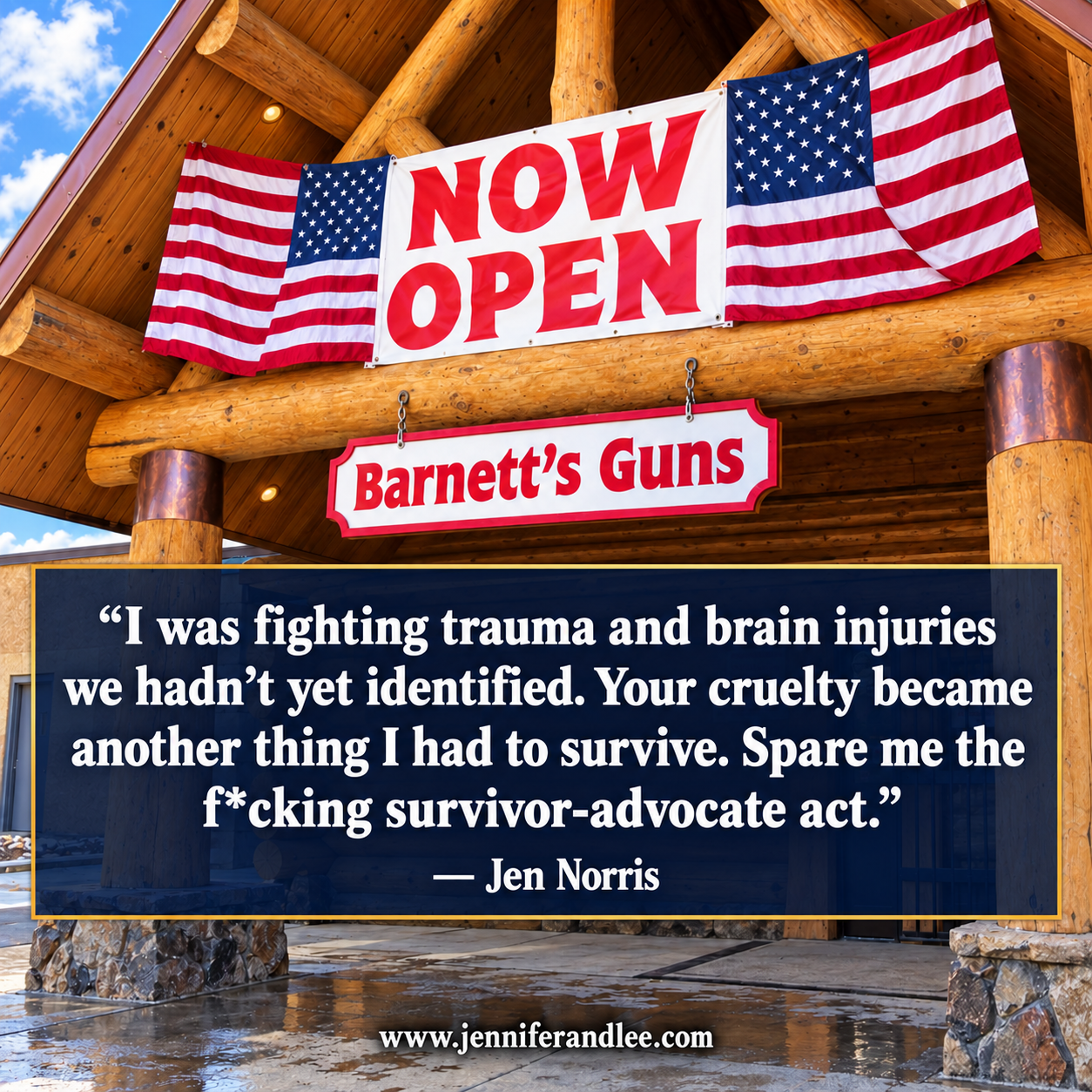
On January 15, 2013, I learned I had been asked to testify before the House Armed Services Committee. By January 17th, I was at a gun store in Hampton, Tennessee, buying a gun during a suicidal crisis. I felt overwhelmed by Colleen Bushnell’s control and abuse. She was denying me my right to have my own agency. She claimed she had “broken the Lackland scandal,” and I believe she resented not being selected to testify and was trying to break me so she could take my place.
It was posted on Facebook before an audience of survivors, including people I worked with. It was ridiculous but it definitely stung. This person was up Nancy Parrish’s ass and no one would hold this abusive, jealous false accuser accountable. I knew I had not done what I was accused of, yet people connected to my work were seeing a document that repeatedly described my behavior as unlawful.
The notice threatened financial consequences, demanded a response within ten days, and instructed me to sign a settlement agreement. It never identified the words I supposedly said. That omission matters.
Readers were given an accusation and threatened consequences without the alleged statement they would need to evaluate either. She abused her authority and role with Protect Our Defenders to give readers the impression that I was a danger to the community, when in fact she is, and still is.
The public humiliation consumed energy I needed for the very work that had brought me into that community. I was left wondering who had read it, who believed it, and whether defending myself would only spread the accusation further. These people sabotaged my health and ability to sustain because this should not have happened to a federal witness for Congress.
This article examines the notice, the public framing surrounding it, and the personal cost of having my decision to end an unwanted association turned into an allegation against my character.
A survivor’s right to say no does not expire when the person hearing it calls herself an advocate.
THE AIR FORCE & HOUSE ARMED SERVICES WALKED OUT, SHUT ME DOWN
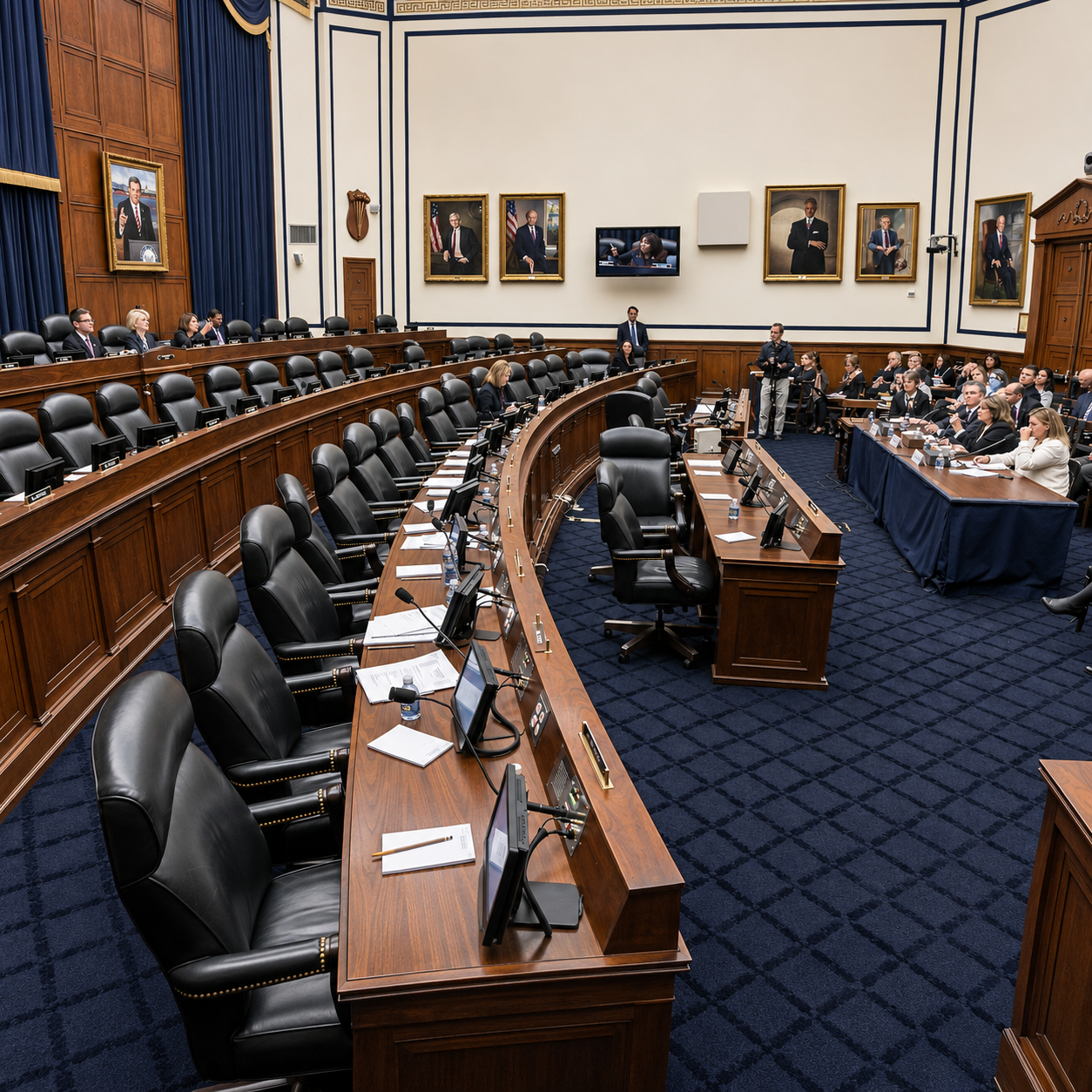
When I testified before the House Armed Services Committee, retaliation was the central issue for me. I wanted lawmakers to understand how reporting abuse could expose a service member to further harm, isolation, and damage to their career. The fear of those consequences keeps people silent, while the treatment they receive after speaking can become another source of lasting trauma. I was asking Congress to confront failures of leadership, conflicts of interest, and a system that too often left victims without a safe path to accountability. I also recognized service members lost to noncombat deaths and the families still waiting for answers. Their lives mattered to me, and their absence belonged in that conversation.
Sharing my story publicly was profoundly difficult. It meant revisiting painful experiences and placing deeply personal parts of my life before lawmakers, cameras, and people who knew nothing about me beyond what they heard that day. There is an enormous vulnerability in explaining how you were harmed, especially when experience has already taught you that speaking can bring punishment. I wanted people to understand the human cost without having to surrender every private detail to public scrutiny. I spoke because I hoped that making those failures visible would help protect others. Behind that testimony was a person carrying years of trauma, trying to turn painful experience into meaningful change.
THE DEPARTMENT OF DEFENSE SHUT ME DOWN WITH A RED HERRING
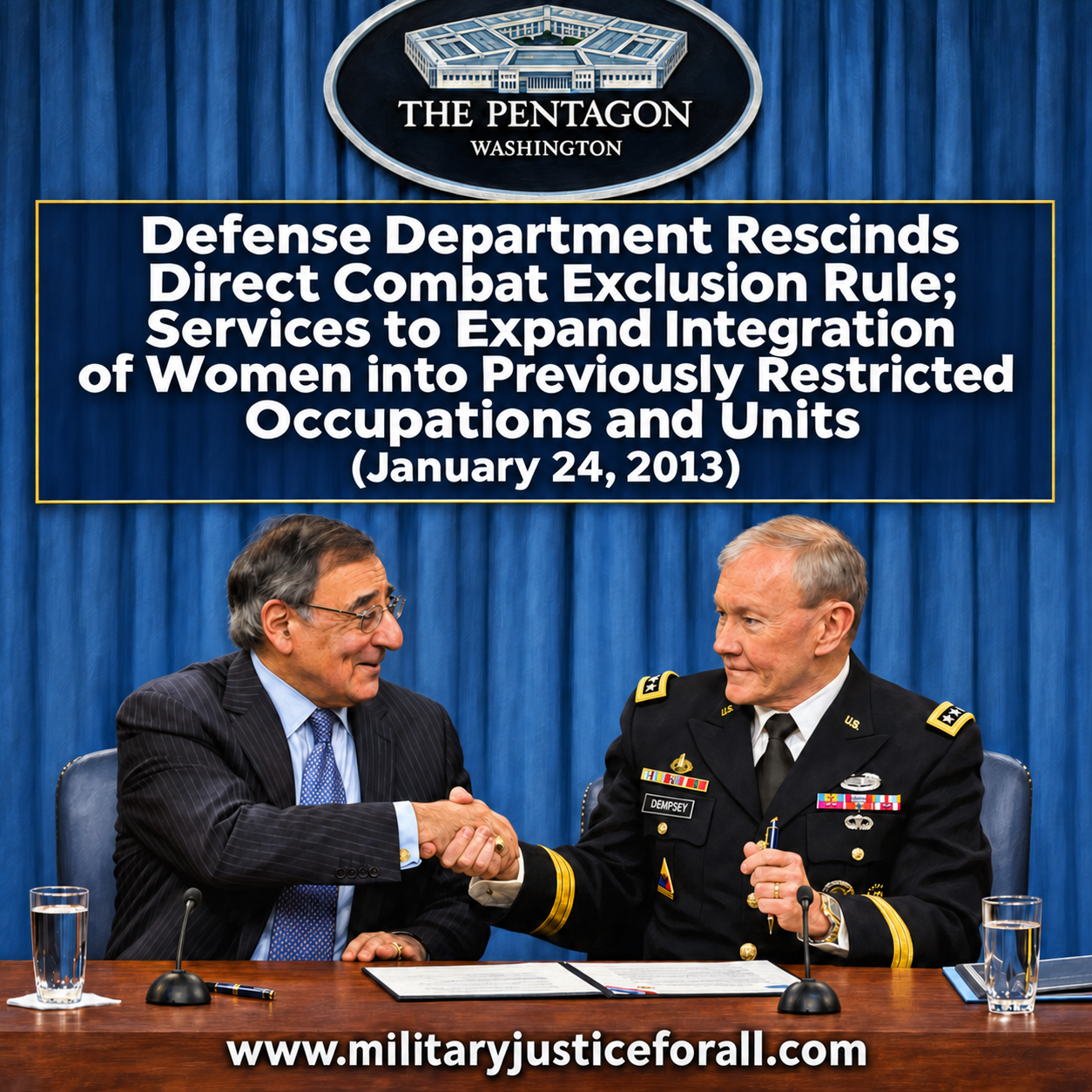
On January 24, 2013, Defense Secretary Leon Panetta and Joint Chiefs Chairman General Martin Dempsey formally announced the rescission of the military’s direct ground combat exclusion rule, beginning a process to open previously restricted positions to women. News of the decision had emerged the previous day—the same day I testified before the House Armed Services Committee. The announcement gave the media another major military story to pursue, with debates about combat assignments, physical standards, and integration. At a moment when survivors were asking the public to examine abuse, retaliation, and failures of military justice, the Pentagon also had a significant policy change to present as progress.
From my perspective, that timing helped crowd out the military crime conversation we had worked so hard to bring before Congress. Sharing our experiences publicly had come at an enormous personal cost, and I wanted sustained attention to what happened when service members reported wrongdoing. Instead, the announcement offered a new debate for reporters and audiences to follow while our concerns about retaliation, accountability, and noncombat deaths still needed answers. It felt as though the conversation was moving on before the substance of our testimony had been fully confronted. Opening opportunities for women mattered, and protecting the people already serving deserved the same urgency. I wanted the public to keep asking whether those who wore the uniform could report a crime without becoming the next target.
SEXUAL ASSAULT NON PROFIT IGNORES PLEAS FOR HELP, SHUTS ME DOWN
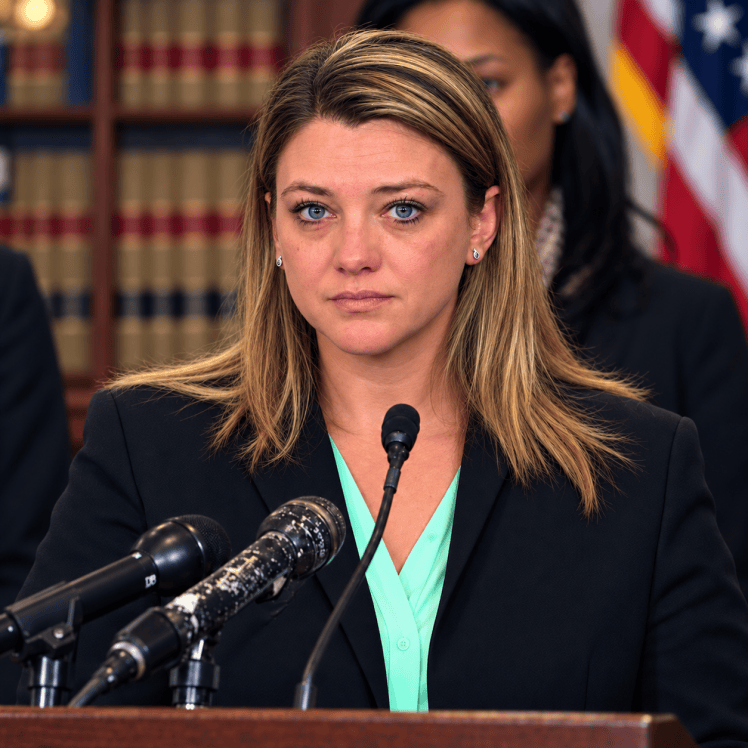
On May 16, 2013, I stood with Senator Kirsten Gillibrand, Senator Susan Collins, fellow survivor Brian Lewis, and other lawmakers for the public introduction of the Military Justice Improvement Act. I was profoundly proud of that moment because it felt like someone had finally listened. We had described retaliation, command bias, and the consequences of leaving access to justice in the hands of people with conflicting interests. The proposal addressed prosecution decisions for a broad range of serious crimes, with exceptions for uniquely military offenses. That mattered enormously to me because I wanted victims of military crime—and families seeking answers about noncombat deaths—to have a place in this fight. I poured my heart and soul into the effort because I believed our painful experiences could help make other people safer.
That pride made what followed devastating. I spent the summer defending the bill while dealing with Jeremiah Arbogast’s neurological battery and attacks on my reputation, only to watch him later receive recognition as an owner of the same effort. I believe the coordinated campaign against us undermined our participation and helped sabotage the broader reform conversation. To me, Nancy Parrish and Protect Our Defenders assumed ownership of work that survivors had helped advance through our testimony, labor, and personal sacrifice. Our bill was stolen and our message for all crime victims was displaced. Our contributions became an abuser’s platform while we struggled with the gang bullying and our health. Its broader scope was obscured by sexual-assault-only messaging, pushing the other victims and families I wanted heard further into the background.
It was crushing to watch a moment of hope become another experience of exclusion inside a movement promising justice for folks who have nowhere to turn if their command fails them.
JUSTICE DENIED DOC SETS ME UP, USES ARBOGAST TO SHUT ME DOWN

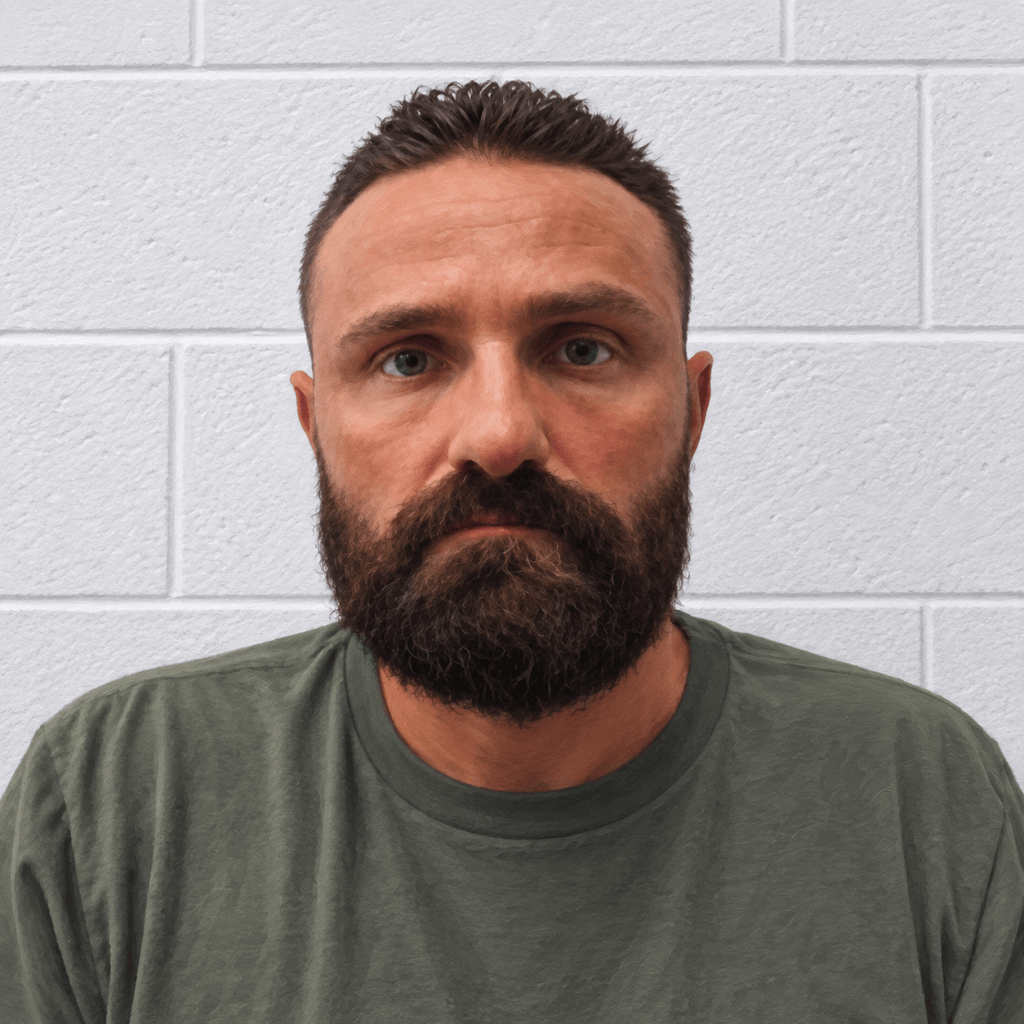
I set a reasonable boundary and later tried to end contact with people whose behavior made me uncomfortable. Jeremiah Arbogast publicly insulted me, circulated an unrelated article about my family containing our home address, and participated in discussions about coordinating complaints against advocates. Blocking him did not end the hostility. The escalating attacks were retaliation for refusing access and maintaining my independence. The later communications reinforced my belief that the effort extended beyond personal insults to influencing whether organizations, congressional offices, and other advocates would continue working with me.
The consequences reached my health, marriage, reputation, and ability to continue advocating. Energy I needed for military justice reform went toward defending myself and trying to feel safe. I experienced Protect Our Defenders’ response as another institutional betrayal, while people whose conduct I had challenged continued gaining visibility. I believe the pressure and exclusion helped displace me from work I had helped advance. I spoke publicly because I wanted service members protected from retaliation and abuse of authority. Finding similar dynamics inside advocacy left me increasingly isolated and struggling to participate in a step of the reform effort I believed in.
PROTECT OUR DEFENDERS ADVOCATE SHUTS ME DOWN WITH DEFAMATION
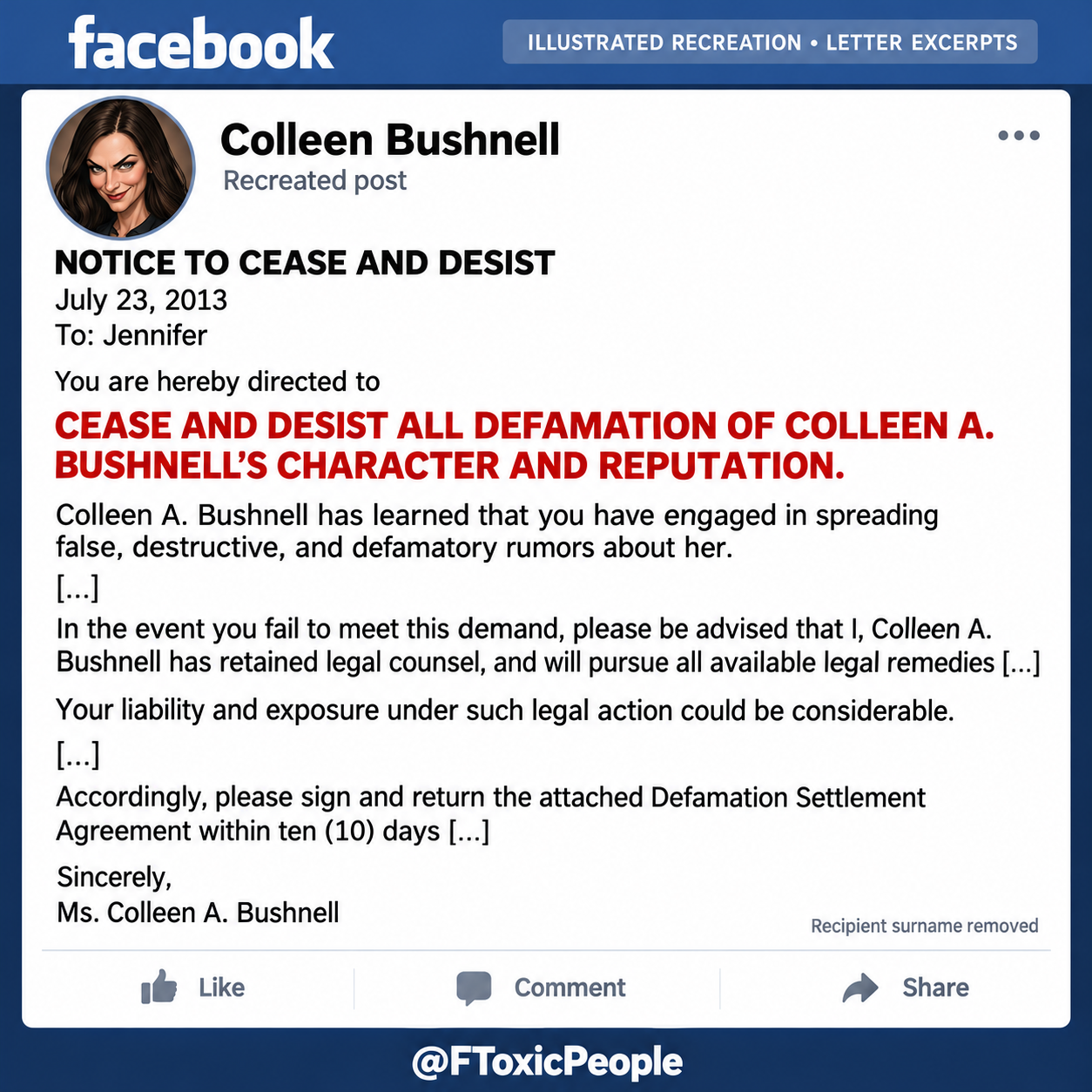
Notice to Defame and Libel Veteran Advocate* by Colleen Bushnell
In a letter dated July 23, 2013, Colleen Bushnell accused me of spreading defamatory rumors about her advocacy work, demanded written assurances that I would stop, and instructed me to sign a settlement agreement within ten days. She threatened litigation seeking damages, an injunction, court costs, and attorney’s fees. Yet the notice identified no specific statement, publication, date, and supplied no explanation of what was supposedly false. That left me facing sweeping accusations without a concrete allegation I could meaningfully examine or answer. A cease-and-desist letter can be sent without an attorney, but hers remains a private demand; its legal language does not establish wrongdoing or carry the authority of a court order.
What made this so absurd and painful was that my decision had been straightforward: I found her behavior toxic and wanted no affiliation with her. I was trying to create distance, yet I found myself defending my reputation against unspecified accusations. I experienced the letter as another attempt to punish that boundary and undermine my place in advocacy. As I saw it, Bushnell and Nancy Parrish continued their association through 2023 while I remained ostracized, carrying the personal and professional consequences. They continued together, and I was left explaining why I wanted distance in the first place. Refusing an association should never have required sacrificing my credibility, my community, or the work I cared about.
Notice to Cease and Desist
Ms. Jennifer ______ aka Ms Jennifer _______
*This abusive b*tch used my maiden name when she posted this defamatory cease and desist on Facebook. As a survivor, I was intentionally trying to hide my maiden name from the public.
working on behalf of the ____
*She sent this defamatory cease and desist to the organization that I volunteered for. She inserted herself into my life, tried to control me, and then punished me because I refused to engage. She DARVOd my ass.
CEASE AND DESIST
July 23, 2013
*this date is important because it occurred about a month after Jeremiah Arbogast began his cyberbullying campaign.
By Certified Mail (Physical address confidential for online communication)
By Email:
CC By Email:
Ms. Jennifer ______ aka Ms. Jennifer ________ (maiden name)
(Physical address confidential)
Dear Ms. ______:
If you are represented by legal counsel, please direct this letter to your attorney immediately and have your attorney notify me of such representation.
You are hereby directed to
CEASE AND DESIST ALL DEFAMATION OF COLLEEN A. BUSHNELL’S CHARACTER AND REPUTATION.
Colleen A. Bushnell is an educated, respected professional in the community. She has spent years serving the community in her profession and building a positive reputation. Colleen A. Bushnell has learned that you have engaged in spreading false, destructive, and defamatory rumors about her.
Under Arizona Law, it is unlawful to engage in defamation of another’s character and reputation. Defamation consists of (1) a statement that tends to injure reputation; (2) communicated to another; and (3) that the speaker knew or should have known was false.
Your defamatory statements involved Ms. Bushnell’s work as a grass roots, voluntary advocate for legislative reform regarding instances of military sexual trauma in the U.S. military.
Accordingly, we demand that you (A) immediately cease and desist your unlawful defamation of Colleen A. Bushnell and (B) provide prompt written assurance within ten (10) days that you will cease and desist from further defamation of my, Colleen A. Bushnell’s character and reputation.
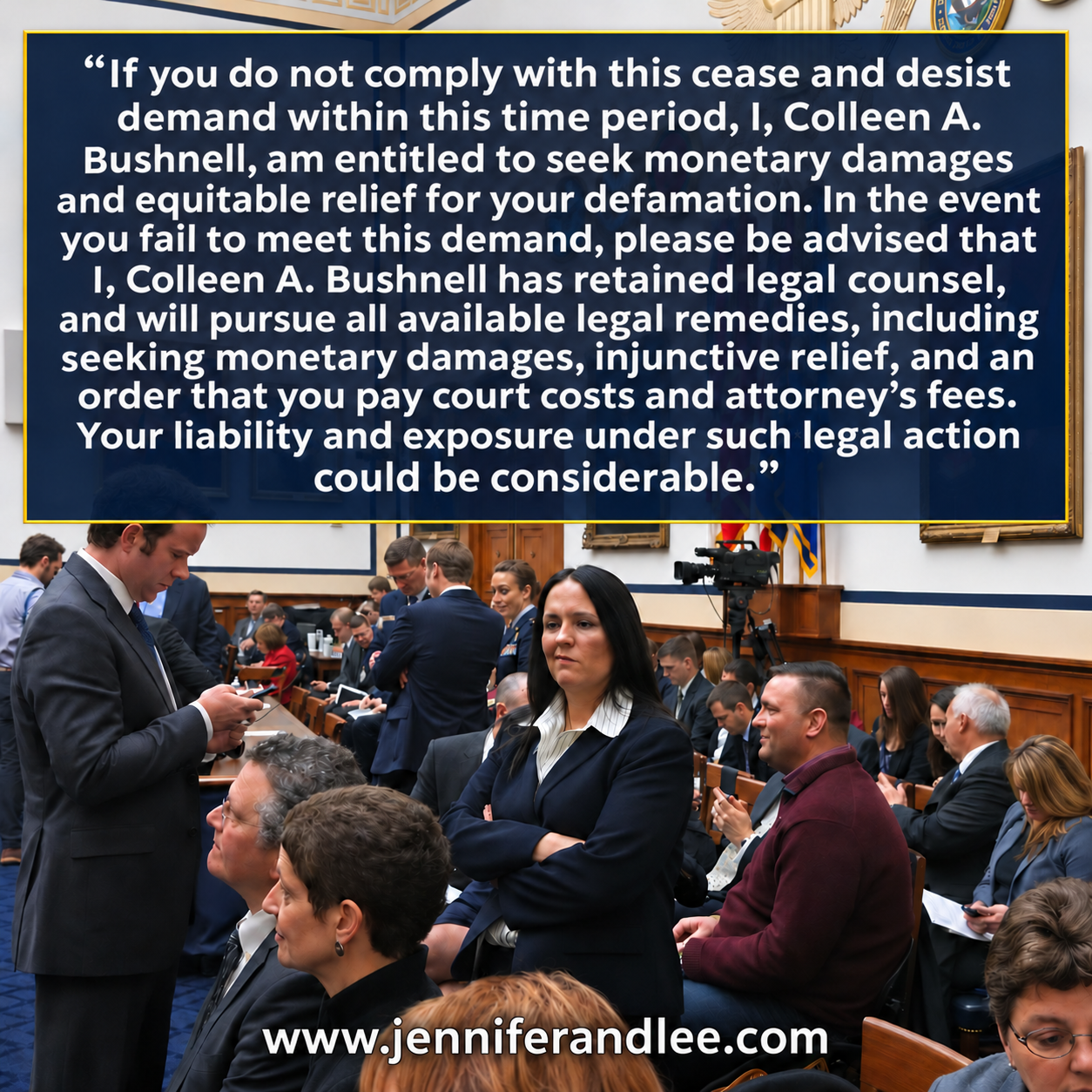
If you do not comply with this cease and desist demand within this time period, I, Colleen A. Bushnell, am entitled to seek monetary damages and equitable relief for your defamation. In the event you fail to meet this demand, please be advised that I, Colleen A. Bushnell has retained legal counsel, and will pursue all available legal remedies, including seeking monetary damages, injunctive relief, and an order that you pay court costs and attorney’s fees. Your liability and exposure under such legal action could be considerable.
Before taking these steps, however, I wish to give you one opportunity to discontinue your illegal conduct by complying with this demand within ten (10) days. Accordingly, please sign and return the attached Defamation Settlement Agreement within ten (10) days to Colleen A. Bushnell (physical address confidential for online commmunication).
I recommend that you consult with an attorney regarding this matter. If you or your attorney have any questions, please contact me directly.
Sincerely,
Ms. Colleen A. Bushnell
CC: Panayiota Bertzikis, Director, Founder, MRCC
THE MOB ABUSES THEIR COLLECTIVE POWER, SHUTS ME DOWN ON-LINE
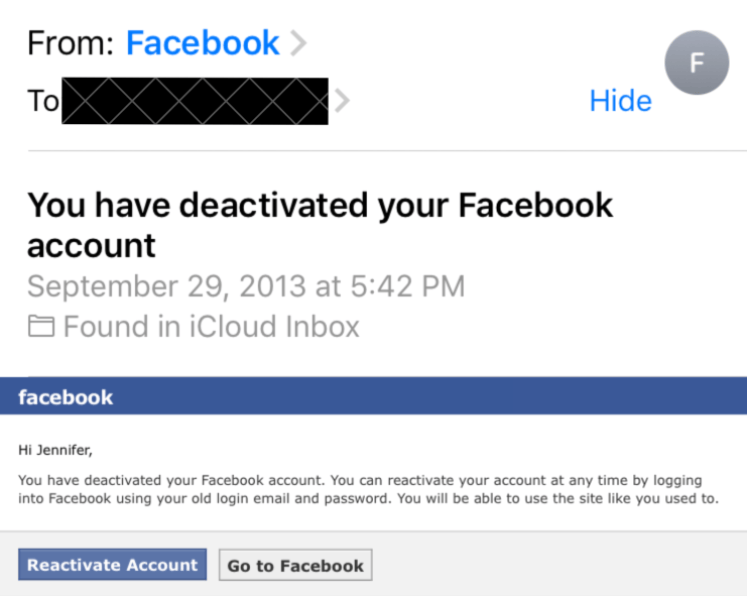
How Online Mobs Silence Independent Voices (2016)
In this article, I described how online mobbing pushed Lee and me out of public advocacy. The pattern included coordinated attacks, reputation damage, accusations circulated to others, disclosure of identifying information, and swatting. What made it especially devastating was watching influential people and organizations amplify individuals whose abusive conduct I reported to Nancy Parrish, Brian Purchia, and Kirby Dick, while our concerns were dismissed by all. The pressure reached into our health, safety, relationships, and ability to continue helping service members. People who barely knew us were participating in a campaign whose consequences we had to live with.
The bigger picture was the repetition of the problem I had asked Congress to confront: people reporting mistreatment could become targets themselves. I experienced that pattern again inside advocacy, where challenging harmful behavior appeared to threaten our credibility and access. After roughly two years away, I returned at the encouragement of other advocates because active-duty service members still needed support. Studying manipulation and documenting these tactics became part of reclaiming my voice. The article explains both why we withdrew and why I eventually returned—to expose how intimidation can silence independent voices and undermine the reform work they helped advance.
POD & ARBOGAST STEAL THE MJIA, SHUT ME DOWN WITH CONGRESS, MEDIA
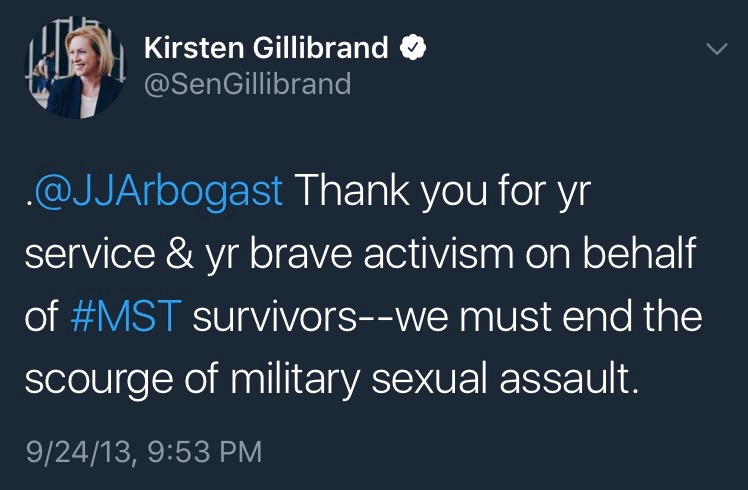
Seeing Senator Kirsten Gillibrand publicly thank Jeremiah Arbogast for his “brave activism” in September 2013 was devastating. I had spent the entire summer experiencing bullying and retaliation while fighting for the Military Justice Improvement Act—a bill I believed could protect service members from the failures of authority. Watching him receive recognition while I struggled with the damage to my reputation, health, and advocacy felt like being erased from work I had helped advance. I believe he was exploiting Gillibrand’s commitment to survivors to gain credibility and influence around the very legislation I had been defending. The public praise was painful because it concealed the treatment I had experienced behind the survivor-advocate image.
I refused the airport pickup, and Arbogast and Matthews made me pay for figuring them out. Looking back at the hostility and coordinated pressure that followed, I know my refusal prevented an attempted setup. What I experienced afterward was a campaign to discredit me and undermine my participation. I hold Protect Our Defenders responsible for enabling that displacement rather than addressing the conduct I reported. Seeing Arbogast gain access and recognition around the MJIA felt like watching our work being taken from us while we carried the consequences. A movement demanding accountability from military leadership should have been willing to confront abusive behavior within its own advocacy circles. Instead, I felt pushed aside while someone I had sought protection from gained a larger platform.
ARBOGAST REPRESENTING THE MJIA, GASLIGHTING SHUTS ME DOWN
Ahead of Sexual Assault Vote Expected on Senate Floor Next Week, Bipartisan Group of Senators, Survivors, Advocates Continue Push for Independent Military Justice System
Washington, D.C. – As the U.S. Senate prepares for an expected vote on the bipartisan Military Justice Improvement Act next week, a strong bipartisan coalition continued the push earlier today for an independent, objective and unbiased military justice system. U.S. Senators Kirsten Gillibrand (D-NY), Chuck Grassley (R-IA), Barbara Boxer (D-CA), Dean Heller (R-NV), Jeanne Shaheen (D-NH), Richard Blumenthal (D-CT), Mazie Hirono (D-HI), and Ted Cruz (R-TX), together with Jeremiah Arbogast, advocate and retired Lance Corporal, U.S. Marines, Paula Coughlin, retired Lt. and helicopter pilot, U.S. Navy, Member, Protect Our Defenders Board of Directors, Stacey Thompson, retired Lance Corporal, U.S. Marines, Advocacy Committee Member, Protect Our Defenders, Greg Jacob, Policy Director, Service Women’s Action Network (SWAN), Tom Tarantino, Chief Policy Officer, Iraq and Afghanistan Veterans of America (IAVA), and Thomas J. Berger, Ph.D., Executive Director, Veterans Health Council, Vietnam Veterans of America stood together to push for the bill’s final passage.
53 Senators, including 44 Democrats and nine Republicans, have publicly announced their support of this common sense proposal that seeks to reverse the systemic fear that victims of military sexual assault consistently describe in deciding whether to report the crimes committed against them due to the clear bias and inherent conflicts of interest posed by the military chain of command’s current sole decision-making power over whether cases move forward to a trial.
The Senate is also expected to vote next week on additional sexual assault reforms sponsored by Senator McCaskill, which Senator Gillibrand supports.
Read more of Senator Gillibrand’s press release here.
MST ADVOCATES SHUT ME DOWN WITH CROOKED RUMFORD COPS
Workplace Abuse and Bullying: My Story as a Veteran Advocate in the “MST Community” (2014)
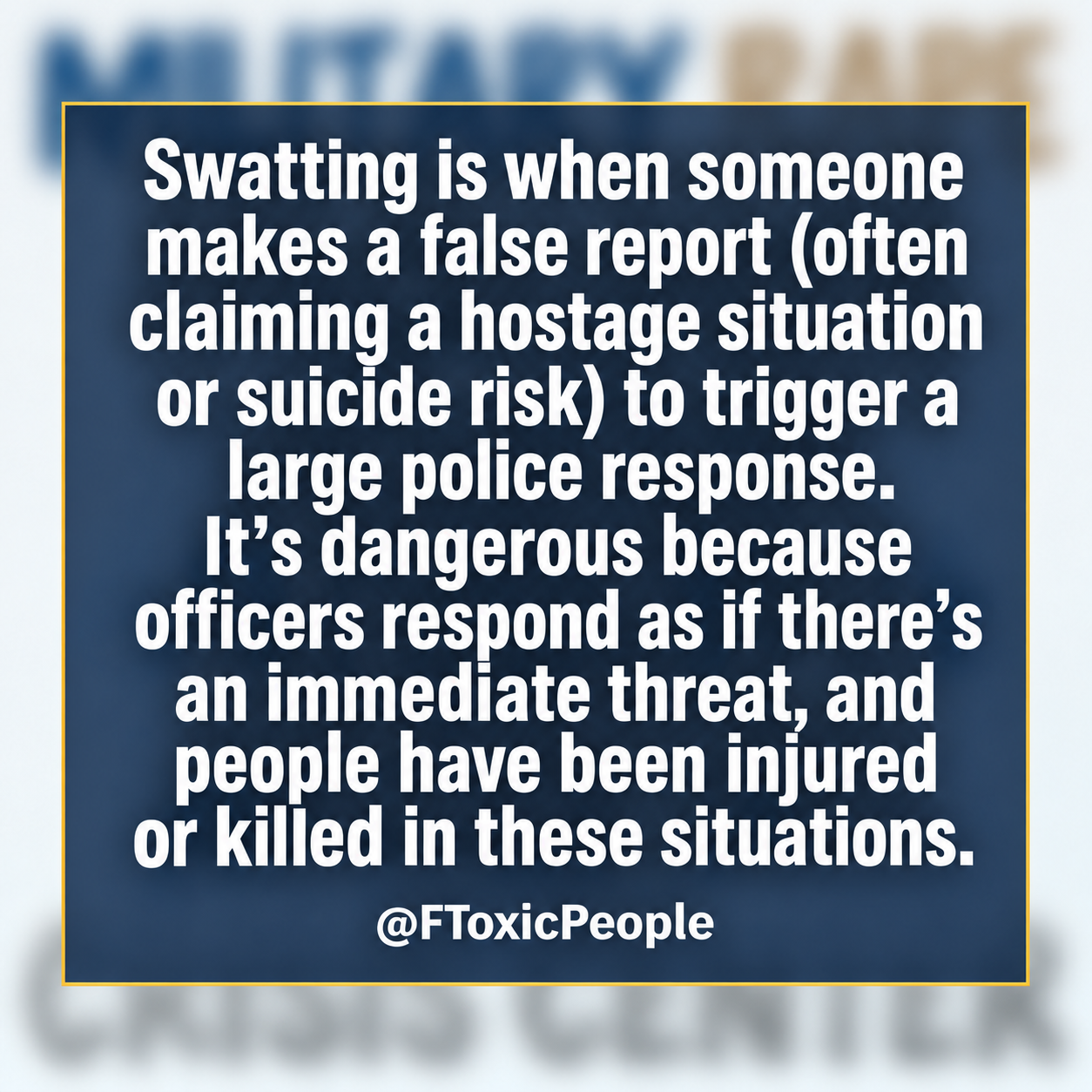
On the night before the Senate’s vote on the Military Justice Improvement Act, the abuse I had been reporting reached our front door. A crisis-center director who knew about our frightening history with local police contacted that same department and portrayed me as a suicidal veteran. Officers arrived after dark with guns drawn on Lee and my service dog. I was ordered out of bed, placed in a police car, and taken to the hospital, where I was assessed and quickly released. This is the definition of swatting and a profound betrayal: someone presenting themselves as a protector of survivors exposed our household to the very authority they knew we feared.
Based on the phone call, they could expect hospitalization or something worse. What we understood immediately was that an armed encounter could end in injury or death, and neither of us was willing to risk another one. We stopped our public advocacy right then and shut down our public page. After everything I had invested in the MJIA, I spent the eve of its vote confronting the possibility that continuing to speak publicly could endanger our lives. The devastation was knowing that people calling themselves advocates had become people we felt compelled to protect ourselves from. Our withdrawal was an act of survival.
SA EXPRESS-NEWS ERASES SURVIVORS & SHUTS ME DOWN FOR GOOD
Why Another One of Protect Our Defender’s Advocates Frightened Me From the Start (June 13, 2013)
One of the most painful parts of this history was watching Jeremiah Arbogast bully me and dismiss the MJIA to someone publicly representing support for it. I was defending legislation I believed could help victims of a broad range of serious military crimes, while the insults, reputation attacks, and coordinated complaints I documented were undermining my ability to participate. They sabotaged our advocacy: it consumed our energy, damaged trust, and weakened the voices of survivors who had helped advance the reform. Watching him gain a larger platform around our effort felt like being displaced by a f*cking monster who is not going to get away with any of it.
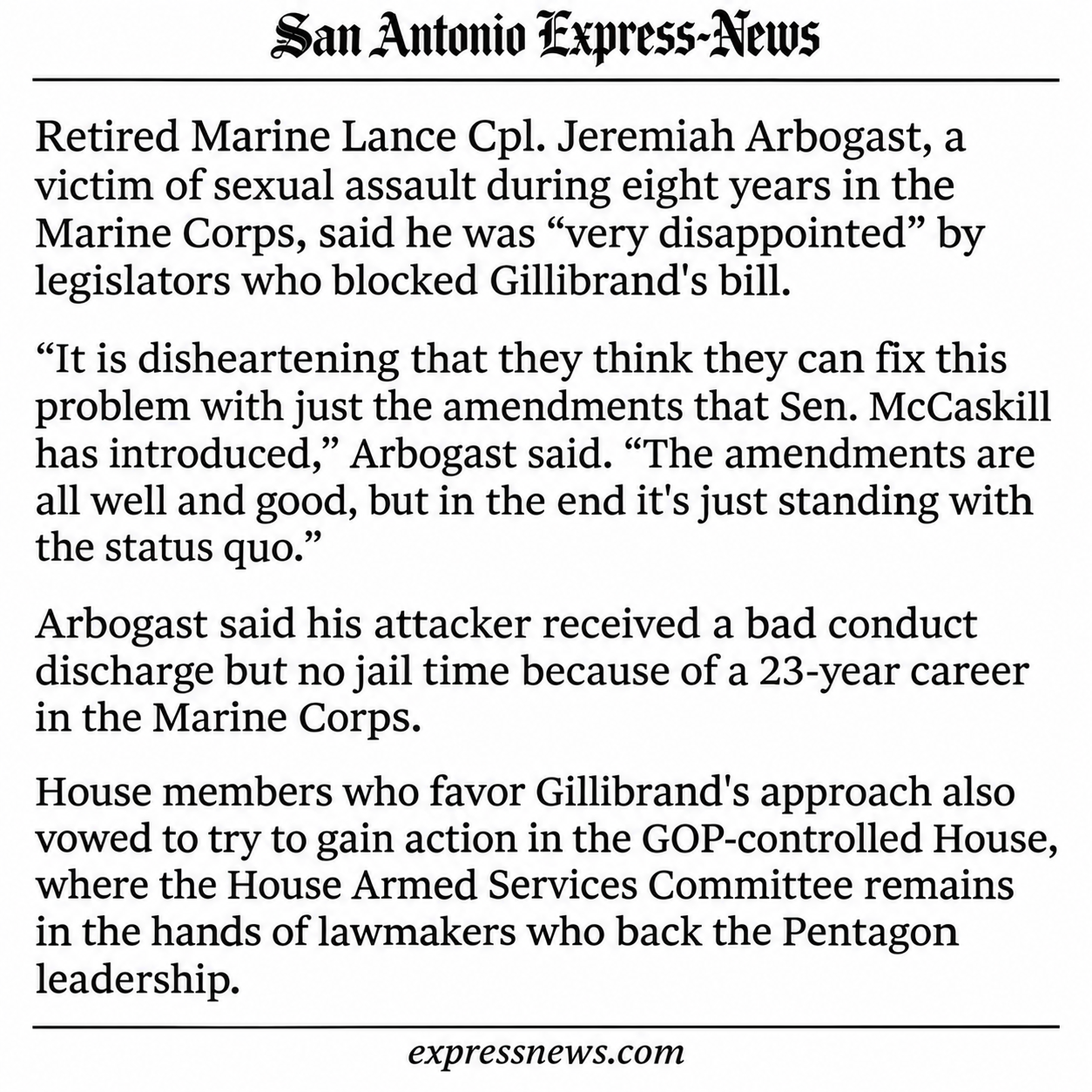
Then, after the Senate blocked the bill in March 2014, the San Antonio Express-News quoted Arbogast describing himself as “very disappointed” and criticizing the competing approach as preserving the status quo. Reading those comments was devastating. He was being heard as a disappointed supporter while the treatment I had reported—and its consequences for other survivors and our broader effort—was absent from that public account. The MJIA covered serious crimes beyond sexual assault, with specified military exceptions, yet its public framing increasingly obscured that breadth. To me, the contradiction was profound: someone could publicly mourn the bill’s defeat while never having supported it to begin with. Disgusting.
Summary
Looking back, the deepest betrayal was encountering the same pattern I had asked Congress to confront: reporting mistreatment brought further punishment, while people with influence retained their platforms. I experienced the insults, reputation attacks, legal threats, exclusion, doxxing, and swatting as an escalating assault on our ability to participate safely. That pressure undermined our advocacy and helped obscure the broader purpose we had fought to advance. Victims of serious military crimes and families confronting non-combat deaths deserved a sustained place in that conversation. Watching their concerns recede while we struggled to defend ourselves was devastating.
I am putting this history together because our withdrawal never erased our contributions or the reasons we spoke. But significant worsened brain injuries did shut us down. The record preserves the work, the warnings, and the personal cost of continuing. My hope for reform was rooted in a simple principle: people should be able to report harm without sacrificing their safety, livelihood, or future. That principle must apply inside advocacy organizations as firmly as it applies inside the military. A movement demanding accountability must be willing to confront the harm done by people within its own ranks.
Related Links
- My Testimony Before the House Armed Services Committee (January 23, 2013)
- Defense Department Rescinds Direct Combat Exclusion Rule (January 24, 2013)
- The Introduction of the Military Justice Improvement Act (May 16, 2013)
- One Reasonable Boundary, Two Angry Strangers, and the Smear Campaign That Upended My Advocacy Efforts (June 6, 2013)
- Protect Our Defenders “Advocacy” Network: Coordinated Allegations, Reputation Attacks and Gatekeeping (November 17, 2013)
- Senators, Survivors and Advocates Continue Push for Independent Military Justice — Gillibrand’s Official Release (February 6, 2014)
- Colleen Bushnell’s Cease-and-Desist Notice — Published February 23, 2014
- Timeline of MST Gang Stalking (February 27, 2014)
- Workplace Abuse and Bullying: My Story as a Veteran Advocate in the “MST Community” (March 5, 2014)
- Senate Blocks Gillibrand’s Military Sexual-Assault Bill — San Antonio Express-News (March 6, 2014)
- How Online Mobs Silence Independent Voices (January 19, 2016)
- False Narratives with National Consequences: How Our Traumatic Past Was Weaponized Against Us (July 4, 2024)
- The “No” That Changed My Life: Vulnerability, Predators, and Smear Campaigns (September 28, 2026)


