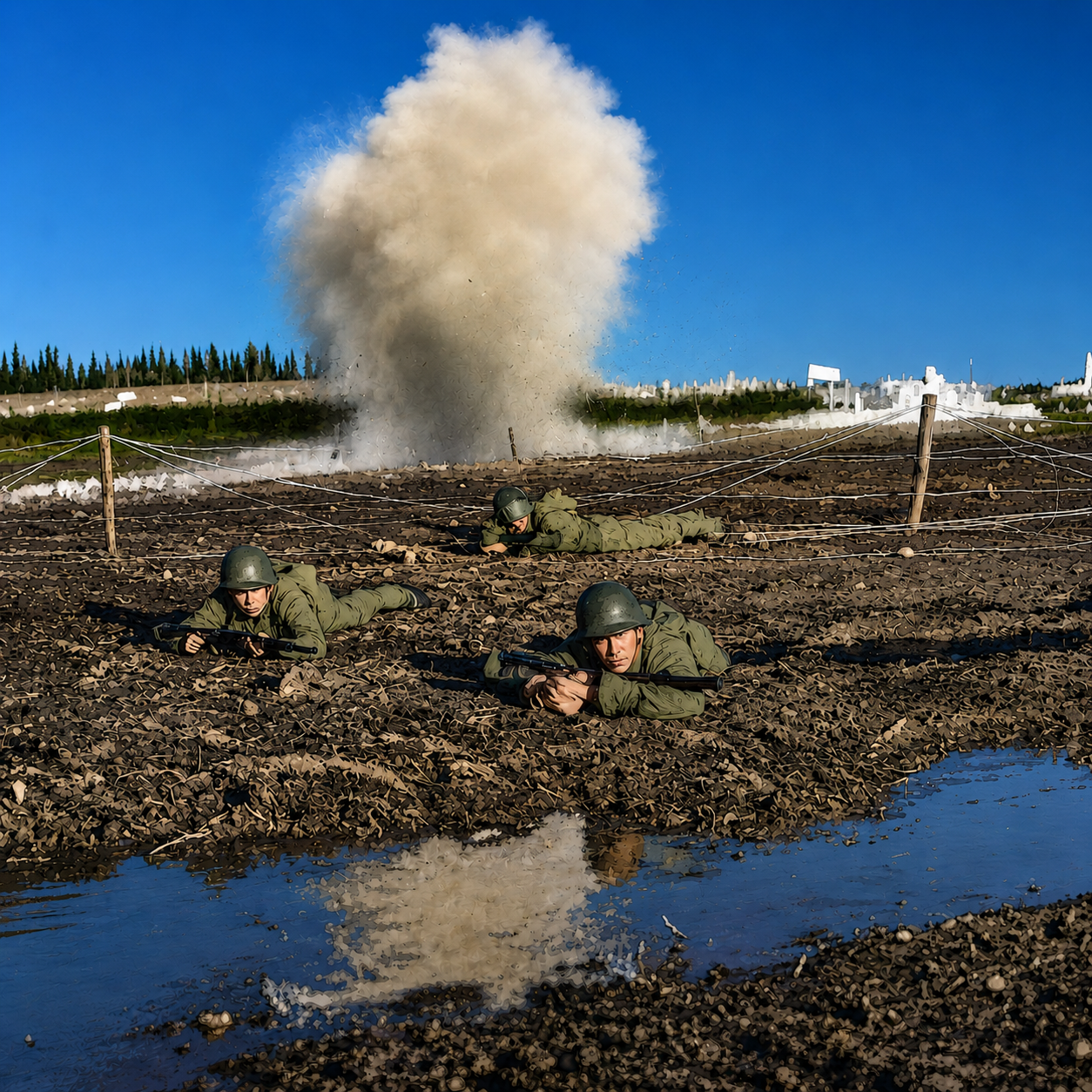
Design inspired by a historical NARA photo of Camp Edwards in Cape Cod, Massachusetts
(National Archives and Record Administration)
Editor’s Note: This would never fly today on a fragile ecosystem like Cape Cod.
Introduction:
When most people think about World War II, they picture tanks, fighter aircraft, battleships, and the soldiers who operated them. Far fewer consider the raw materials that made those weapons possible. Behind every rifle cartridge, bomber, armored vehicle, and communications system was a complex supply chain of strategic metals that determined not only military capability, but in many cases, the outcome of the war itself.
Steel, aluminum, copper, lead, tungsten, uranium, and antimony were among the most valuable resources of the era. Nations around the world raced to secure reliable supplies, often treating these materials as strategic assets equal in importance to troops and weapons. Shortages forced engineers to develop new alloys, substitute materials, and rapidly expand domestic mining and industrial production.
While metals such as steel and aluminum are widely recognized for their contributions to the Allied war effort, others—particularly antimony—remain largely unknown outside historical and industrial circles. Yet antimony played a critical role in hardening bullets, strengthening batteries, producing armor-piercing munitions, manufacturing tracer ammunition, and making military equipment more resistant to fire.
For me, this history became deeply personal. Decades after World War II ended, I served at the Massachusetts Military Reservation, a military installation whose history stretches back to the WWII era. Years later, I learned that I had chronic exposure to multiple heavy metals, including lead, antimony, and uranium. That experience prompted me to better understand the strategic importance of these materials, how extensively they were used by the military, and why their environmental legacy continues to matter long after the fighting has ended.
This article explores the essential metals that powered the World War II war machine, the unique role each played in weapon production, and how the history of these strategic materials continues to influence military installations, environmental stewardship, and public health today.
The Unsung Heroes of WWII: The Strategic Metals Behind Every Bullet, Tank & Bomber
During World War II, weapon manufacturing relied heavily on mass-produced iron and steel for large items like tanks, ships, and artillery. Because metal was constantly in short supply, nations used alloys and various specific metals depending on the part. [1, 2, 3, 4]
Key metals used to build WWII weaponry included:
- Steel Alloys: Essential for strength and durability. Steel was mixed with manganese, chromium, nickel, molybdenum, and cobalt to create hardened armor plating, jet engines, and gun barrels. [1, 2]
- Aluminum: Crucial for manufacturing lightweight yet durable aircraft, as well as some paratrooper gear and specialty shell casings. [1, 2, 3]
- Copper and Zinc: Combined to make brass, which was the standard metal for small-arms ammunition casings. Due to copper shortages, nations (especially Germany) frequently substituted brass with coated steel for bullets. Copper was also vital for electrical wiring in radios and motors. [1, 2, 3]
- Tungsten: A highly sought-after, dense metal used to create machine tools and armor-piercing projectiles. [1]
- Lead: Primarily utilized in the cores of bullets and other projectile munitions. [1, 2, 3]
- Uranium: A little-known, highly strategic metal utilized by the Allies for the development of the first atomic bombs. [1, 2]
Antimony was one of the most critical and strategic metalloids used during World War II, often described as an unsung hero of the Allied war effort. Pure lead is too soft to fire from high-powered military rifles without melting or deforming, so manufacturers alloyed it with antimony to create antimonial lead. [1, 2, 3, 4]
Antimony served several vital functions in WWII weaponry and equipment: [1, 2]
- Hardening Bullets and Shrapnel: Adding antimony significantly hardened lead bullet cores and shrapnel, allowing projectiles to retain their shape, accurately engage rifle rifling, and penetrate targets effectively. [1, 2, 3, 4, 5]
- Tungsten Steel Production: It was a key element used in the manufacturing of specialized tungsten steel, which was required for armor-piercing projectiles and high-strength machine tools. [1, 2]
- Ammunition Primers and Tracers: Antimony compounds were utilized in the explosive primers that ignite the gunpowder in a cartridge, as well as in tracer ammunition formulations to help soldiers track their fire at night. [1]
- Flame Retardants: Millions of pounds of antimony oxide were used to coat military tents, vehicle covers, and canvas uniforms to make them fireproof. [1, 2]
- Lead-Acid Batteries: It strengthened the internal plates of the heavy lead-acid batteries needed to start ignition engines for military trucks, tanks, and submarines. [1, 2]
Doctor’s Data Heavy Metals Testing Results for Jennifer:
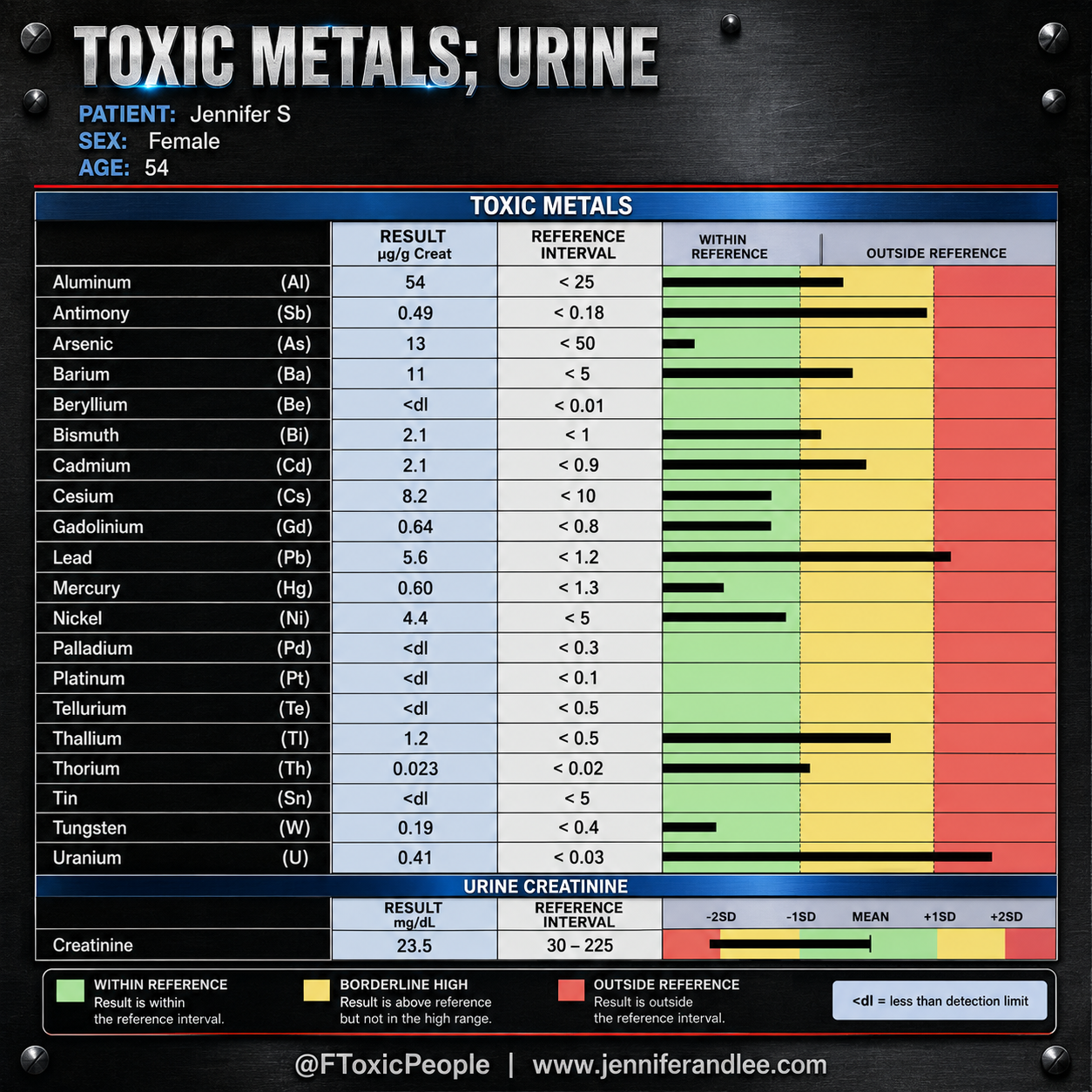
Analysis of Doctor’s Data Heavy Metals Testing:
This is not a single-metal elevation.
Instead, there is a pattern involving multiple toxic metals, including:
- Lead
- Uranium
- Antimony
- Cadmium
- Aluminum
- Thallium
- Barium
- Bismuth
When several metals are elevated together, clinicians often consider:
- occupational exposure
- environmental exposure
- military exposure
- contaminated water or soil
- industrial settings
- mobilization of stored metals (if a chelating agent was used before collection)
Summary:
World War II was not won by manpower and strategy alone. It was also won through access to the natural resources that made modern warfare possible. Every tank, aircraft, battleship, artillery shell, radio, and rifle depended on carefully selected metals whose unique physical and chemical properties allowed them to withstand the extraordinary demands of combat.
From hardened steel armor and lightweight aluminum aircraft to lead ammunition, tungsten armor-piercing rounds, uranium used in the Manhattan Project, and antimony that strengthened bullets, batteries, primers, and military equipment, these strategic materials became indispensable components of the Allied arsenal. Their importance was so great that nations fought to secure reliable supplies, opened new mines, and redesigned manufacturing processes whenever shortages threatened production.
The end of World War II did not mark the end of these materials’ story. Many military installations continued to manufacture, store, test, and dispose of equipment containing these metals for decades afterward. At some locations, the environmental legacy of military operations has required extensive investigation and cleanup to address contamination from historical activities.
My own journey to understand chronic exposure to lead, antimony, and uranium led me back through this history. Learning how central these metals were to military manufacturing provided important context for understanding the materials that helped build America’s wartime arsenal and why responsible environmental management at former and active military sites remains so important today.
The story of World War II is therefore not only one of courage, sacrifice, and industrial innovation—it is also a reminder that the materials used to defend a nation can leave legacies that span generations. Understanding both their historic importance and their long-term environmental impact helps us better protect the health of today’s service members, veterans, military families, and surrounding communities while preserving the lessons of the past.
World War II Propaganda Posters:

Color image of two soldiers in combat uniforms by Cornwell, Dean, 1892-1960 in 1943.
One is shooting a military rifle and the other has just landed next to him by parachute.
Additional parachutes can be seen in the distance.
World War Poster Collection, U.S. Treasury
(This image is AI generated for higher quality purposes)
Related Links:
New York Times: The Army Thought He Was Faking His Health Issues. Turns Out He Had Chronic Lead Poisoning. (April 3, 2019)
Why Are Military Women Affected by Toxic Exposure More than Men? – Women’s eNews (April 14, 2022)
After Lead Poisoning Symptoms Dismissed by PTSD Diagnosis, It Results in Brain Inflammation, Fatigue, Muscle Weakness, Digestion Issues & Chronic Pain (2024)
I Watched My Father Die From a Brutal & Painful Battle with Terminal Bone Cancer… And My Toxic Military Leadership Kicked Me While I Was Down (2024)
NBC News: Veterans Wait 30 Years on Average for the U.S. to Acknowledge Toxic Exposures (September 18, 2024)
Dear Mass Air National Guard, You Poisoned Me With Lead… But You Already Knew That (2025)

 Jennifer and Lee